
Your body is not just physical—it is made of energy and nature’s core five elements.
In yoga and Ayurveda, the human body is built from five natural elements, known as Panch Tattva. When these elements stay balanced, your body and mind work smoothly. When they don’t, problems begin.
These five elements are:
- Earth (Prithvi)
- Water (Jal)
- Fire (Agni)
- Air (Vayu)
- Space (Akash)
These elements are not just concepts—they directly affect your health, energy, and emotions.
What Is Panch Tattva?
“Panch Tattva” comes from Sanskrit:
- Panch = five
- Tattva = elements
It means the five building blocks of life and the universe. Everything you see—including your body—is made from these elements.
In Ayurveda and yoga, these elements are also called Panch Mahabhuta and are deeply connected to your body’s structure, senses, and energy system.
The 5 Elements of the Human Body
1. Earth Element (Prithvi)
The earth element gives your body structure and stability.
It is present in:
- Bones
- Muscles
- Skin
- Hair
If this element is strong, you feel grounded and stable. If not, you may feel weak or unbalanced.
2. Water Element (Jal)
Water controls fluid balance and emotions.
It is found in:
- Blood
- Saliva
- Urine
- Body fluids
A balanced water element keeps your body hydrated and emotions calm.
3. Fire Element (Agni)
Fire is responsible for energy and transformation.
It controls:
- Digestion
- Body temperature
- Metabolism
When balanced, digestion is strong. When imbalanced, it may cause acidity or low energy.
4. Air Element (Vayu)
Air controls movement in the body.
It governs:
- Breathing
- Circulation
- Nervous system
A healthy air element keeps your body active and your mind alert.
5. Space Element (Akash)
Space represents emptiness and connection.
It exists in:
- Body cavities
- Mind awareness
- Communication
It allows all other elements to function properly.
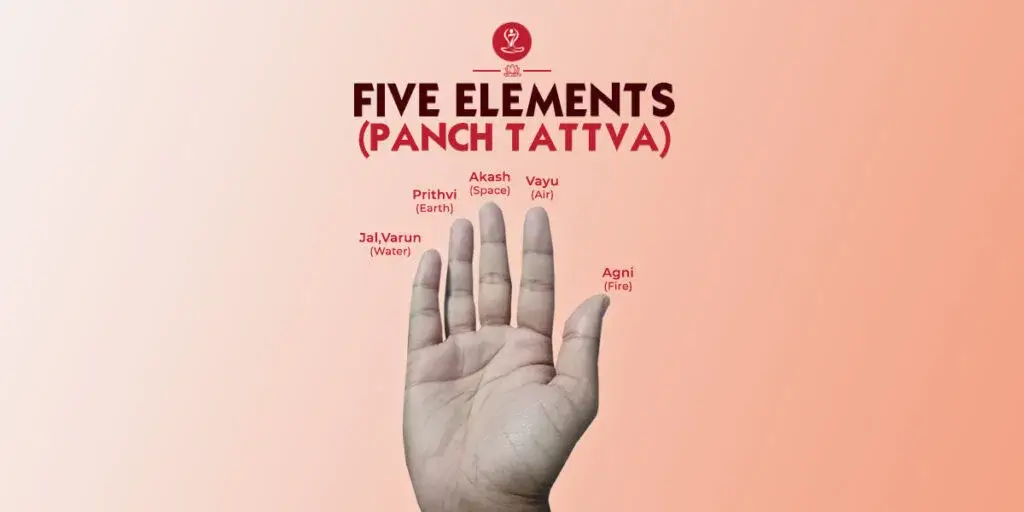
Panch Tattva and Your Fingers
In yoga, each finger represents one element:
- Thumb → Fire
- Index finger → Air
- Middle finger → Space
- Ring finger → Earth
- Little finger → Water
This is why mudras (hand gestures) are used to balance the elements naturally.
What Happens When the 5 Elements Are Imbalanced?
When these elements go out of balance, your body shows clear signs.
Common Imbalance Symptoms:
- Water imbalance → cold, asthma, fluid issues
- Earth imbalance → weight gain or loss
- Fire imbalance → acidity, digestion issues
- Air imbalance → gas, movement disorders
- Space imbalance → speech or mental issues
Even small imbalances can affect your energy, mood, and health.
Why Balancing Panch Tattva Is Important
Balanced elements lead to:
- Better physical health
- Stable emotions
- Strong digestion
- Improved energy levels
- Mental clarity
In Ayurveda, these elements also form the three doshas (Vata, Pitta, Kapha), which control your overall health.
Simple Ways to Balance the 5 Elements
You don’t need anything complex. Small daily habits can help.
Easy Practices:
- Practice at least few mintues daily pranayama routine (breathing exercises session)
- Use hand mudras regularly
- Eat balanced, natural food
- Stay connected with nature
- Maintain proper hydration
- Follow a daily routine
Consistency matters more than intensity.
Final Thoughts
The five elements are not just philosophy—they are a practical guide to better health.
When you understand and balance your Panch Tattva:
- Your body works better
- Your mind becomes calm
- Your energy improves naturally
Start small. Stay consistent. Your body already knows how to heal—you just need to support it.
Conclusion
The Five Elements (Panch Tattva) form the foundation of traditional yoga and Ayurvedic philosophy, representing the natural forces that influence the body, mind, and spirit. By practicing element-specific yoga mudras, pranayama, meditation, and maintaining a healthy lifestyle, you may support greater balance, focus, and overall well-being. Remember that these practices work best with consistency and should complement—not replace—professional medical advice or treatment.
FAQ
The Five Elements, also known as Panch Tattva, are Earth (Prithvi), Water (Jal), Fire (Agni), Air (Vayu), and Space (Akash). In yoga and Ayurveda, they are believed to be the fundamental building blocks of nature and the human body.
According to traditional Ayurvedic and yogic philosophy, balancing the Five Elements may help support physical health, emotional stability, mental clarity, and overall well-being. An imbalance is thought to influence both body and mind.
Most yoga practitioners recommend practicing element-balancing mudras for 15–20 minutes daily. Beginners can start with shorter sessions and gradually increase the duration.
Yes. Panch Tattva mudras are easy to learn and suitable for beginners. They can be practiced while sitting comfortably during meditation or pranayama.
Traditional yoga and Ayurveda suggest that physical discomfort, emotional instability, low energy, digestive issues, or mental restlessness may indicate an imbalance. However, these signs are not medical diagnoses, and persistent symptoms should be evaluated by a healthcare professional.
Yes. Many practitioners believe that balancing the Five Elements through mudras, breathing exercises, and meditation helps improve concentration, mindfulness, and inner peace.
The concept of Panch Tattva comes from ancient yoga and Ayurveda. While some practices like meditation and breathing exercises have scientific support for stress reduction, the Five Element theory itself is a traditional wellness philosophy and should not replace medical treatment.
