
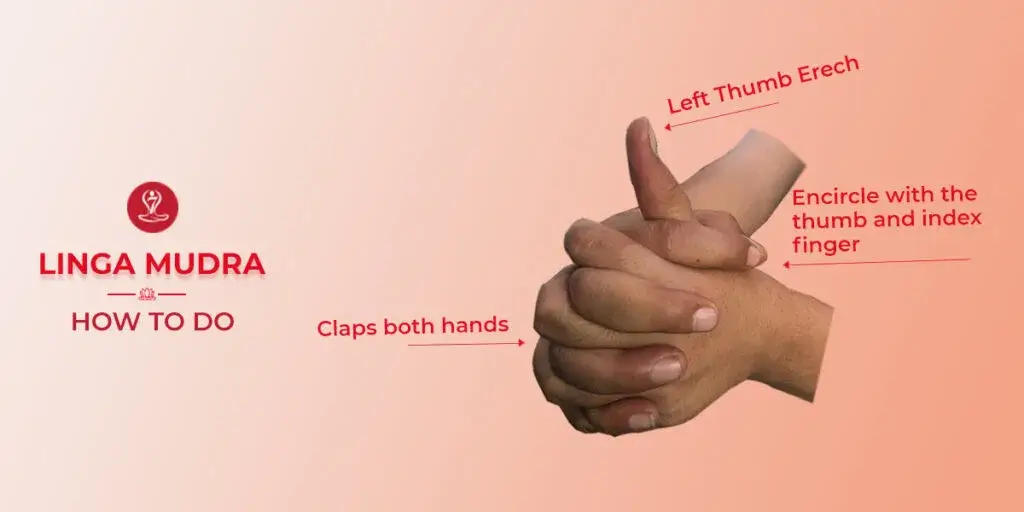
Linga Mudra, a hand gesture with deep symbolism and potential health benefits. This mudra involves interlocking the fingers of both hands with the thumbs pointing upwards.
This mudra is believed to generate heat in the body and enhance respiratory functions. In Hindu symbolism, the upright thumb in Linga Mudra represents Lord Shiva, signifying masculine energy and creation.
Meaning
the Linga Mudra is indeed associated with the symbolism of the phallus, or linga, in Hindu culture. The term “linga” refers to the phallus, which is a symbol of masculinity and creation in Hinduism. The hand gesture in Linga Mudra, with the interlocked fingers and the upright thumbs, resembles the shape of a linga.
The association with the phallus represents the creative energy and vitality that this mudra is believed to stimulate within the body. Additionally, Linga Mudra is sometimes referred to as the “upright mudra,” reflecting the upward-pointing thumbs in the hand gesture.
Steps To Do Linga Mudra
- Find a comfortable seated position for meditation, such as Padmasana (Lotus Pose), Siddhasana (Perfect Pose), Swastikasana (Auspicious Pose), or Vajrasana (Thunderbolt Pose).
- Rest your hands on your thighs or knees with your palms facing upward.
- Close your eyes and take a few deep breaths to center yourself and bring awareness to your body and breath.
- Bring your hands together in front of your body.
- Interlace your fingers, but keep your left thumb pointing upwards.
- Use your right thumb and index finger to encircle the erect left thumb, forming a circle.
- Maintain a relaxed and comfortable posture, keeping your spine upright and shoulders relaxed.
- Focus your attention on your breath or on a mantra, such as “OM,” to deepen your meditation practice.
- Hold the Linga Mudra for as long as desired, usually for a few minutes to several minutes.
- Release the mudra gently when you’re ready to end your practice.
Remember to breathe deeply and evenly throughout the practice, and allow yourself to experience the subtle energy shifts that may occur while holding the mudra. Practicing Linga Mudra regularly can help stimulate inner fire, increase vitality, and promote a sense of balance and harmony within the body and mind.
Health Benefits of Linga Mudra (Mudra of Heat)
It is believed Mudra of heat has a lot of spiritual, mental, and emotional benefits.
Heat Generation and Immune Support: Linga Mudra’s ability to generate heat stimulates the fire element within the body, which can aid in fighting off infections, colds, and respiratory disorders. This boost in immunity supports overall wellness and helps the body stay healthy.
Respiratory Health: Mudra promotes deep breathing and stimulates lung capacity, which may improve respiratory functions. It can help increase oxygen levels in the body, making it beneficial for conditions like asthma and bronchitis, and supporting overall respiratory health.
Balance Energy Levels: By harmonizing the interaction between the air and fire elements within the body, Linga Mudra works to balance energy levels. This balance promotes vitality, vigor, and a sense of overall well-being, helping individuals feel more energized and revitalized.
Mind-Body Connection: Like many yogic practices, this Mudra fosters a deep connection between the mind and body. By promoting relaxation, focus, and mental clarity, it helps individuals cultivate a greater sense of mindfulness and inner peace.
When to Perform?
Practicing this Mudra in various positions and the potential benefits of practicing during specific times, such as between 4-6 AM. It’s true that yoga mudras, including Linga Mudra, can be practiced in different postures and at different times according to individual preferences and schedules.
Chanting a mantra or silently repeating affirmations while practicing Linga Mudra can enhance the meditative aspect of the practice, deepening the mind-body connection and promoting a sense of inner peace and focus.
While there may not be a specific time duration recommended for practicing Linga Mudra, regularity and consistency are key to experiencing its benefits fully.
Conclusion
Linga Mudra is a powerful yogic hand gesture that holds deep symbolic and therapeutic significance. By interlocking the fingers and keeping the left thumb upright, practitioners can stimulate the fire element within the body, generating heat and promoting vitality.
FAQ
Linga Mudra is a traditional yoga hand gesture created by interlocking the fingers while keeping one thumb upright. It is commonly practiced during meditation and pranayama and is traditionally believed to generate internal warmth, improve concentration, and support overall well-being.
Beginners can start with 5–10 minutes daily. Depending on individual comfort and guidance from a qualified yoga instructor, the duration may gradually increase. Avoid prolonged practice, especially during hot weather or if you feel excessive body heat.
People with high fever, dehydration, acid reflux aggravated by heat, uncontrolled high blood pressure, or heat-related health conditions should practice with caution or avoid it. If you are pregnant or have a medical condition, consult your healthcare provider before practicing.
The best time is early morning on an empty stomach or before meditation and pranayama. It may also be practiced during colder weather to complement a wellness routine. Avoid practicing immediately after heavy meals.
