
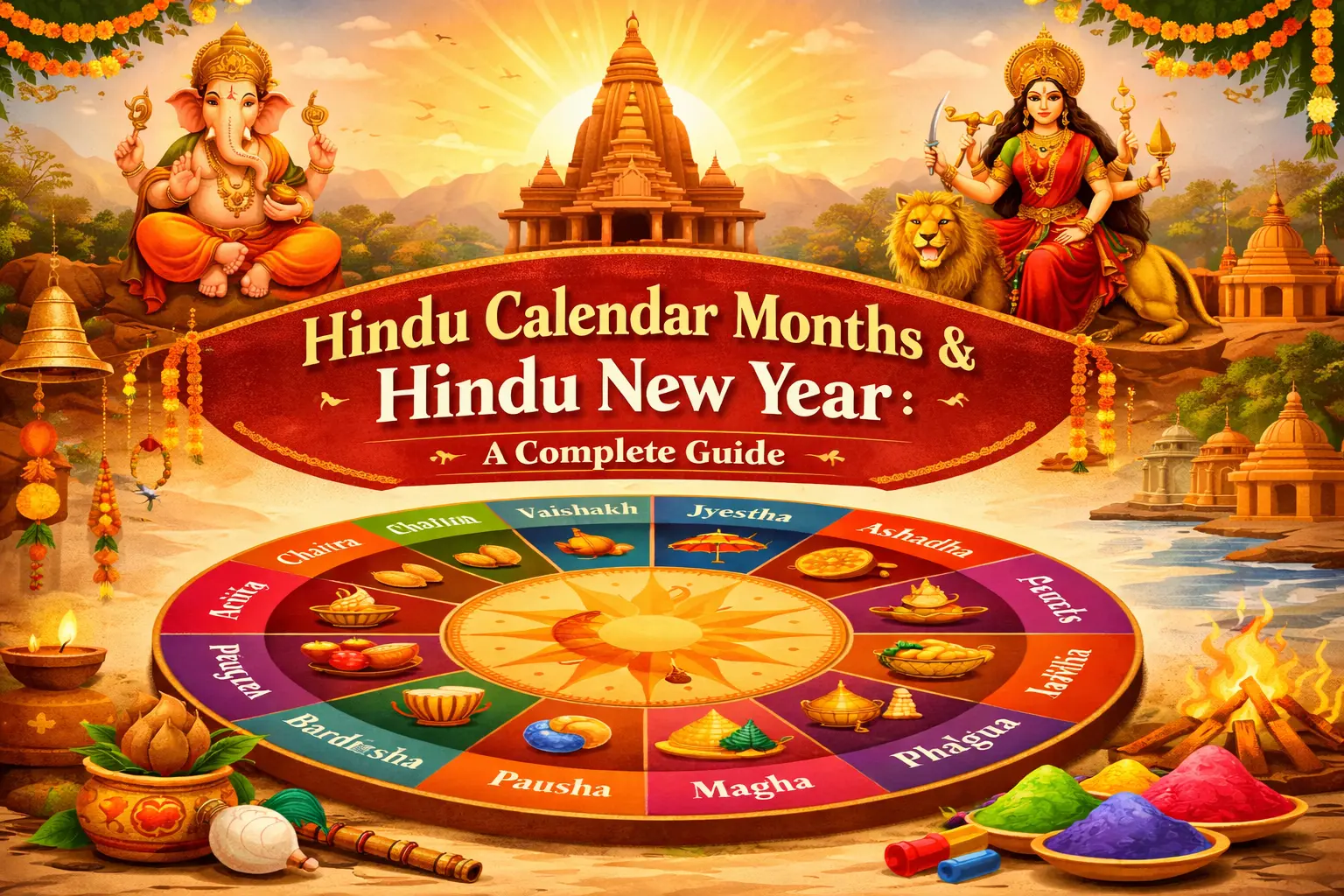
The Hindu calendar, also known as Panchang, is one of the oldest time-keeping systems in the world. Unlike the Gregorian calendar used globally, the Hindu calendar follows the lunar cycle of the moon, which is why its months change slightly every year.
For centuries, Hindus have used this calendar to determine festivals, fasting days, religious ceremonies, and auspicious dates. Understanding the Hindu months helps people stay connected with traditions, seasonal changes, and spiritual practices.
In this guide, we will explore the 12 months of the Hindu calendar, their approximate English dates, important festivals, and the beginning of the Hindu New Year.
List of Hindu Calendar Months With English Dates
Below is the traditional list of 12 Hindu months along with their approximate English calendar period.
| Hindu Month | Hindi Name | Approx English Months |
|---|---|---|
| Chaitra | चैत्र | March – April |
| Vaishakh | वैशाख | April – May |
| Jyeshtha | ज्येष्ठ | May – June |
| Ashadha | आषाढ़ | June – July |
| Shravana | श्रावण | July – August |
| Bhadrapada | भाद्रपद | August – September |
| Ashwina | आश्विन | September – October |
| Kartika | कार्तिक | October – November |
| Margashirsha | मार्गशीर्ष | November – December |
| Pausha | पौष | December – January |
| Magha | माघ | January – February |
| Phalguna | फाल्गुन | February – March |
1. Chaitra (March – April)
Chaitra marks the first month of the Hindu calendar and represents new beginnings. It arrives during the spring season, when nature begins to bloom again.
Important festivals during this month include:
- Chaitra Navratri
- Ram Navami
- Gudi Padwa
- Ugadi
Many communities celebrate the Hindu New Year during this month.
2. Vaishakh (April – May)
Vaishakh is considered one of the most auspicious months in Hindu tradition. Many people perform charity, holy baths, and religious rituals during this time.
Major festivals include:
- Akshaya Tritiya
- Buddha Purnima
- Parashurama Jayanti
This month is also considered favorable for weddings and sacred ceremonies.
3. Jyeshtha (May – June)
Jyeshtha is usually the hottest month of the year in India. Due to extreme summer heat, traditional practices encourage people to offer water donations and cooling foods.
Important observances:
- Ganga Dussehra
- Nirjala Ekadashi
4. Ashadha (June – July)
Ashadha marks the arrival of the monsoon season. This month also begins the sacred period known as Chaturmas, a four-month spiritual period dedicated to devotion and discipline.
Major festivals:
- Jagannath Rath Yatra
- Guru Purnima
During Chaturmas, many saints and spiritual seekers remain in one place and focus on spiritual practices.
5. Shravana (July – August)
Shravana is one of the most sacred months dedicated to Lord Shiva. Devotees observe Shravan Somvar fasts every Monday.
Common religious activities include:
- Visiting Shiva temples
- Performing Rudrabhishek
- Kanwar Yatra pilgrimage
Major festivals:
- Nag Panchami
- Raksha Bandhan
6. Bhadrapada (August – September)
Bhadrapada is widely known for the grand celebration of Ganesh Chaturthi, which celebrates the birth of Lord Ganesha.
Other important festivals include:
- Hartalika Teej
- Anant Chaturdashi
Many homes and communities install Ganesh idols for worship during this time.
7. Ashwina (September – October)
Ashwina marks the beginning of the major festival season in India.
Important festivals:
- Sharad Navratri
- Durga Puja
- Dussehra (Vijayadashami)
These festivals celebrate the victory of good over evil.
8. Kartika (October – November)
Kartika is considered one of the holiest months in Hinduism.
Major festivals:
- Diwali
- Govardhan Puja
- Bhai Dooj
- Kartik Purnima
Many devotees perform lamp lighting, fasting, and holy river baths during this month.
9. Margashirsha (November – December)
Margashirsha is spiritually significant in Hindu scriptures. In the Bhagavad Gita, Lord Krishna says:
“Among months, I am Margashirsha.”
This month is considered highly beneficial for meditation and spiritual practices.
10. Pausha (December – January)
Pausha falls in the winter season and is associated with agricultural traditions in many parts of India.
Some regions celebrate harvest festivals and traditional rituals during this period.
11. Magha (January – February)
Magha is known for holy river bathing rituals, especially during the Magh Mela.
Important observances:
- Magha Purnima
- Vasant Panchami
Many people wake early in the morning to take sacred baths in rivers like the Ganga and Yamuna.
12. Phalguna (February – March)
Phalguna is the final month of the Hindu calendar and is famous for the colorful festival of Holi.
Major festivals:
- Holika Dahan
- Holi (Festival of Colors)
This month celebrates joy, unity, and the arrival of spring.
When Does the Hindu New Year Start?
The Hindu New Year begins on Chaitra Shukla Pratipada, the first day of the Chaitra month.
Different regions celebrate this day with different names:
- Gudi Padwa – Maharashtra
- Ugadi – Karnataka, Andhra Pradesh, Telangana
- Navreh – Kashmir
Unlike January 1, the Hindu New Year aligns with nature, seasonal cycles, and lunar movements.
Why Do Hindu Calendar Dates Change Every Year?
The Hindu calendar follows the lunar cycle, where each month is based on the moon’s phases.
A lunar month lasts about 29.5 days, making the lunar year around 354 days, which is about 11 days shorter than the solar year.
To maintain seasonal balance, an extra month called Adhik Maas is added approximately every three years.
This adjustment keeps festivals like Diwali, Holi, and Navratri aligned with their correct seasons.
Why Hindu Months Are Important Even Today
Even in modern times, millions of people rely on the Hindu calendar for:
Festival planning
Every festival occurs according to the Hindu lunar calendar.
Auspicious dates (Muhurat)
Families consult the calendar for:
- Weddings
- Housewarming ceremonies
- Naming rituals
Fasting and spiritual practices
Many fasts are associated with specific months like Shravana and Kartika.
Traditional agriculture
Historically, farmers used these months to guide sowing and harvesting seasons.
Conclusion
The Hindu calendar is deeply connected to nature, astronomy, and spiritual traditions. Each month carries unique cultural significance, festivals, and seasonal meaning.
From the fresh beginnings of Chaitra to the joyful celebrations of Phalguna and Holi, the Hindu calendar continues to guide religious and cultural life for millions of people around the world.
Understanding these months helps preserve ancient traditions while keeping cultural heritage alive for future generations.


Disclaimer
The content is purely informative and educational in nature and should not be construed as medical advice. Please use the content only in consultation with an appropriate certified medical or healthcare professional