
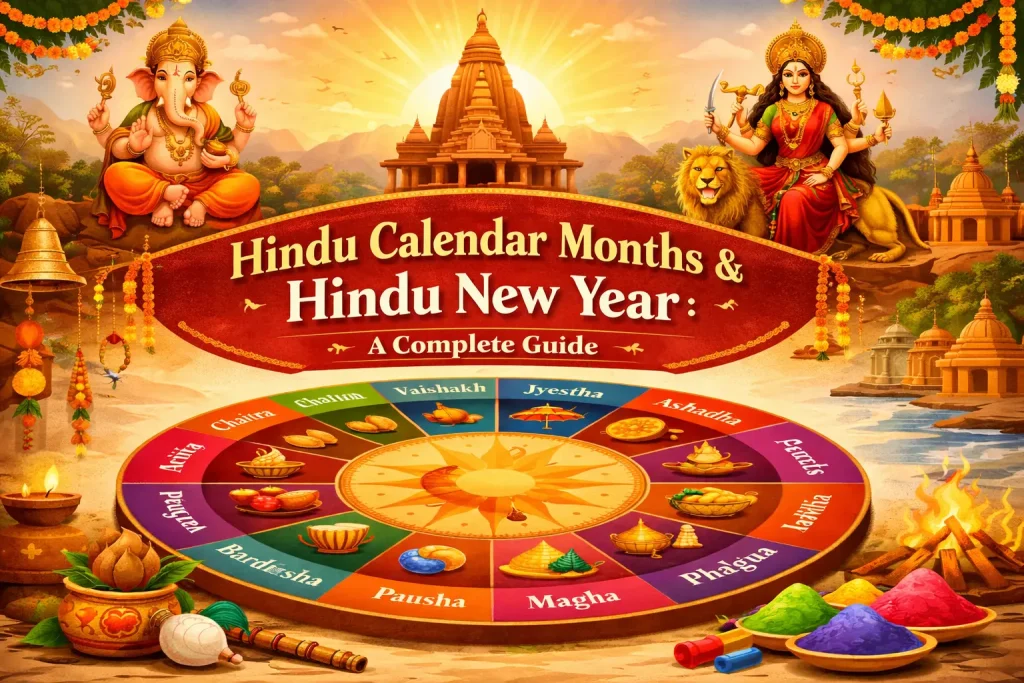
The Hindu calendar consists of 12 lunar months based on the movement of the Moon. Each month holds deep cultural, spiritual, and seasonal significance in India. Unlike the Gregorian calendar, the Hindu calendar follows a lunisolar system, connecting time with nature, festivals, and rituals.
The Hindu calendar, also known as Panchang, is one of the oldest time-keeping systems in the world. Unlike the Gregorian calendar used globally, the Hindu calendar follows the lunar cycle of the moon, which is why its months change slightly every year.
For centuries, Hindus have used this calendar to determine festivals, fasting days, religious ceremonies, and auspicious dates. Understanding the Hindu months helps people stay connected with traditions, seasonal changes, and spiritual practices.
In this guide, you’ll find the complete Hindu calendar months list with their English equivalents, seasons, and important festivals.
12 Months in Hindu Calendar (Quick List)
The 12 months of the Hindu calendar are:
Chaitra, Vaishakha, Jyeshtha, Ashadha, Shravana, Bhadrapada, Ashwin, Kartik, Margashirsha, Pausha, Magha, Phalguna
Hindu Calendar Months Table
| Hindu Month | English Months | Season (Ritu) |
|---|---|---|
| Chaitra | March – April | Spring (Vasanta) |
| Vaishakha | April – May | Spring (Vasanta) |
| Jyeshtha | May – June | Summer (Grishma) |
| Ashadha | June – July | Summer (Grishma) |
| Shravana | July – August | Monsoon (Varsha) |
| Bhadrapada | August – September | Monsoon (Varsha) |
| Ashwin | September – October | Autumn (Sharad) |
| Kartik | October – November | Autumn (Sharad) |
| Margashirsha | November – December | Pre-Winter (Hemant) |
| Pausha | December – January | Pre-Winter (Hemant) |
| Magha | January – February | Winter (Shishir) |
| Phalguna | February – March | Winter (Shishir) |
Hindu Months with Meaning and Festivals
1. Chaitra
- Marks the beginning of the Hindu New Year in many regions
- Major Festivals: Navratri, Ram Navami
- Significance: New beginnings and spiritual renewal
2. Vaishakha
- Considered highly auspicious for charity and fasting
- Festivals: Akshaya Tritiya, Buddha Purnima
- Focus: Prosperity and good deeds
3. Jyeshtha
- Peak summer month with intense heat
- Festivals: Ganga Dussehra
- Significance: Water conservation and purification
4. Ashadha
- Beginning of monsoon season
- Festivals: Rath Yatra, Guru Purnima
- Focus: Devotion and spiritual learning
5. Shravana
- Dedicated to Lord Shiva
- Festivals: Shravan Somvar, Raksha Bandhan, Nag Panchami
- Significance: Fasting, devotion, and protection
6. Bhadrapada
- Important for Lord Krishna devotees
- Festivals: Janmashtami, Ganesh Chaturthi
- Focus: Celebration and devotion
7. Ashwin
- One of the most festive months
- Festivals: Navratri, Durga Puja, Dussehra
- Significance: Victory of good over evil
8. Kartik
- Holiest month in Hindu tradition
- Festivals: Diwali, Bhai Dooj, Kartik Purnima
- Focus: Light, prosperity, and spiritual growth
9. Margashirsha
- Considered sacred in scriptures
- Festivals: Gita Jayanti
- Significance: Knowledge and devotion
10. Pausha
- Cold and calm period
- Festivals: Pausha Putrada Ekadashi
- Focus: Family well-being
11. Magha
- Holy month for bathing rituals
- Festivals: Makar Sankranti, Magh Mela
- Significance: Purification and charity
12. Phalguna
- End of the Hindu calendar year
- Festivals: Holi, Maha Shivaratri
- Focus: Joy, transformation, and devotion
Hindu Calendar Seasons (Ritu System)
The Hindu calendar divides the year into 6 seasons:
- Vasanta (Spring) – Chaitra, Vaishakha
- Grishma (Summer) – Jyeshtha, Ashadha
- Varsha (Monsoon) – Shravana, Bhadrapada
- Sharad (Autumn) – Ashwin, Kartik
- Hemant (Pre-Winter) – Margashirsha, Pausha
- Shishir (Winter) – Magha, Phalguna
Why Do Hindu Calendar Dates Change Every Year?
The Hindu calendar follows the lunar cycle, where each month is based on the moon’s phases.
A lunar month lasts about 29.5 days, making the lunar year around 354 days, which is about 11 days shorter than the solar year.
To maintain seasonal balance, an extra month called Adhik Maas is added approximately every three years.
This adjustment keeps festivals like Diwali, Holi, and Navratri aligned with their correct seasons.
Why Hindu Months Are Important Even Today
Even in modern times, millions of people rely on the Hindu calendar for:
Festival planning
Every festival occurs according to the Hindu lunar calendar.
Auspicious dates (Muhurat)
Families consult the calendar for:
- Weddings
- Housewarming ceremonies
- Naming rituals
Fasting and spiritual practices
Many fasts are associated with specific months like Shravana and Kartika.
Traditional agriculture
Historically, farmers used these months to guide sowing and harvesting seasons.
Related Reading
Explore more festival guides here:
FAQ (Frequently Asked Questions)
The 12 months are Chaitra, Vaishakha, Jyeshtha, Ashadha, Shravana, Bhadrapada, Ashwin, Kartik, Margashirsha, Pausha, Magha, and Phalguna.
The Hindu calendar is lunisolar, meaning it is based on both the Moon and the Sun.
Kartik is often considered the holiest month due to festivals like Diwali.
Conclusion
The Hindu calendar is more than just a system of time. It reflects nature, spirituality, and cultural traditions. Each month carries unique significance, festivals, and seasonal connections that guide daily life and rituals.
