
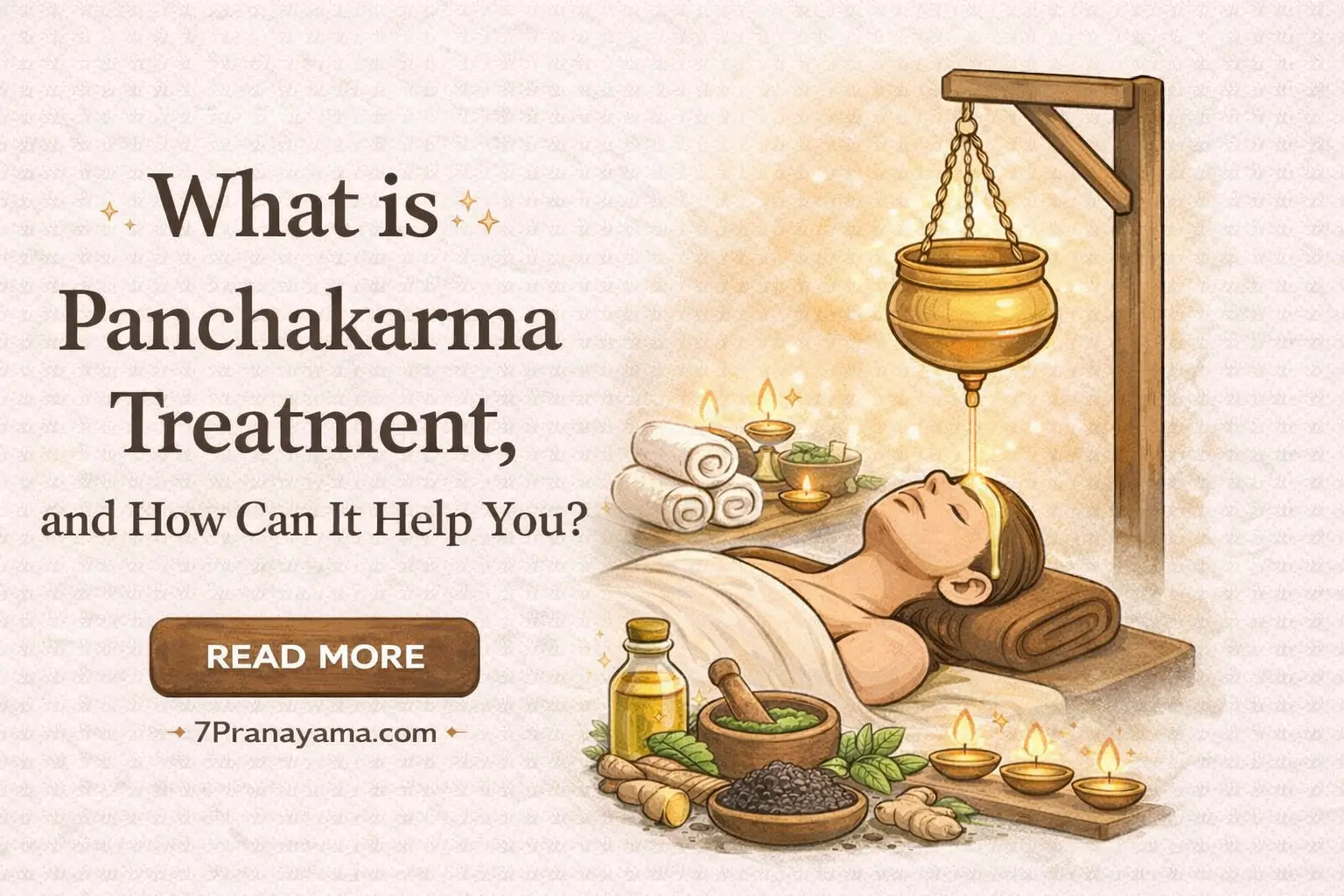
Ayurveda describes numerous ancient methods for rejuvenating and restoring the body to health, among which Panchakarma Treatment/therapy holds special significance.
Panchakarma is a unique feature of Ayurvedic medicine, not found in any other medical system. Many complex and chronic diseases that cannot be treated solely with medication can be effectively cured through Panchakarma.
What Is Panchakarma?
Panchakarma is an ancient purification therapy of Ayurveda, also known as Panchakarma Chikitsa. This therapy involves purifying the body by eliminating accumulated toxins and imbalances. Through Panchakarma, the imbalanced Vata, Pitta, and Kapha doshas are brought back into balance, thereby preventing various diseases.
The word ‘Panchakarma’ literally means “five actions.” It refers to five specific therapeutic procedures that use appropriate medicinal substances to eliminate toxins from the body. Panchakarma treatment not only purifies the body but also restores health by balancing all three doshas—Vata, Pitta, and Kapha.
In short, Panchakarma therapy cleanses the blocked channels (srotas) of the body and balances the digestive fire (agni), leading to improved bodily functions and enhanced overall health.
Panchakarma is one of the most effective therapeutic methods in Ayurveda. Ayurvedic treatment is primarily divided into three categories:
Daiva-Vyapashraya Chikitsa – Treatment through divine and Vedic mantras
Yukti-Vyapashraya Chikitsa – Medicinal and rational treatment
Sattvavajaya Chikitsa – Ayurvedic psychotherapy
This three-fold therapeutic system is considered helpful in maintaining the balance of the body, mind, and soul.
Five Karmas
In Panchakarma, five karmas are primarily used to purify the entire body, which is known as the prime karma.
These five karmas are as follows:
- Vamana (therapeutic emesis)
- Virechanam (purgation)
- Anuvasana (enema using medicated oil)
- Nasyam
- Asthana Vasti (Therapeutic Decoction Enema)
Acharya Sushruta (father of surgery) has included Raktmokshana in Panchakarma instead of Aasthana Vasti.
The Five Karmas in Panchakarma are as follows.
Vamana (Emesis or Vomiting Therapy)
This Karma is mainly done for Kapha diseases and Vata Kapha diseases. It is necessary for the correction of various phlegm diseases arising in the head, bones, joints, and mucous membranes.
Virechan or Purgation
In the Virechana process, the contaminated doshas are removed in a controlled manner from the excretory tract. This is especially done in the diseases caused by the dysfunction of pitta.
Anuvasan Basti (Oil Enema)
The process of putting any medicine in the anus is called ‘Basti Karma’. Basti karma in which only ghee, oil, or other lubricating substances are used in large quantities is called ‘Anusana’ or ‘Snehan Basti’.
Nasyam
Through this action of Panchakarma, the doshas located in the head are removed from the nostrils, and the patient benefits. Its main types are Nasya, Pratimarshanasya, Navana, and Avapidana Nasya. Which are selected and used according to the disease and the patient.
Aasthapan Basti or Niruh
The Vasti therapy method is mainly used in Vata Vyadhis (nervous disorders). In this, medicines are prepared from medicinal herbs, in which honey, salt, lipids, and other medicines are given inside the rectum. “Niruh” indicates “elimination of morbid dosha or disease from the body. And “establishment” indicates “establishment of life span and age”.
The use of Asthan Vasti is beneficial in constipation, kidney stones, back pain, abdominal cramps, and pain and other types of joint pain (Vata Vyadhi).
Raktamokshan
In this Karma, the blood is purified. Bad blood is the root of many diseases. In such a situation, through this process, the bad blood present in the body is cleaned. With this, eczema, acne, skin diseases, etc., can be removed.
Panchakarma is said to be useful for both the healthy and the sick. According to the season, we should do Panchakarma (refinement) so that the irritable doshas in our body continue to do their natural work in the same condition.
How can Panchakarma treatment help you?
Panchakarma therapy purifies the body’s blocked channels (srotas) and balances the digestive fire (Agni). This results in improved bodily functions and better physical and mental health.
Here’s how Panchakarma can help you:
- Deeply detoxifies the body by removing accumulated toxins
- Balances Vata, Pitta, and Kapha
- Improves digestion and metabolism by strengthening agni
- Boosts immunity and disease resistance
- Enhances physical and mental well-being
- Rejuvenates the body, improving energy, skin, and vitality
Three stages of Ayurvedic Panchakarma treatment
Ayurvedic Panchakarma treatment is a three-stage process that helps in the deep cleansing and balancing of the body:
- Purva Karma
- Pradhana Karma
- Paschat Karma
Purva Karma (Snehana and Svedana)
The procedures performed before the main Panchakarma treatment are called Purva Karma. This includes Snehana (oleation through massage or internal administration of oil) and Svedana (inducing sweating through steam or heat). These procedures loosen and prepare the accumulated toxins in the body, known as Ama in Ayurveda, for elimination. Ama is considered the root cause of many diseases in Ayurveda.
Pradhana Karma (Panchakarma)
Once the individual has completed the Snehana and Svedana procedures and the body is ready for purification, the Pradhana Karma, or the main Panchakarma treatment, is performed. In this stage, the doshas and toxins are eliminated from the body through specific methods, leading to a reduction in diseases and a restoration of health.
Paschat Karma (Post-therapy Care)
This phase focuses on diet, lifestyle, and rejuvenation therapies to restore strength and maintain the benefits of Panchakarma.
In essence, Panchakarma helps reset your body and mind, promoting long-term health, balance, and well-being.
Conclusion
Panchakarma treatment leads to better health, is free from toxins and imbalances, and has a major role in rebuilding the body. It recommends using remedies such as Vamana, Virechana, Basti, Nasya, and Raktamokshan to correct deep-rooted imbalances.
Apart from Panchakarma, other medical methods only pacify the virulent doshas in our body, due to which the diseases get pacified, but there is a possibility of recurrence of the disease.
RELATED ARTICLES
Dec 27, 2025
Thyme Benefits: A Small Herb with Big Healing Power
Thyme is an herb from the mint family; the flowers and leaves are used as culinary staples, and the oil[...]

Dec 26, 2025
Benefits of Neem You Should Know For Natural Healing
Neem is considered a miraculous tree. Although bitter in taste, neem is extremely beneficial because of its powerful medicinal properties.[...]

Dec 17, 2025
Science-Backed Benefits of Honey for Skin, Hair & Health
Honey is a naturally sweet, golden-colored liquid produced by bees from the nectar of flowers. Since ancient times, the benefits[...]
RECENT POSTS


Disclaimer
The content is purely informative and educational in nature and should not be construed as medical advice. Please use the content only in consultation with an appropriate certified medical or healthcare professional