
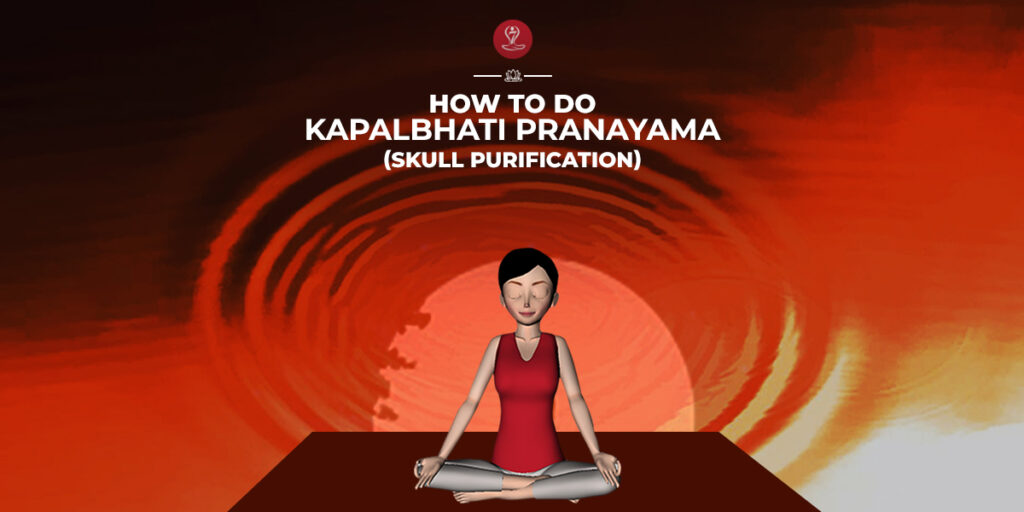
Kapalbhati Pranayama is a yogic breathing technique from Hatha Yoga involving forceful exhalations through the nose with abdominal contractions, followed by natural inhalation. “Kapal” means skull and “Bhati” means shining — making it literally the “Skull Shining Breath.”
What Is Kapalbhati Pranayama?
Kapalbhati is one of the six Shatkarmas (cleansing kriyas) of Hatha Yoga, also called “Breath of Fire” or “Light Skull Breathing.” It oxygenates the body and helps eliminate mental and physical ailments over time.
Kapalbhati is considered “Sanjivani” — the most effective of all yogic practices. It is derived from two Sanskrit words:
- Kapal = Skull
- Bhati = Shining or Illuminated
It is also called Bhalabhati, where “Bhala” means head and “Bhati” means light — referenced in the Hatha Yoga Pradipika as “Light Skull Breathing.”
This advanced breathing technique involves:
- Short, strong, forceful exhalations
- Passive, automatic inhalation
- Active abdominal muscle contractions
Pranayama itself means Prana + Ayam — the prolonging or expansion of
prana (life force). It gives life force to a person through the flow of
prana-shakti.
What Are the Three Forms of Kapalbhati?
There are three types of Kapalbhati — Vatakrama (wind cleansing), Vyutkarma (sinus cleansing), and Shitkarma (mucus cleansing).
1. Vatakrama — Wind Cleansing
The most common form. Sit cross-legged, breathe deeply
through both nostrils, then exhale forcefully pulling the stomach inward.
Breathing is passive; exhalation is active.
2. Vyutkarma — Sinus Cleansing
Sniff water through the nostril, let it pass into the
mouth, then spit it out. Similar to Jala Neti Kriya — it cleanses the nasal
passage, throat, and mouth.
3. Shitkarma — Mucus Cleansing
The opposite of Vyutkarma. Water is taken through the
mouth and expelled through the nostrils, effectively cleansing mucus from
the upper respiratory system.
How to Do Kapalbhati Pranayama — Step by Step
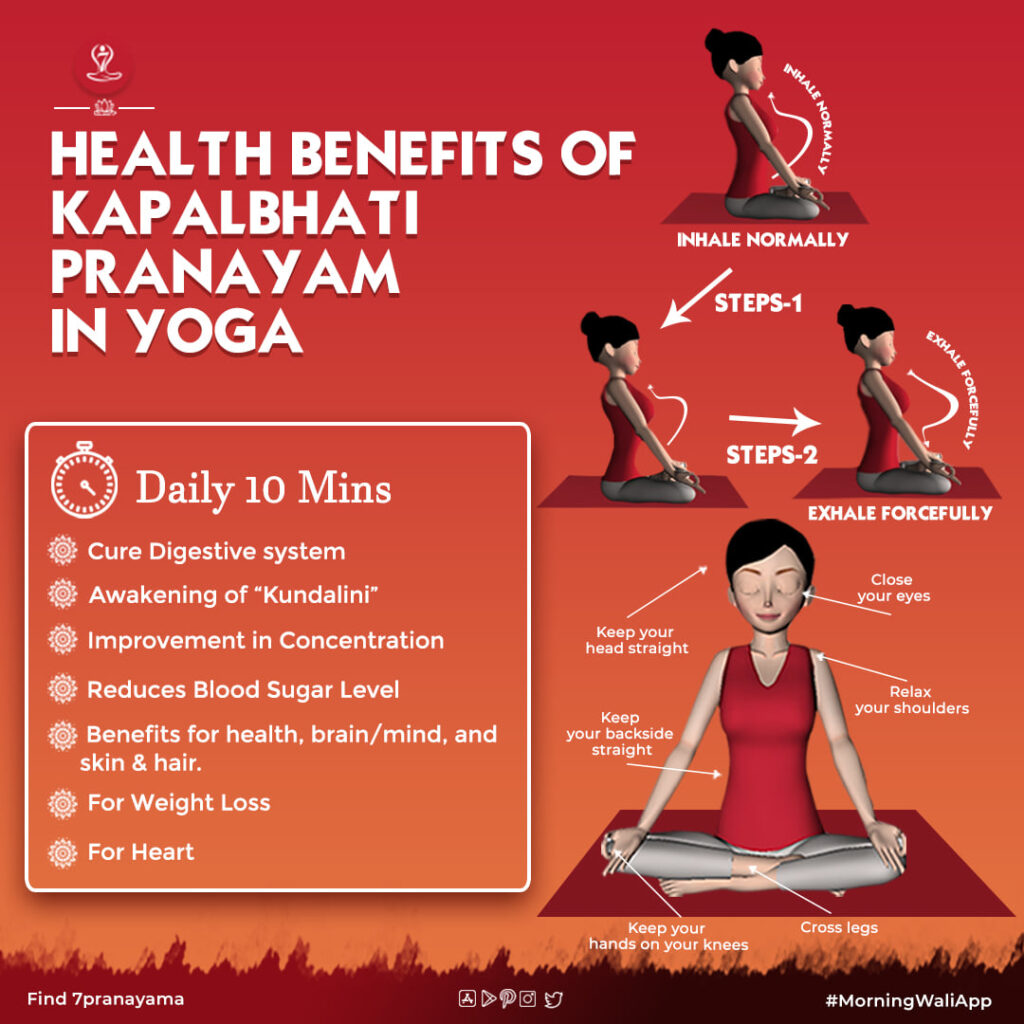
Sit in Padmasana or Sukhasana, exhale forcefully through
the nose contracting the abdomen, then allow inhalation naturally. Begin with
20–40 rounds and gradually increase to 50–105 rounds per session.
Follow these steps carefully:
- Sit in a cross-legged position on a yoga mat — Padmasana (left foot on
right thigh, right foot on left thigh) or Sukhasana if Padmasana is
difficult. Those who cannot sit on the ground may sit on a chair. - Form Vayu Mudra or Gyan Mudra with your fingers and rest them on
your knees. - Keep your spine straight, close your eyes, and release all mental tension.
- Take a few deep breaths to relax your body and mind.
- Begin forceful exhalation through the nose, contracting the abdominal
muscles to push air out. - Relax the abdominal muscles and allow inhalation to happen naturally and
passively. - Repeat for 20–30 rounds initially, gradually increasing with practice.
- After completing rounds, take a few deep breaths to return to normal.
How Many Rounds of Kapalbhati Should a Beginner Do?
Beginners should start with 20–40 exhalations per round.
With practice, this can increase to 50–105 rounds, repeated 4–5 times per day.
After each round, relax the abdominal muscles fully before beginning the next
round. You can use the 7pranayama app to set rounds, duration reminders,
and practice logs.
What Are the Health Benefits of Kapalbhati Pranayama?
Kapalbhati Pranayama benefits include improved lung
capacity, better digestion, reduced stress, enhanced mental clarity, stronger
abdominal muscles, improved blood circulation, and lower blood sugar levels.
Does Kapalbhati Improve Lung Capacity?
Yes. Forceful exhalation and deep inhalation strengthen
respiratory muscles and increase overall lung capacity over time.
Is Kapalbhati Good for Digestion?
Yes. It stimulates digestive organs by increasing blood
flow, relieving common problems like gastritis, duodenitis, constipation,
and bloating. Combined with Agnisar Kriya, it offers significant relief from
gastric issues.
Can Kapalbhati Help With Weight Loss?
Yes. Kapalbhati boosts metabolism, burns calories through
rapid breathing and abdominal contractions, and reduces stress-related
overeating. A 12-week study showed a significant reduction in body fat
percentage with regular practice.
A controlled trial conducted at a Deemed University in Gwalior, Madhya Pradesh
with 30 female students confirmed that 12 weeks of Kapalbhati training significantly reduced body fat percentage.
Weight loss benefits include:
- Boosts metabolism — increases the rate at which the body burns calories
- Burns calories — rapid breathing and abdominal contractions reduce fat
stores - Reduces stress — prevents stress-driven overeating and unhealthy food
choices - Improves digestion — ensures nutrients are properly absorbed and waste
is efficiently eliminated - Promotes mindful eating — increases body awareness and reduces
likelihood of overeating
Does Kapalbhati Reduce Blood Sugar?
Yes. A study showed that 30 days of Kapalbhati practice
reduced blood sugar levels in diabetic patients from 164.5 to 157.8.
Regular practice is advisable for diabetic patients, but always under medical
supervision.
Is Kapalbhati Good for the Heart?
Yes. Kapalbhati controls high blood pressure, removes
toxins, and reduces stress and depression — all key risk factors for heart
disease. Regular practice can reduce both systolic and diastolic blood
pressure.
Can Kapalbhati Improve Blood Circulation?
Yes. Forceful exhalation and deep inhalation improve
circulation throughout the body, purify the blood, and correct low blood
pressure over time.
Does Kapalbhati Boost the Immune System?
Yes. Kapalbhati’s breathing exercises may positively
influence immune system function through improved oxygenation and toxin
elimination.
Does Kapalbhati Help Awaken Kundalini?
Yes. Kapalbhati requires focus on the base (root) chakra,
which is believed to activate and awaken Kundalini Shakti through sustained
practice.
Kapalbhati Benefits for the Brain and Mental Health
Kapalbhati increases oxygen flow to the brain, improves
concentration, reduces anxiety and depression, strengthens nerve function,
and promotes positive thinking and intellectual clarity.
Key brain and mental health benefits:
- Relieves anxiety and mental tension
- Purifies and strengthens the body’s nerve network
- Eliminates anxiety and depression by strengthening the pulse
- Brings positive thoughts and improves decision-making power
- Sharpens the mind and develops intellectual ability
- Practicing for 5–10 minutes promotes inner peace and a meditative state
Kapalbhati Benefits for Skin
Kapalbhati improves skin health by increasing blood
circulation, detoxifying the body, reducing stress, boosting oxygen supply,
and balancing hormones — all of which contribute to clearer, healthier skin.
- Improves blood circulation — delivers oxygen and nutrients to skin cells,
improving overall appearance - Detoxifies the body — stimulates the digestive system to eliminate waste
and toxins, promoting clearer skin - Reduces stress — lowers cortisol levels, reducing acne and premature
aging caused by chronic stress - Increases oxygen supply — promotes cell renewal and regeneration,
improving skin texture and tone - Balances hormones — corrects hormonal imbalances that lead to acne and
premature skin aging
For best results, combine Kapalbhati with a healthy diet, regular exercise,
and a consistent skincare routine.
Kapalbhati Benefits for Hair
Kapalbhati means “to shine on the forehead (scalp)” —
and regular practice supports scalp health and may help address common hair
problems.
For better results, combine Kapalbhati with Balayam (nail rubbing yoga
technique), which is specifically known for improving hair health.
Who Should Avoid Kapalbhati Pranayama?
Kapalbhati should be avoided by pregnant women, people
with heart disease, high blood pressure, hernia, epilepsy, stroke, spinal
disorders, or active gastric ulcers.
Medical Conditions That Contraindicate Kapalbhati
Do not practice Kapalbhati if you have any of the
following conditions without explicit medical clearance.
Avoid Kapalbhati if you have:
- Heart disease — forceful exhalation places strain on the cardiovascular
system - High blood pressure — may aggravate hypertension if practiced
incorrectly - Hernia — abdominal contractions can worsen the condition
- Epilepsy or stroke history — risk of neurological aggravation
- Spinal disorders — overspeed practice can worsen spinal problems
- Active gastric ulcers — heat and acid-related gastric issues can
worsen with practice - Thyroid issues — incorrect practice may obstruct the thyroid
When Should Women Avoid Kapalbhati?
Women should avoid Kapalbhati during pregnancy and
shortly after delivery.
Is Kapalbhati Safe for Beginners?
Yes, but only under the supervision of a qualified yoga
teacher. Beginners should never start at high speed or high repetitions.
Precautions for Practicing Kapalbhati Safely
Always practice Kapalbhati on an empty stomach, start
slowly under expert guidance, and never overexert — especially if you have
any pre-existing health condition.
Key precautions to follow:
- Empty stomach only — practice in the morning, or at least 4–5 hours
after eating. Do not eat for at least 20 minutes after practice. - Start under supervision — first-time practitioners must learn under a
qualified yoga expert. - Do not rush — do not push beyond your capacity by comparing yourself
to others. - Respiratory conditions — those with breathing problems should consult
a doctor before practicing. - Overspeed side effects — practicing too fast can cause spinal disorders,
ulcers, gastric problems, and thyroid obstruction. - Kapalbhati is suitable for all age groups — with appropriate
modifications based on health status.
Conclusion
Kapalbhati Pranayama is one of yoga’s most powerful cleansing techniques, offering benefits for the lungs, digestion, weight management, blood sugar, heart, skin, hair, and mental clarity — when
practiced correctly and consistently.
Kapalbhati is not just a breathing exercise — it is a complete cleansing system for the body and mind. From its three distinct forms to its step-by-step practice method, each element serves a specific purpose. Its benefits span weight loss, blood sugar control, improved concentration,
glowing skin, and heart protection.
However, it must be practiced with proper technique and awareness. Those
with medical conditions must consult a healthcare professional before
beginning. For everyone else, consistent daily practice of even 5–10 minutes
can create measurable improvements in physical health, mental clarity, and
overall wellbeing.
AI Content Disclaimer
Note on Content: This article was developed with the assistance of artificial intelligence to ensure comprehensive research and clarity. However, the final content has been meticulously reviewed, edited, and fact-checked by the 7pranayama editorial team to ensure accuracy and alignment with our wellness standards. Our goal is to provide you with the most reliable, science-backed information to support your health journey.
Frequently Asked Questions (FAQ)
Here are the most commonly asked questions about
Kapalbhati Pranayama — covering practice, benefits, safety, and timing.
Kapalbhati is used to cleanse the respiratory system, improve digestion,
boost lung capacity, reduce stress, support weight loss, and enhance mental
clarity through rhythmic forceful breathing.
Beginners should start with 20–40 exhalations per round, done 4–5 rounds
per session. With practice, increase to 50–105 exhalations per round.
Early morning on an empty stomach is ideal. If mornings are not possible,
practice at least 4–5 hours after your last meal.
It is generally advised to avoid intense Kapalbhati during menstruation,
as forceful abdominal contractions may cause discomfort. Practice gently
or rest during this time.
A 12-week study showed significant reduction in body fat percentage. For
mental clarity and digestion, many practitioners report noticeable
improvements within 2–4 weeks of consistent daily practice.
