
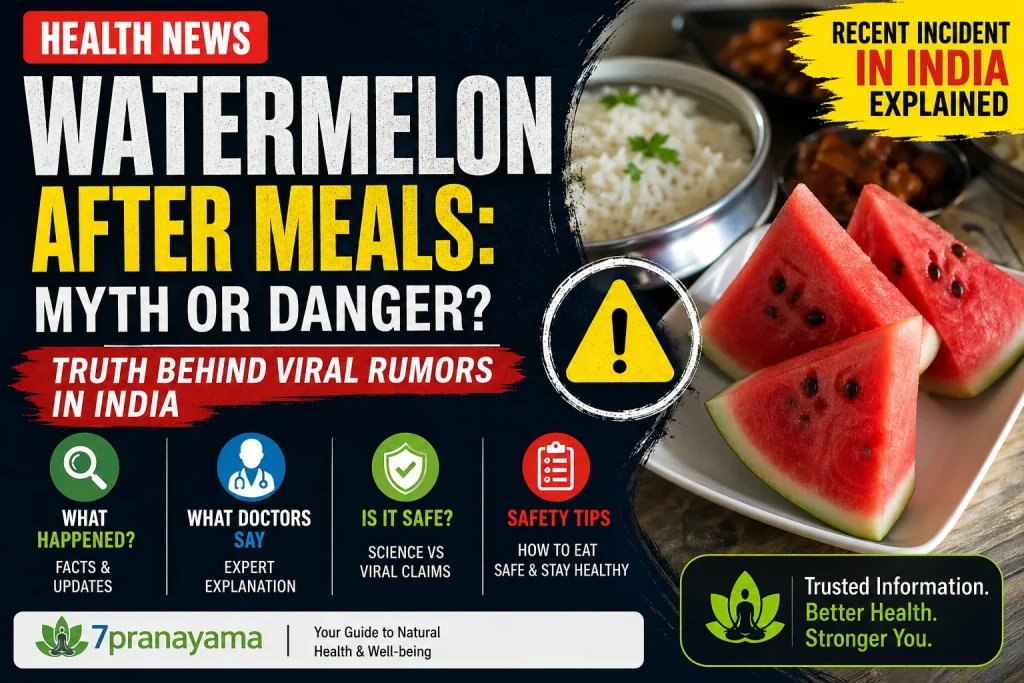
A tragic recent incident in Mumbai, where four family members died after a meal that reportedly included biryani and watermelon, has triggered widespread fear and viral social media rumors across India. Many posts now claim that eating watermelon after biryani, rice, or at night can be deadly.
What Actually Happened?
According to current medical reports and police investigations:
- The exact cause of death is still under forensic investigation
- Doctors have stated there is no scientific evidence that watermelon combined with rice, biryani, or nighttime eating directly causes death
- Experts suspect possible:
- Food contamination
- Bacterial growth in improperly stored cut fruit
- Toxic substances or poisoning
- Hygiene or storage failures
Medical experts are warning the public not to spread misinformation until lab reports are complete.
Is Watermelon After Biryani Harmful?
The science says:
There is no proven medical evidence that eating watermelon after rice, biryani, or cooked meals is inherently dangerous.
However, possible risks include:
- Contaminated cut fruit
- Fruit left unrefrigerated in summer heat
- Dirty knives or surfaces
- Pesticide or chemical adulteration
- Overeating causing bloating or digestive discomfort
Why the Myth Is Spreading
Social media often turns tragic events into simplified health myths, such as:
- “Watermelon after rice causes poison”
- “Watermelon at night is deadly”
- “Mixing fruits with heavy meals kills”
These claims are not supported by medical science.
Real Food Safety Tips for Watermelon
To stay safe:
- Wash the outer rind before cutting
- Use clean knives
- Refrigerate cut fruit immediately
- Avoid roadside pre-cut watermelon
- Discard fruit with unusual smell or slimy texture
- Buy from trusted vendors
Bottom Line
The recent Mumbai deaths are tragic, but there is currently no evidence that watermelon after biryani or rice itself was the cause. The likely concern is contamination or toxic exposure—not normal food combining.
