

Compass pose is typically an intermediate to advanced seated yoga poses, which demands a lot of the flexibility of your shoulders, hips and hamstrings. So it is important to make sure that your body is adequately prepared or warmed up before trying it.
Compass Pose Basics
| Sanskrit Pronunciation | Parivrtta Surya Yantrasana |
| Meaning | parivrtta, meaning “revolved” or “twisted”; surya, meaning “sun”; yantra, meaning “instrument”; asana, which translates as “pose” or “posture.” |
| Pose Type | Sitting and twisting side-bend |
| Pose Level | Advanced |
| Style of yoga | – |
| Other Names | Compass Pose, Revolved sundial pose |
| Stretches | The hips, groins, hamstrings, shoulders, and side bodies |
| Strengthening | The leg and arm muscles |
| Duration | 30 second to 3 minutes |
Meaning
The Sanskrit name Parivrtta Surya Yantrasana is literally translated in English as:
- Parivrtta: Revolved
- Surya: Sun
- Yantra: Instrument
Getting the benefits of compass yoga pose requires a combination of skills like flexibility, strength and balance that take commitment and patience to build. It also provides the yogi with the most advanced opportunities to learn and grow physically, mentally and spiritually.
The body needs to be warm and open before moving into compass pose, practice a few warm-up poses such as side angle pose, Uttanasana, lizard pose, leg-over-shoulder pose, revolved wide-legged standing forward folds, pyramid pose, big toe pose, gate pose, and sun salutes, as well as plenty of simpler hip opener poses, hamstring, shoulder, and side-body stretches. These poses preceding compass help warm and stretch your body.
Practice Guide For Compass Pose
The Practice Guide to Perform Compass Pose serves as a valuable resource for yoga enthusiasts seeking to advance their practice, offering a structured and detailed approach to mastering this challenging yet rewarding yoga pose.
Preparatory Poses
- Head-To-Knee Pose (Janu Sirsasana)
- Standing Forward Bend (Uttanasana)
- Wide-Legged Forward Bend (Prasarita Padottanasana)
- Lizard Pose (Uttana Pristhasana)
Getting Into Compass Pose
- To get into the compass pose, you must first sit in a comfortable, cross-legged position.
- Bend your right knee, touch it to your chest, and place the sole of the right foot on the floor. Leave your left foot in a cross-legged position.
- Now hold the outer part of your right leg with your left hand and slowly lengthen the right knee from the inside.
- Make sure your right hand is under your right knee and try to bring the right fingers to the floor on the outside of your right hip.
- At this point, use your left hand to raise your right knee as high as possible over the right.
- Breathe slowly and lengthen your spine. Make sure the right knee aligns behind the right shoulder.
- Now, try to straighten your right leg as you stretch your left arm back behind your head. make sure to keep your spine upright.
- Maintain the final pose for up to 10 slow breaths. Use your inhales to lengthen the spine and exhales to deepen the stretch.
- To come out Compass pose, inhale, and lengthen your spine. Then exhale, release the foot, and bend the right knee to slowly dissolve out of the posture.
- Repeat all the above points for the opposite side.
Follow up Poses
- Parivrtta Janu Sirasana
Compass Pose Benefits
- Physical Benefits:
- Stretches and opens the hips, hamstrings, shoulders, chest, and upper back.
- Strengthens the core muscles, including the abdominals and obliques.
- Improves spinal flexibility and mobility.
- Enhances balance, coordination, and proprioception.
- Stimulates the digestive organs and aids in detoxification.
- Energetic and Spiritual Benefits:
- Promotes mindfulness, concentration, and mental focus.
- Activates Manipura Chakra, associated with personal power and transformation.
- Balances the flow of prana (life force energy) throughout the body.
- Encourages a sense of grounding and inner stability.
Precautions
- According to the experts, this asana is considered best when yogis practice early in the morning. Mornings are preferred as the food is digested as well as the body has the energy to perform the asana. Due to some reason, you cannot practice it in the morning, you can practice this asana in the evening as well. But at least keep a 3-5 hour gap between your practice and meal.
- Compass Pose must avoid deep squats with any knee injury.
- Avoid this Asana, in case of back, neck, ankles your arms injury.
Conclusion
Parivrtta Surya Yantrasana requires strength, flexibility, and balance, making it a challenging yet rewarding posture for those with an advanced yoga practice. Regular practice can lead to increased physical and mental well-being, as well as a deeper connection to the body and breath.
RELATED ARTICLES

Dec 03, 2025
How to Do Ashtanga Namaskara Correctly for Maximum Benefits
Ashtanga Namaskara, also known as the Eight-Limbed posture, is part of Surya Namaskara or Sun Salutation. It is the present[...]
Dec 02, 2025
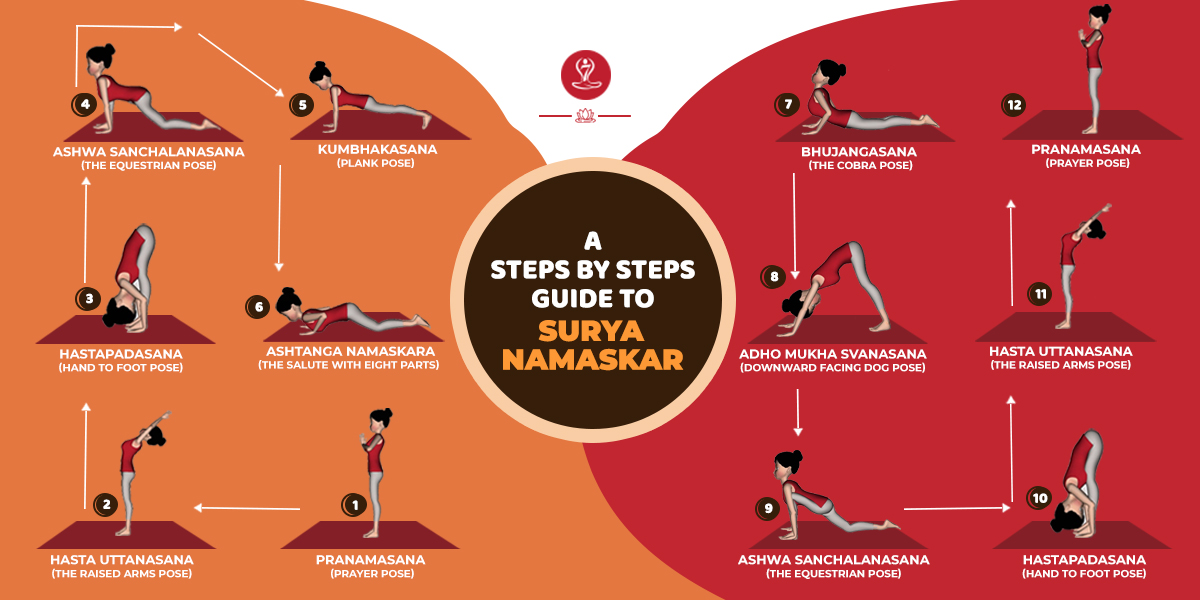
Surya Namaskar: The Ultimate Full-Body Yoga Workout
One of the tremendous Yoga practices is Surya Namaskar or Sun Salutation, which is a sequence of 12 powerful yoga[...]
Nov 20, 2025
Strengthen Your Legs: Yoga for Knock Knees (Genu Valgum)
Knock knees, medically known as "genu valgum", is a condition in which the knees tilt inward and touch each other[...]
RECENT POSTS


Disclaimer
The content is purely informative and educational in nature and should not be construed as medical advice. Please use the content only in consultation with an appropriate certified medical or healthcare professional