
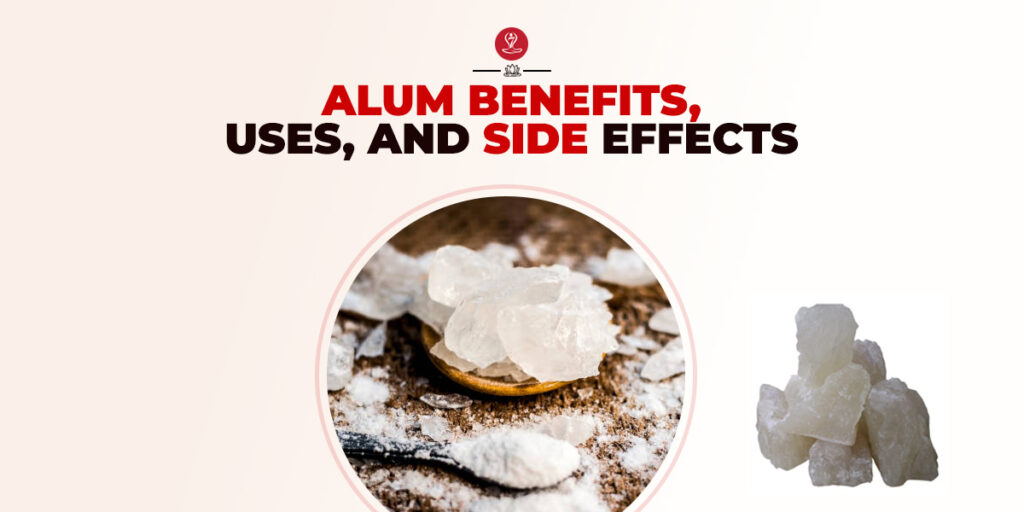
Alum, also known as fitkari, is a natural mineral widely used for skincare, hygiene, and traditional remedies.
Quick Info
Common Name: Alum (Fitkari)
Type: Natural mineral salt
Main Uses: Skin care, bleeding control, hygiene, water purification
Key Properties: Astringent, antibacterial, antiseptic
Form: Colorless crystalline solid
Usage: External use and traditional remedies
What is Alum (Fitkari)?
Alum is a natural mineral salt made from aluminum compounds, commonly known as fitkari. It appears as a colorless crystalline substance and is widely used for skincare, hygiene, and traditional remedies.
Alum, known as Fitkari in Hindi, and ‘Shubhra’ in Ayurveda.
Alum is an odorless, colorless, and transparent substance found in the form of crystalline blocks or granular powder, with a mildly sweet, astringent taste.
Naturally occurring alum shells are used to make it.
Alum melts at 90-degree centigrade temperature and if further heated to 200 degrees centigrade, its crystals lose water and turn into a concentrated or solid substance, which is known as Brunt Alum.
Pure alum is completely transparent and completely soluble in water. On heating it becomes porous.
It comes in two colors white and light pink, but white is used more in homes. In Ayurveda, it is used in the form of Bhasma. Bhasma is prepared by evaporating alum.
Alum is widely used in Unani systems of medicine, including Ayurveda.
Antiseptic, binder, antihemorrhagic and antibacterial properties are present in abundance in alum which is used for many benefits ranging from purifying water to skin rejuvenation.
Choosing the right alum can be challenging. One must be aware of its various forms to make the right choice.
What is Alum Used For?
Alum (fitkari) is used for skin care, stopping minor bleeding, oral care, hygiene, and water purification. It has astringent, antibacterial, and antiseptic properties that help tighten skin, reduce bacteria, and remove impurities.
Types of Alum
Potassium alum: Potassium alum has already been mentioned above. It is a colorless crystal material. This form of alum is widely used for domestic and medicinal purposes. The alum found in homes is actually a potassium alum.
Ammonium Alum: When ammonium is used in place of aluminum, ammonium alum is formed. It is a white-colored crystalline solid substance. It is mostly used in making beauty products and personal care products.
Chrome Alum: Chromium is used instead of aluminum to make this alum. It is known as chromium potassium sulfate. This alum is used in industrial works. Chroma alum is used extensively in the leather industry.
Sodium alum: This is an inorganic compound, also known as soda alum. This white solid is used in the manufacture of baking powder and as a food additive. It can also be called edible alum.
Alum Benefits, Uses, And Side Effects
Scientific studies proving the benefits of potassium alum are lacking, however many of the benefits are anecdotal.
Improve dental health
Research has believed that regular use of alum on the teeth can help in destroying the cavities that accumulate on the teeth. On the basis of this fact, it can be said that the benefits of alum can prove to be helpful for maintaining dental health.
Reduce acne and dark spots
Research has suggested that alum can act to cleanse bacteria and tighten pores due to its astringent properties, which can reduce acne scars. Since the risk of acne remains high due to the large pores of the pores.
Stops blood flow
Alum is effective in stopping the bleeding after an injury. Rubbing it and applying it to the injured area can stop the flow of blood. Although this recipe works only on small injuries. But avoid excessive use and keep it out of reach of children.
Make the water clean
Potassium alum is mainly used for water treatment at home. As a water treatment, you must have often seen that when the water starts getting dirty or foul-smelling in the water tank then alum is used to remove the foul smell and make the water clean.
Anti-aging properties
Not many people are aware that alum has anti-aging properties, so it helps in preventing the signs of premature aging and makes the skin soft, glowing, and delightful.
Alum in shaving
The practice of applying alum on the face has been going on for years. Whether it is to get a shave by going to the salon or keep the facial skin soft after shaving at home.
The antiseptic properties of alum provide protection against disease-causing microorganisms, and the astringent properties help reduce swelling and bleeding.
Alums provide protection to soothe the skin after shaving, prevent the spread of bacteria and prevent minor injuries.
Top Uses of Alum
Main uses of alum:
- Skin tightening and pore reduction
- Stops minor bleeding (styptic)
- Natural deodorant to control body odor
- Oral care for gums and mouth ulcers
- Water purification to remove impurities
Alum for Skin
Alum is used for skin care because of its astringent and antibacterial properties. It helps tighten the skin, reduce pores, control excess oil, and limit odor-causing bacteria. It is commonly used as a natural aftershave and deodorant.
Benefits of Alum
- Natural and widely available
- Multi-purpose use for skin, hygiene, and home
- Easy to use and cost-effective
Mineral-based ingredients like Himalayan salt are also commonly used for health and wellness:
Side Effects of Alum
Alum may cause dryness, irritation, or a stinging sensation, especially on sensitive skin or when used frequently. It should be used in moderation and not applied excessively.
How to use an alum block
It is surprisingly simple to use alum for different problems.
- Alum can be used as a mouthwash. For this, heat a glass of water and sieve it by adding a small spoonful of alum powder. This water can be used when it cools down.
- Mix a teaspoon of alum powder in a glass of warm water and keep it lukewarm. Now wash the injury or wound with this water two to three times a day.
- After shaving, sprinkle a few drops of water on your face and rub the alum slowly. Doing so can reduce the risk of getting septic.
Side Effects
- Potassium alum can weaken the skin.
- Consuming alum in excess for a long time can be the cause of cancer and Alzheimer’s etc.
- Excessive use of alum can cause many problems for you like dysentery, dry skin, etc.
- If you have delicate skin then it can increase the problems like rashes, and redness in the skin.
Conclusion
Alum is a simple and effective natural ingredient used for skincare, hygiene, and traditional practices. While it offers multiple benefits, proper and moderate use is important to avoid side effects.
FAQ
Alum is used for skincare, stopping minor bleeding, oral care, hygiene, and water purification.
Yes, alum is generally safe for skin when used in small amounts, but overuse may cause dryness or irritation.
Yes, alum acts as a styptic and helps stop minor bleeding from small cuts or shaving nicks.
Alum can be used occasionally, but frequent daily use may lead to dryness or irritation.
