
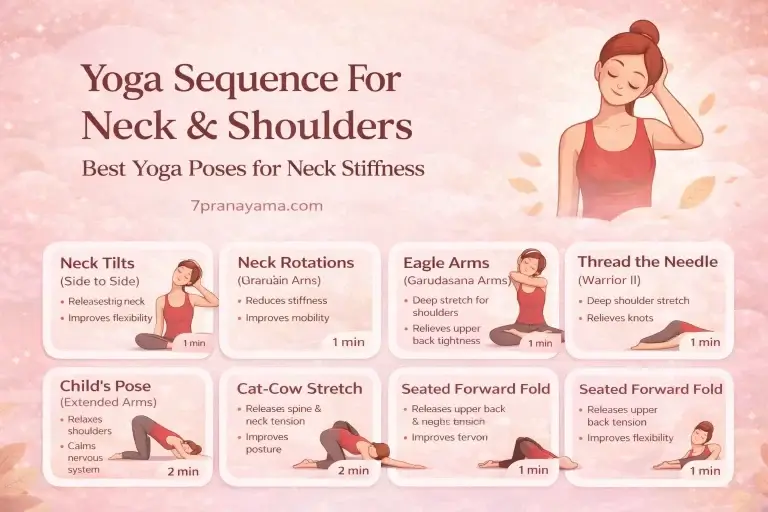
Neck and shoulder stiffness has become extremely common today—long hours on phones, laptops, and poor posture silently build tension in the upper body. The good news? A simple yoga sequence can help release that stiffness naturally, improve mobility, and restore comfort in just a few minutes a day.
This guide covers an easy, beginner-friendly yoga sequence for neck and shoulders that you can follow at home without any equipment.
Why Neck Stiffness Happens
Before jumping into the sequence, it helps to understand the root causes:
- Poor posture (forward head, rounded shoulders)
- Long screen time
- Stress and muscle tension
- Lack of movement
- Improper sleeping position
Yoga works by gently stretching, strengthening, and relaxing the muscles around your neck, shoulders, and upper back.
10-Min Yoga Sequence for Neck & Shoulder Relief
Practice this sequence slowly, focusing on your breath.
1. Neck Tilts (Side to Side)
How to do:
- Sit or stand tall
- Gently tilt your head toward one shoulder
- Hold for 5–8 breaths, then switch
Benefits:
- Releases tight neck muscles
- Improves flexibility
2. Neck Rotations
How to do:
- Slowly rotate your neck in a circular motion
- Do 5 rounds clockwise and anti-clockwise
Benefits:
- Reduces stiffness
- Improves mobility
3. Shoulder Rolls
How to do:
- Roll shoulders forward and backward slowly
- 10 repetitions each
Benefits:
- Relieves shoulder tension
- Improves blood flow
4. Eagle Arms (Garudasana Arms)
How to do:
- Cross one arm over the other
- Bring palms together and lift elbows slightly
Benefits:
- Deep stretch for shoulders
- Relieves upper back tightness
5. Cat-Cow Stretch
How to do:
- On all fours, inhale (cow – lift chest)
- Exhale (cat – round spine)
Benefits:
- Releases spine and neck tension
- Improves posture
6. Thread the Needle Pose
How to do:
- From tabletop, slide one arm under the body
- Rest shoulder and head on the mat
Benefits:
- Deep shoulder stretch
- Relieves knots
7. Child’s Pose (Extended Arms)
How to do:
- Sit back on heels, stretch arms forward
- Relax forehead on the floor
Benefits:
- Relaxes neck and shoulders
- Calms the nervous system
8. Seated Forward Fold
How to do:
- Sit with legs straight
- Bend forward gently
Benefits:
- Releases upper back tension
- Improves flexibility
Daily Routine (Simple Plan)
- Total time: 10–12 minutes
- Best time: Morning or after work
- Frequency: Daily
Consistency matters more than intensity.
Pro Tips for Faster Relief
- Avoid sudden neck movements
- Keep your screen at eye level
- Take breaks every 30–45 minutes
- Combine yoga with deep breathing (pranayama)
- Stay hydrated
When to Be Careful
Avoid or modify poses if you have:
- Severe neck pain or injury
- Cervical issues
- Recent surgery
Consult a professional if pain persists.
Final Thoughts
This simple yoga sequence is one of the most effective natural ways to relieve neck stiffness and shoulder tension. Just a few minutes daily can improve posture, reduce pain, and bring a sense of relaxation to your entire body.
