
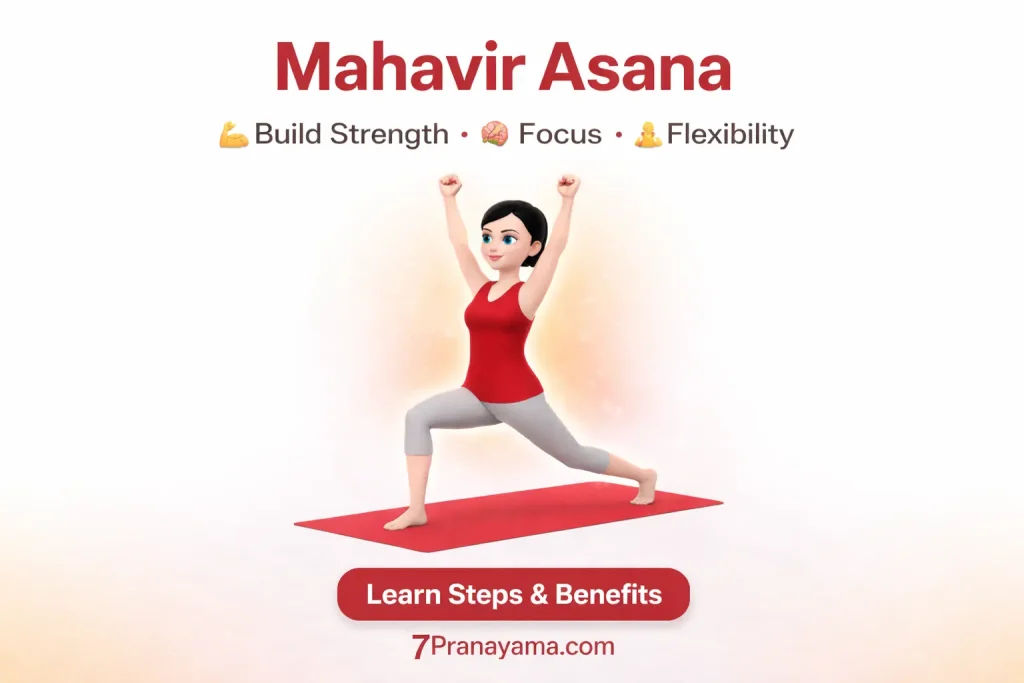
Mahavirasana, also known as the Warrior Pose, is a yoga asana that embodies strength, stability, and focus. However, there might be some confusion here. Mahavirasana is typically not referred to as the Warrior Pose in yoga. The Warrior Pose is more commonly associated with the Virabhadrasana series (Warrior I, II, and III).
Nevertheless, Mahavirasana is a seated yoga pose that relatively easy to perform and can be done by all, from child to young.
What is Mahavir Asana?
The word “Mahavir” comes from Sanskrit:
- Maha = Great
- Vir = Brave / Warrior
- Asana = Posture
So, Mahavir Asana can be understood as a posture that reflects inner strength and confidence.
In some traditions, it is also referred to as Maruti Asana.
Practice Guide to Perform Mahavirasana (Maruti Asana or The Warrior pose)
The Practice Guide to Perform Mahavirasana is a comprehensive manual designed to assist practitioners in mastering the Mahavirasana yoga pose. This guide offers step-by-step instructions, tips, and insights to effectively execute this intricate asana, known for its balancing and strengthening benefits.
Preparatory Poses
How to do Mahavirasana
Starting Position: stand upright and keep your arms relaxed by your sides.
Foot Position: Now according to your ability, bring your left foot forward and stand with the knee bent and keep your right leg knee bent backward. Keep in mind that both your legs should be from the ground.
Hand Position: Close the fingers of both hands Or clench your fists and lift them upwards parallel to your head.
Maintain Alignment: Ensure that your back remains straight; avoid rounding the spine excessively. Put the eyes in front of the sight.
Breathing: Keeping your mouth closed, pull the breath from your nose, inflate the stomach and when the action is over, let the breath out. Inhale and exhale smoothly and steadily throughout the exercise.
Hold: Hold the position for 30 seconds to a minute, or longer if comfortable.
Release: To come out of the pose, engage your core muscles and inhale as you slowly lift your torso back up to a standing position.
Follow-up Yoga Poses
Precautions & Contraindications
- If there is a pain in the legs or joints, then this asana should not be practiced.
- If there is any problem or pain in the spine, do not do this asana.
According to the experts, this asana is considered best when yogi practiced early in the morning. Mornings are preferred as the food is digested as well as the body has the energy to perform the asana. Due to some reason, you cannot practice it in the morning, you can practice this asana in the evening as well. But at least keep a 3-5 hour gap between your practice and meal.
Benefits of Mahavirasana
Hip Flexibility: This pose stretches and opens the hips, improving flexibility and mobility.
Relaxation: Practicing this asana with proper breathing can induce a sense of calm and relaxation.
Spinal Health: It helps in lengthening and aligning the spine, reducing stiffness
Stimulates Digestion: Mahavirasana can aid digestion by compressing the abdominal area.
Improves Concentration: The focus required in maintaining the posture can enhance mental focus and clarity.
Stimulates Digestion: Mahavirasana can aid digestion by compressing the abdominal area.
Removes laziness: Mahavirasana removes laziness and produces agility in the body or the body starts working quickly.
Reduces Stress: The process of breathing and exhaling during this asana reduces stress and anxiety and provides relief to the brain.
Conclusion
Mahavirasana, often referred to as the Maruti Asana, involves a complex combination of balance, flexibility, and concentration. It is easily accessible for beginners that relatively easy to perform and can be done by all, from child to young.
Frequently Asked Questions (FAQ)
Yes, it is beginner-friendly if done slowly with proper alignment.
Start with 20–30 seconds and gradually increase to 1 minute.
Not exactly. It may look similar, but traditional warrior poses belong to a different yoga sequence.
Yes, daily practice is safe if you don’t have joint or spine issues.
Yes, controlled breathing during the pose helps calm the nervous system.
