
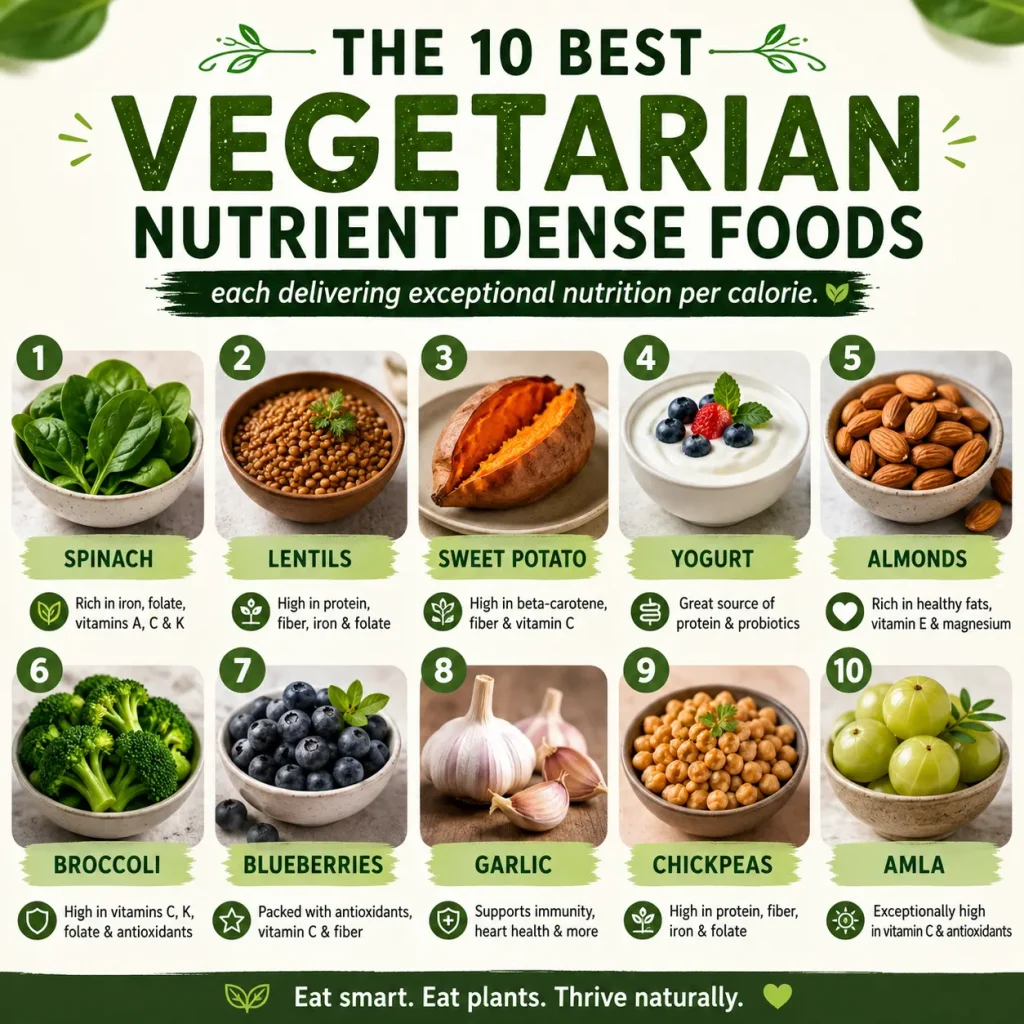
Nutrient dense foods are foods that provide a high amount of vitamins, minerals, and essential nutrients relative to their calorie content. The best vegetarian nutrient dense foods deliver maximum nutrition per bite — supporting energy, immunity, digestion, and long-term disease prevention.
What Are Nutrient Dense Foods?
Nutrient dense foods deliver maximum nutrition — vitamins, minerals, antioxidants, and essential compounds — for minimum calories. They are the opposite of empty-calorie foods like chips, white bread, and sugary drinks.
We all eat food every day. But are we really eating the right food?
Most people fill their plates with food that satisfies hunger but offers very little real nutrition. This is where nutrient dense foods make all the difference.
Research has shown that what you eat directly affects your energy levels, immunity, skin health, mental clarity, and long-term disease prevention. Choosing nutrient dense foods is one of the simplest and most effective changes you can make for your health.
Why Does Nutrient Density Matter for Your Health?
Nutrient density determines how much real nutritional value your body gets from each meal — directly affecting energy, immunity, weight management, skin health, and disease prevention.
Think of it this way — 100 calories from spinach and 100 calories from a biscuit are not the same thing. Spinach delivers iron, calcium, Vitamin K, and antioxidants. The biscuit delivers almost nothing except sugar and refined flour.
Here is why nutrient density matters:
- Energy levels — Nutrient rich foods fuel the body efficiently
- Immunity — Vitamins and minerals strengthen immune defenses
- Weight management — High nutrition keeps you full with fewer calories
- Disease prevention — Antioxidants reduce risk of chronic disease
- Mental clarity — Proper nutrients support brain function
- Skin and hair health — Vitamins and minerals show on the outside too
What Are the 10 Best Vegetarian Nutrient Dense Foods?
The 10 best vegetarian nutrient dense foods are spinach, lentils, sweet potato, yogurt, almonds, broccoli, blueberries, garlic, chickpeas, and amla — each delivering exceptional nutrition per calorie.
1. Spinach
Spinach is one of the most nutrient dense vegetables on the planet — rich in iron, calcium, Vitamin K, Vitamin C, and folate with very few calories.
Spinach has been used in traditional cooking and medicine for centuries. It is light on calories but extremely heavy on nutrition — making it a must-have in any healthy vegetarian diet.
Key nutrients:
- Iron — supports healthy blood and energy levels
- Calcium — essential for strong bones and teeth
- Vitamin K — critical for blood clotting and bone health
- Vitamin C — boosts immunity and skin health
- Folate — important for cell growth and during pregnancy
- Antioxidants — fight free radicals and reduce inflammation
How to eat it: Raw in salads, blended in smoothies, sautéed with garlic, or added to soups and dals.
2. Lentils (Dal)
Lentils are one of the best plant-based sources of protein, iron, folate, and fiber — making them an exceptional nutrient dense food, especially for vegetarians.
Lentils (dal) have been a cornerstone of Indian diets for thousands of years — and for good reason. They are affordable, filling, and nutritionally rich.
Key nutrients:
- Plant-based protein — essential for muscle repair and growth
- Iron — prevents anemia and supports energy levels
- Folate — critical for cell function and healthy pregnancy
- Fiber — supports digestion and blood sugar control
- Potassium — helps manage blood pressure naturally
How to eat it: As dal, in soups, mixed into salads, or as sprouted lentils for maximum nutrition.
3. Sweet Potato
Sweet potato is one of the most nutritious root vegetables — packed with beta-carotene, Vitamin C, Vitamin B6, potassium, and fiber that support eye health, immunity, and digestion.
Sweet potato is naturally sweet, filling, and loaded with nutrients. It is one of the best foods you can eat for overall health — and it is available almost everywhere.
Key nutrients:
- Beta-carotene — converts to Vitamin A, supports eye and skin health
- Vitamin C — boosts immunity and collagen production
- Vitamin B6 — supports brain health and energy metabolism
- Potassium — manages blood pressure and heart health
- Fiber — promotes healthy digestion and gut function
How to eat it: Boiled, roasted, mashed, or added to curries and chaats.
4. Yogurt (Dahi)
Yogurt is a powerhouse of protein, calcium, probiotics, and Vitamin B12 — supporting bone health, gut health, immunity, and skin from within.
Yogurt is one of the most consumed foods in Indian households — and one of the most nutritious. Its live bacteria make it especially valuable for digestion and immunity.
Key nutrients:
- Calcium — strengthens bones and teeth
- Protein — supports muscle repair and keeps you full
- Probiotics — improve gut health and boost immunity
- Vitamin B12 — supports nerve function and energy
- Potassium and Magnesium — support heart and blood pressure health
How to eat it: Plain after lunch, as raita, blended into lassi, or mixed with fruits and honey.
Tip: Choose plain yogurt over flavored varieties. Add honey instead of sugar for best health results.
5. Almonds
Almonds are one of the most nutrient dense nuts — rich in healthy fats, Vitamin E, magnesium, protein, and fiber that support brain health, heart health, and skin.
A small handful of almonds delivers an impressive amount of nutrition. They are one of the easiest and most convenient nutrient dense snacks you can add to your daily routine.
Key nutrients:
- Vitamin E — a powerful antioxidant that protects skin and cells
- Healthy fats — support brain function and heart health
- Magnesium — supports muscle function and blood sugar control
- Protein — keeps you full and supports muscle repair
- Fiber — promotes digestion and gut health
How to eat it: Soaked overnight for best absorption, as a mid-morning snack, blended into milk, or crushed into kheer and desserts.
6. Broccoli
Broccoli is one of the most nutrient dense vegetables available — loaded with Vitamin C, Vitamin K, folate, fiber, and powerful cancer-fighting antioxidants.
Broccoli may not be everyone’s favorite, but its nutritional value is hard to match. Research consistently ranks it among the top vegetables for long-term health and disease prevention.
Key nutrients:
- Vitamin C — one of the richest vegetable sources of Vitamin C
- Vitamin K — essential for bone health and blood clotting
- Folate — supports cell growth and healthy pregnancy
- Fiber — promotes digestion and reduces cholesterol
- Sulforaphane — a powerful antioxidant studied for cancer prevention
How to eat it: Steamed, stir-fried with garlic, added to soups, or lightly roasted with olive oil.
7. Blueberries
Blueberries are among the highest antioxidant foods in the world — rich in Vitamin C, Vitamin K, manganese, and anthocyanins that protect the brain, heart, and skin.
Do not let their small size fool you. Blueberries pack an extraordinary amount of nutrition and antioxidant power — and are particularly known for their brain and memory benefits.
Key nutrients:
- Anthocyanins — powerful antioxidants that reduce oxidative stress and inflammation
- Vitamin C — boosts immunity and collagen production
- Vitamin K — supports bone health and blood clotting
- Manganese — essential for metabolism and bone development
- Fiber — supports digestion and gut health
How to eat it: Fresh as a snack, blended into smoothies, added to oatmeal, or mixed into yogurt.
8. Garlic
Garlic is a powerful medicinal food — containing allicin, Vitamin C, Vitamin B6, and selenium — known for boosting immunity, reducing blood pressure, and fighting infection naturally.
Garlic has been used as both food and medicine since ancient times. Ayurveda and modern research both recognize garlic as one of the most health-promoting foods available.
Key nutrients:
- Allicin — the main bioactive compound with powerful medicinal properties
- Vitamin C — supports immunity and skin health
- Vitamin B6 — supports brain health and energy metabolism
- Selenium — antioxidant that protects against cell damage
- Manganese — supports bone health and metabolism
How to eat it: Raw on an empty stomach for maximum benefit, crushed into curries, mixed into chutneys, or added to soups and stir-fries.
9. Chickpeas (Chana)
Chickpeas are one of the most protein and fiber rich plant foods available — also providing iron, folate, phosphorus, and magnesium for sustained energy, digestion, and bone strength.
Chickpeas are a staple in Indian cooking and one of the best vegetarian superfoods you can eat. They are filling, affordable, and nutritionally outstanding.
Key nutrients:
- Plant-based protein — among the highest protein legumes available
- Fiber — promotes digestion, reduces cholesterol, controls blood sugar
- Iron — prevents anemia and supports energy levels
- Folate — critical for cell function and healthy pregnancy
- Magnesium and Phosphorus — support bone and muscle health
How to eat it: As chana masala, in salads, as sprouted chana for breakfast, hummus, or chana chaat.
10. Amla (Indian Gooseberry)
Amla is one of the richest natural sources of Vitamin C in the world — also packed with antioxidants, iron, calcium, and polyphenols that support immunity, hair growth, digestion, and skin health.
Amla has been a cornerstone of Ayurvedic medicine for thousands of years. Research now confirms what Ayurveda has always known — amla is one of the most powerful nutrient dense foods available in nature.
Key nutrients:
- Vitamin C — one of the richest natural sources in the world
- Antioxidants and Polyphenols — fight free radicals and inflammation
- Iron — supports healthy blood and energy
- Calcium — strengthens bones and teeth
- Fiber — supports digestion and gut health
How to eat it: Raw with a pinch of salt, as amla juice on an empty stomach, in murabba, powdered in warm water, or as amla chutney.
Conclusion
The 10 best vegetarian nutrient dense foods — spinach, lentils, sweet potato, yogurt, almonds, broccoli, blueberries, garlic, chickpeas, and amla — deliver maximum nutrition per calorie and are among the most powerful foods for long-term health.
You do not need expensive supplements or complicated diet plans to get proper nutrition. Nature has already provided everything your body needs — in simple, affordable, and delicious vegetarian foods.
Start by adding 2 or 3 of these foods to your daily diet. Over time, build a routine around them. The results — better energy, stronger immunity, healthier skin, and improved digestion — will speak for themselves.
Frequently Asked Questions (FAQ)
Here are the most common questions about vegetarian nutrient dense foods — answered simply and practically.
Nutrient dense foods provide a high amount of vitamins, minerals, and essential nutrients relative to their calorie content — giving your body maximum nutrition per bite.
Spinach, amla, and lentils are among the most nutrient dense vegetarian foods — each delivering exceptional vitamins, minerals, and antioxidants with very few calories.
Yes. Lentils, chickpeas, yogurt, and almonds are all excellent plant-based protein sources that can meet daily protein needs as part of a balanced vegetarian diet
Yogurt, spinach, and almonds are the best vegetarian foods for bone health — providing calcium, Vitamin K, magnesium, and Vitamin D that keep bones strong.
Aim to include at least 3 to 5 of these foods in your daily diet. Variety is key — rotating different foods ensures your body gets a wide range of essential nutrients
