
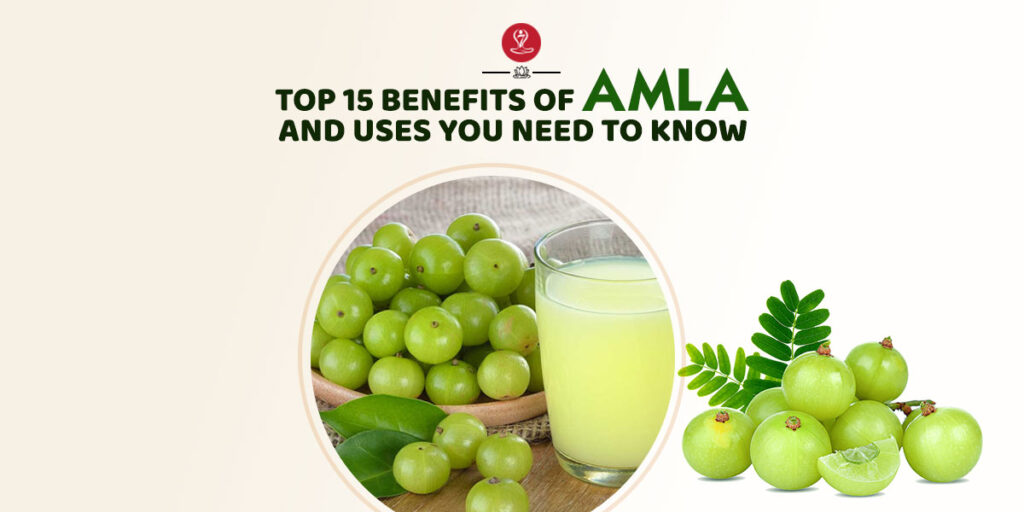
Amla, also known as Indian Gooseberry, is one of the most powerful and commonly used in Ayurveda. The benefits of Amla make it one of the most valued remedies in Ayurveda.
What is the Indian Gooseberry (Amla)?
The benefits of Amla begin with its rich nutritional profile and long-standing importance in Ayurveda. Indian Gooseberry, or Amla, comes from the Phyllanthus emblica tree, traditionally known as ‘Amalaki’ in Sanskrit. Celebrated for centuries, this superfruit is one of the richest natural sources of Vitamin C and is widely used to support overall health and treat various ailments.
Indian Gooseberry is a small, round fruit that starts greenish-yellow and becomes slightly yellow when fully ripe. It is packed with essential nutrients such as iron, fiber, protein, carbohydrates, and potent antioxidants, all of which contribute to its powerful health-boosting properties.
Top 15 Health Benefits of Amla (Indian Gooseberry)
Regulates Blood Sugar Levels
A major benefit of Indian Gooseberry is its ability to balance high blood sugar levels. Rich in chromium, it helps regulate carbohydrate metabolism and supports healthy insulin function. Eating raw amla twice daily is especially beneficial for maintaining stable sugar levels.
Boosts Metabolism
Indian Gooseberry has an alkaline nature that boosts metabolic activity. It helps improve sluggish digestion caused by unhealthy eating habits, such as junk and fast food.
Relieves Sore Throat
Amla has natural anti-inflammatory properties that help reduce throat pain, dryness, swelling, and redness. A paste of amla powder mixed with honey and turmeric acts as an effective home remedy for sore throat relief.
Purifies the Blood
Indian Gooseberry acts as a natural blood purifier. It helps flush out toxins and reduces excess heat in the blood. Drinking amla juice regularly can be beneficial, especially when symptoms of blood infection or impurities appear.
May Help Prevent Cancer
Research suggests that Indian Gooseberry has anticancer properties due to its extremely high antioxidant content. These antioxidants may help fight harmful free radicals and slow the growth of cancer cells.
Reduces Hair Fall
Massaging the scalp with Indian Gooseberry oil helps treat dryness, itchiness, and dandruff. You can also mix amla powder with henna to promote hair growth. Rinsing hair with boiled amla water makes hair soft, shiny, and strong.
Supports Detoxification
Amla is rich in antioxidants that help remove toxins from the body. Consuming amla on an empty stomach is an excellent natural detox method. Indian Gooseberry is also a key ingredient in Triphala, one of Ayurveda’s most powerful detox remedies.
Improves Digestion
According to Ayurveda, Amla boosts Agni—the digestive fire—thereby improving digestion and nutrient absorption. It helps soothe acidity and supports a healthy gut.
Enhances Eyesight
Due to constant screen exposure, eyesight issues have become common. Amla, being rich in vitamin C and antioxidants, supports eye health and may help improve vision.
Promotes Healthy Skin
Indian Gooseberry purifies the blood and supports cell regeneration, giving clearer, brighter skin. You can consume it raw, dried, pickled, or as murabba. Applying amla powder paste on the face helps reduce dullness and rejuvenates the skin.
Strengthens Bones
Indian Gooseberry contains calcium and other essential nutrients that contribute to strong, healthy bones. Regular consumption supports bone density and reduces the risk of age-related bone weakness.
Reduces Pigmentation
Indian Gooseberry juice helps lighten dark spots and reduce pigmentation over time due to its vitamin C content and skin-brightening properties.
Helps Prevent Jaundice
Indian Gooseberry supports liver health by removing toxins from the body. Drinking a glass of amla juice daily helps strengthen the liver and may help in preventing jaundice.
Relieves Constipation
Indian Gooseberry is rich in natural fiber, which helps regulate bowel movements and relieve constipation. Consuming it daily improves overall digestive health.
Supports Weight Loss
Indian Gooseberry juice helps boost metabolism and reduce fat accumulation. It also promotes detoxification, which supports natural weight loss efforts.
How To Eat Amla Fruit?
Amla Murabba
Always use fully ripe Indian Gooseberry to prepare murabba, as raw amla tastes quite bitter. However, consume it in moderation because excessive intake may increase acidity. Having 1–2 pieces of murabba daily can help relieve constipation, improve digestion, strengthen the immune system, and reduce inflammation in various organs.
Indian Gooseberry Juice
One of the simplest ways to enjoy amla is by drinking its juice. Regular consumption of fresh juice may help lower cholesterol levels and support overall heart health.
Amla Powder
You can find organic amla powder in the market. Mix it with water, honey, or yogurt to make a simple hair or face mask.
Amla Oil
Indian Gooseberry oil helps make your hair stronger, prevents early greying, and reduces hair fall. You can also learn to make amla oil at home.
Fresh Amla
Fresh Indian Gooseberry is available during the season in Indian stores. You can eat it raw with a little salt and spices, or add a teaspoon of honey to balance its sour taste.
Ayurvedic Uses and Classical Formulations of Amla
In Ayurveda, Indian Gooseberry is valued for its ability to balance Vata, Pitta, and Kapha. It has a naturally cooling effect and helps nourish and renew body tissues.
Some well-known Ayurvedic products made with amla include:
- Triphala: A mix of amla, haritaki, and bibhitaki. It is commonly used for cleansing the digestive system and improving gut health.
- Chyawanprash: A thick herbal jam made with amla, ghee, honey, and various spices. It is widely used to boost immunity, strength, and energy.
- Amla Rasayana: A concentrated amla paste taken to support longevity, slow aging, and promote overall rejuvenation.
- Indian Gooseberry Hair Oil: A traditional oil that nourishes the scalp, strengthens hair roots, and encourages healthy hair growth.
Conclusion
In Ayurveda, Amla is widely used to improve weak eyesight, support healthy blood sugar levels, ease stomach discomfort, boost digestion, and reduce hair fall. Its rich nutrient profile makes it highly effective for strengthening the sense organs and helping prevent various health issues.
