
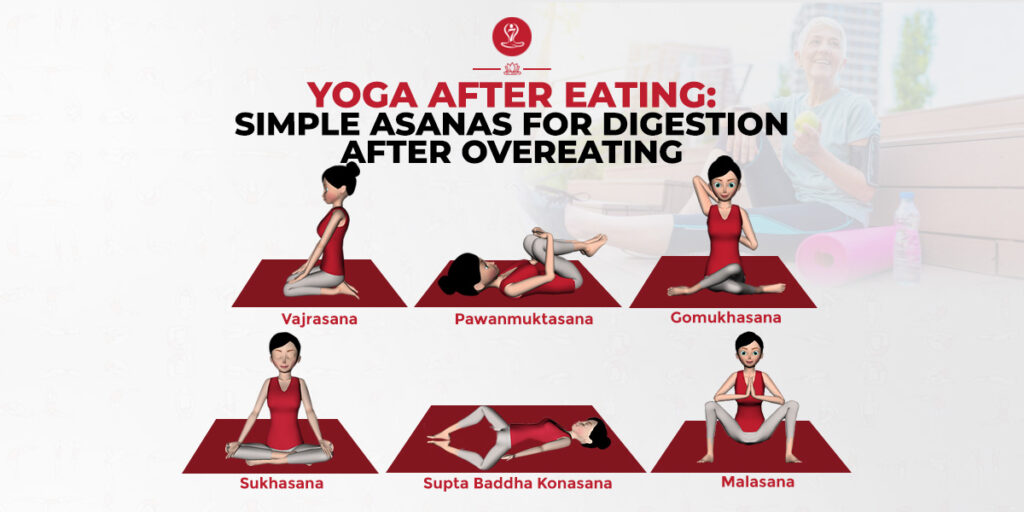
There are many yoga asanas in yoga that you can do after overeating or post-dinner; these sweet yoga poses help to soothe the body, reduce inflammation, and aid digestion.
These yoga poses will not only relieve your stomach problems but also reduce bloating, help with gas, manage constipation, and help you get a good night’s sleep. It also helps treat indigestion, cramps, and the feeling of bloating that you usually experience after eating.
Quick Summary
While doing yoga right after a meal is generally not recommended, practicing specific, simple yoga poses can actually be highly beneficial for your digestive health. These gentle postures help soothe the body, reduce inflammation, fight bloating, relieve gas, manage constipation, and ease indigestion or cramps. They are ideal for post-dinner routines—especially after overeating—and can be comfortably performed one hour after having food to promote a good night’s sleep and increase energy levels.
Table of Contents
Yoga and Digestion
There is a deep connection between yoga and digestion. Regular yoga practice can help activate the digestive system and reduce problems like gas, indigestion, constipation, and bloating. Many yoga asanas gently massage the abdominal organs, which improves blood circulation and supports the digestive process. Furthermore, yoga reduces stress, which is often a major cause of digestive issues. Along with a healthy diet and regular yoga practice, you can improve your digestive health and promote overall well-being.
Yoga After Eating Food Or Overeating
Post-dinner yoga poses do not involve any complicated movements, and the entire routine can be completed within a few minutes.
Vajrasana
Vajrasana is one of the best yoga poses after dinner. This asana mainly focuses on stretching the upper body and abdomen, which also relaxes your breathing and helps with digestion. This asana can be easily done after dinner, as it promotes digestion.
To do this yoga posture, you have to bend both your legs and keep them on your buttocks. And keep the hands on the knees. Keep your back straight and take a deep breath. Just stay in this yoga posture for at least 10-15 minutes.
Pawanmuktasana
Pawanmuktasana, the asana, helps in expelling the waste gas from the digestive system of the stomach, and that is why it is called Wind Releasing Pose in English. This is a very simple asana, very important for good digestion, and should be done daily.
To do this yoga pose, you have to lie on your stomach on the yoga mat. Bend the left knee and take it near the stomach. While exhaling, join both palms together. Keep the fingers of the hand slightly below your knees. Now try to touch your chest with your left knee. Raise your head upwards from the ground. Try to touch the knees to the nose, after staying in this position for 10 to 20 seconds. Exhale slowly.
Gomukhasana
Gomukhasana helps in digestion and can cure your stomach after eating. It helps to flex your spine and abdominal muscles, which eases the digestion process.
First of all, you have to take your left leg and keep your ankle near the left buttock. Then take your right leg and place it on the left leg in such a way that both knees of both legs are touching each other. Use both your hands and place them behind your back so that the right hand meets the left hand. Remember to keep your back straight while doing this. Stay in this yoga pose for at least 30 seconds to 1 minute.
Malasana
If you are feeling bloated and have indigestion, then garland pose can help. This mudra helps in removing the excess food that you have consumed. Malasana is a natural way to fight indigestion.
You can do squats with your feet shoulder-width apart. If your heels are not touching the floor, place a blanket under your heels to maintain proper balance and support your feet in this pose. You can stretch your spine and keep breathing deeply.
Sukhasana
You can digest food by sitting in the position of Sukhasana. After eating, you sit in Sukhasana for 5-10 minutes and then walk after that. By doing this, the energy level in your body will increase. You will feel active in yourself. Sukhasana also cures stomach-related problems.
Sit with the legs spread forward. Bend the right leg. Bend the other leg and form a cross. Straighten the back. Keep the palms on the knees. Repeat the same with the other leg.
Supta Baddha Konasana
The practice of Supta Baddha Konasana Yoga keeps both your mind and body healthy. The muscles of the waist and hips are strong. Supta Baddha Konasana is a very simple yoga asana. You can do this for 30 to 60 seconds. This asana stretches the knee, thighs, and groin area. Performing this yoga after eating helps get rid of the problem of digestive system and spine pain.
Spread a mat or blanket on the ground and lie down on it. Slowly bend the knees and bring them up, and keep the soles of the feet on the ground. After this, bending the legs from the joint of the thighs, take the knees to the outside. In such a situation, the soles of your feet will meet each other, just as the palms are joined while joining hands. Now, keeping the head on the ground, lift the upper part of the neck and spine from the ground. Maintain this yoga posture according to your ability and then gradually come back to the normal state.
Conclusion
Although it is often not recommended to do yoga after meals, some simple yoga poses are known to promote digestion, restore comfort, relieve indigestion problems, give relief to the body, and help deal with constipation. So doing yoga after eating is actually a thing.
FAQ (Frequently Asked Questions)
You can do these specific yogasanas after 1 hour of having food.
Vajrasana focuses primarily on stretching the upper body and abdomen. This action relaxes your breathing and directly promotes the digestion process.
Known as the Wind Releasing Pose in English, Pawanmuktasana is a simple yet vital asana that helps in expelling waste gas from the digestive system of the stomach.
Malasana serves as a natural way to fight indigestion. It helps in removing the discomfort from excess food you have consumed, particularly if you are feeling bloated.
You can practice this simple pose for 30 to 60 seconds. It works to stretch your knee, thighs, and groin area while getting rid of digestive system issues and spine pain.
