
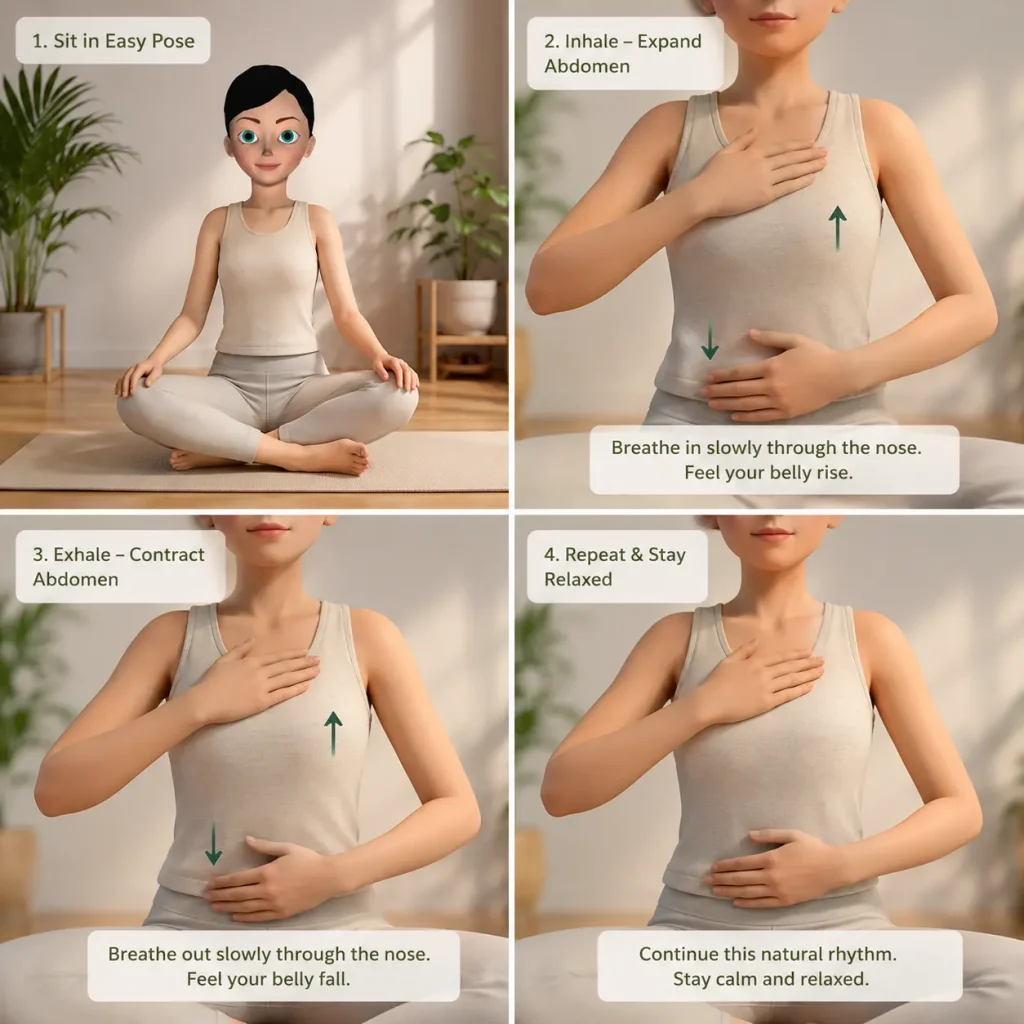
Adham Pranayama, also known as Adham Shwasan or Abdominal Breathing (AKA Belly Breath), is derived from the Sanskrit word Adham, meaning “lower” or “basic,” and Pranayama, meaning “control of breath.”
It is considered the most basic or lowest level of yogic breathing. In this practice, the abdomen and the lower part of the lungs are primarily used while breathing, making the breath deeper and calmer. In yogic science, it is also referred to as diaphragmatic breathing because the diaphragm — the muscle located between the abdomen and chest — plays the main role in the process.
Adham pranayama is believed to help regulate high blood pressure (High BP), reduce the level of the stress hormone cortisol, increase oxygen supply in the body, and relieve insomnia.
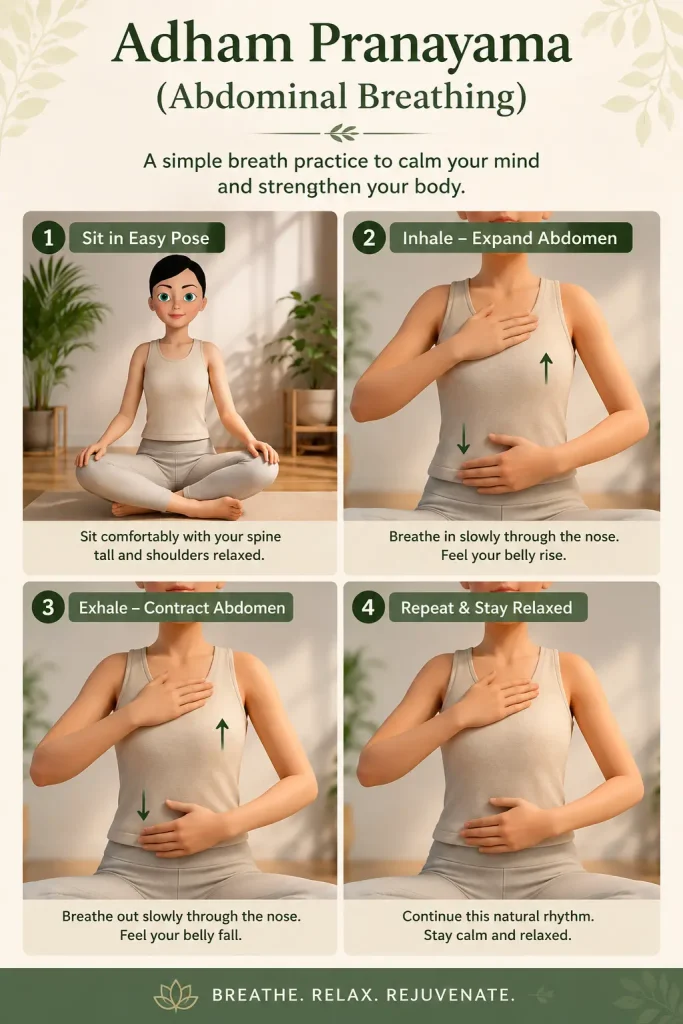
Here are its benefits and the method to practice it:
How to Practice Adham Pranayama: A Step-by-Step Guide
Before starting any breathwork practice or yoga, it is very important first to consult a trusted medical expert. Because every pranayama practice may have certain contraindications (adverse effects) that could create new health problems or worsen existing ones, such a situation would be opposite to the calm, balanced, and energized state we aim to achieve through the practice.
If you have any of the following conditions, it is important to consult a medical expert before practicing:
- Severe asthma
- Recent surgery
- Extremely low or high blood pressure
- Heart disease
- Special conditions during pregnancy
Suitable Environment
Choose a quiet place with minimal noise and distractions. If there are children or pets at home, select a private space where you can focus completely on yourself and your breathing.
Sitting Posture
You may sit in any of the following postures:
- Sukhasana (Easy Pose)
- Padmasana (Lotus Pose)
- Vajrasana (Thunderbolt Pose)
- Sitting on a chair with the spine kept straight
- Sit on a cushion, yoga mat, or folded blanket on the floor
If sitting on the floor feels difficult, you may take support from a wall. While sitting, keep your spine straight but your body relaxed and comfortable.
Initial Relaxation
Before beginning the practice, relax your entire body. Pay special attention to releasing tension from your facial muscles and jaw.
Position of the Hands
Place one hand on your abdomen and the other on your chest. This helps you observe the movement of your breath more clearly.
Breathing Process
- Puraka (Inhalation): Inhale deeply through the nose. Feel the diaphragm moving downward and the abdomen expanding like a balloon.
- Rechaka (Exhalation): Slowly exhale and feel the navel gently moving back toward the spine.
Maintain a Steady Rhythm
Begin with 5 minutes of practice. Gradually increase the duration to 10–15 minutes as you become more comfortable.
Safety Precautions & Contraindications
Important: While Belly Breathing is generally safe, consult a doctor if you have severe asthma, heart disease, recent abdominal surgery, or are in the late stages of pregnancy.
Common Mistakes to Avoid
| Mistake | Correction |
| Chest Breathing | Focus on moving the diaphragm down, not the shoulders up. |
| Hyperventilation | Keep the breath slow and rhythmic, not fast. |
| Facial Tension | Relax your jaw and brow; the breath should be effortless. |
Benefits of Adham Pranayama
Deep breathing allows more oxygen to reach the lungs, improves circulation, and helps remove stale air trapped in the lower parts of the lungs, making the body feel more energized and refreshed.
Although the evidence is moderate, this pranayama is believed to activate the parasympathetic nervous system, helping the body enter a relaxed state.
It calms the mind and may help reduce problems related to insomnia and disturbed sleep.
Conclusion
Adham Pranayama is a simple yet highly effective yogic breathing technique. It teaches us how to breathe correctly and helps create balance between the body, mind, and emotions. With regular and proper practice, a person may feel calmer, more stable, and more energized.
Frequently Asked Questions (FAQ)
Start with 5 minutes daily. As you become more comfortable, you can extend the practice to 10–15 minutes for deeper benefits.
Early morning on an empty stomach is ideal, but it can be practiced anytime you feel stressed or before bed to improve sleep quality.
AI Disclosure: At 7pranayama, we occasionally use AI tools to help structure our content and improve readability. However, the core expertise, final review, and “human touch” come from our certified instructors. Our goal is to provide you with the most up-to-date, high-quality wellness information possible.
