
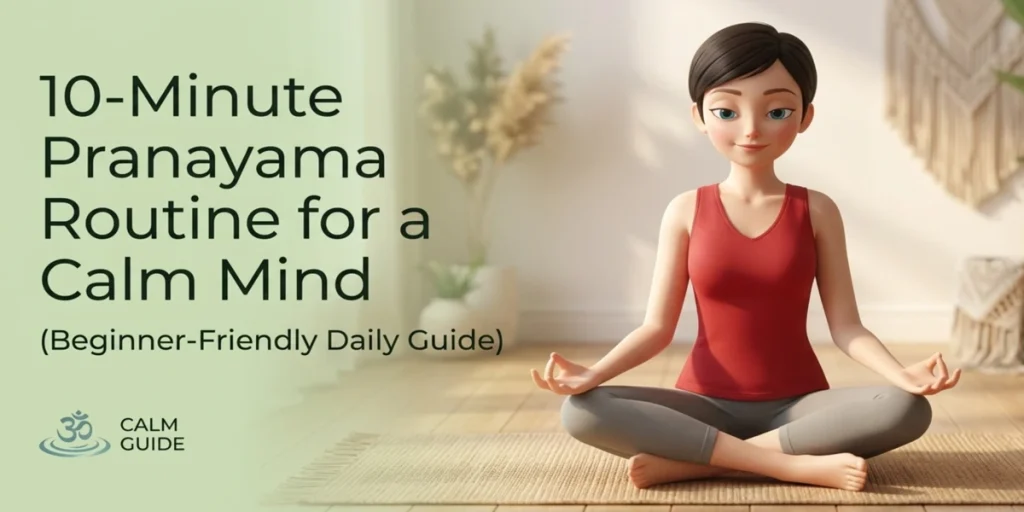
A simple 10-minute pranayama routine can calm your mind, reduce stress, and improve focus. By practicing breathing techniques like Anulom Vilom, Bhramari, and Ujjayi daily, you create mental clarity, emotional balance, and a more peaceful start to your day.
Why a 10-Minute Pranayama Routine Is Enough
Many people assume yoga breathing requires long sessions. In reality, consistency matters more than duration.
From practical experience, even a short daily routine:
- Slows down mental chatter
- Improves breathing awareness
- Helps regulate stress naturally
On busy days, these ten minutes often become the most grounding part of the entire day.
How to Prepare for Pranayama (1 Minute Setup)
Before starting:
- Sit comfortably on a mat, cushion, or chair
- Keep your spine upright but relaxed
- Rest your hands on your knees
- Close your eyes gently
- Take a few natural breaths
This simple preparation signals your body to shift into a calm state.
Daily 10-Minute Pranayama Routine (Step-by-Step)
Step 1: Deep Breathing (2 Minutes)
Begin with slow nasal breathing.
- Inhale deeply, expanding your chest and abdomen
- Exhale slowly without force
- Keep your breathing smooth and natural
Benefit: Prepares your lungs and calms the nervous system.
Step 2: Anulom Vilom (Alternate Nostril Breathing) – 4 Minutes
- Close your right nostril with your thumb
- Inhale through the left nostril
- Close the left nostril with your ring finger
- Exhale through the right
- Continue alternating in a steady rhythm
Benefit: Balances energy, improves focus, and stabilizes breathing patterns.
Step 3: Bhramari Pranayama (Humming Breath) – 2 Minutes
- Inhale slowly through your nose
- Exhale while making a gentle humming sound
The vibration naturally draws your attention inward.
Benefit: Reduces anxiety and creates a deep sense of calm.
Step 4: Ujjayi Breathing (Ocean Breath) – 1 Minute
- Inhale slowly through your nose
- Slightly constrict your throat while exhaling
- Create a soft, whisper-like sound
Keep the rhythm steady and relaxed.
Benefit: Enhances focus and helps maintain mindfulness
Step 5: Stillness & Awareness (1 Minute)
Sit quietly and observe your breath.
- No control
- No effort
- Just awareness
Benefit: Allows your mind and body to absorb the effects of the practice.
Best Time to Practice Pranayama
- Morning: Ideal for a fresh and calm start
- Evening: Helps release stress after a long day
The most important factor is consistency — choose a time you can follow daily.
Real-Life Insight (Why This Works)
In daily practice, even on restless mornings, just a few minutes of controlled breathing creates a noticeable shift. The mind becomes quieter, reactions become softer, and focus improves naturally without effort.
This is the real power of pranayama — simple, but deeply effective.
Common Mistakes to Avoid
- Forcing the breath
- Sitting in a tense posture
- Practicing immediately after a heavy meal
- Expecting instant results
Progress comes with relaxed, consistent practice.
Benefits of Daily Pranayama
With regular practice, you may notice:
- Reduced stress and anxiety
- Better focus and clarity
- Improved breathing capacity
- Emotional balance
- Better sleep quality
Final Thought
A calm mind doesn’t require hours of effort — just a few mindful minutes each day. Start with this 10-minute pranayama routine and let consistency do the rest.
FAQs
Yes, all breathing techniques are simple and beginner-friendly.
Many people feel calmer from the first session, but deeper benefits come with daily practice.
Yes, pranayama is effective both in the morning and evening.
