
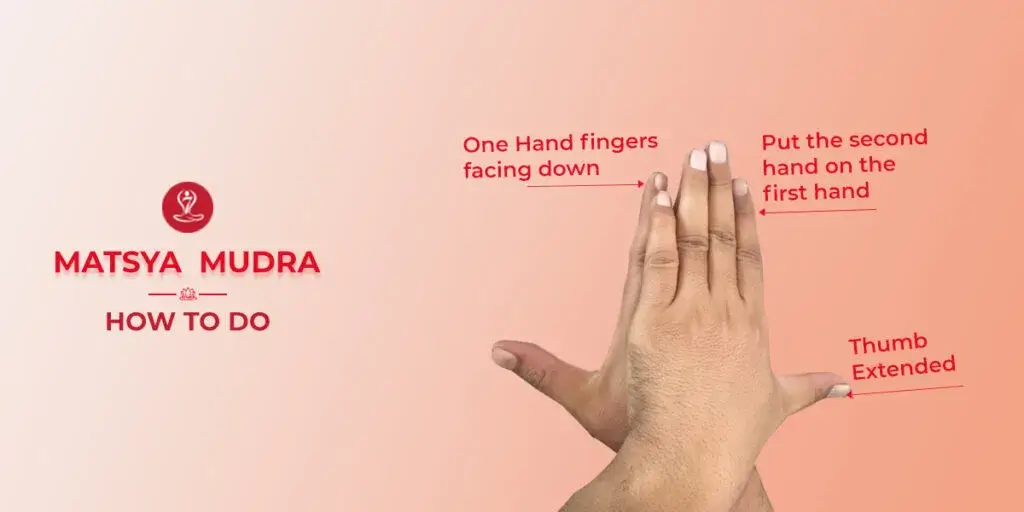
Matsya mudra is the best yoga mudras which are popular and well-known from ancient times in India. this mudra also symbolizes particular energy or quality by the different forms of a yoga mudra.
Matsya is the Sanskrit word for “fish” and mudra stands for a gesture of the hand. As the name suggests it known as “Gesture Of The Fish” in English.
According to Hindu, Jain, and Buddhist iconography, this gesture is used to symbolizing the fish (fearlessly floating in the ocean of samsara). The Matsya Avatara of Lord Vishnu is also known by this gesture.
Matsya mudra is popularly used in Bharatanatyam dances and reading the asana-mantra or rituals.
Steps to do Matsya Mudra (Gesture Of The Fish)
Here are the steps to perform Matsya Mudra:
Sit in a comfortable position: Find a quiet and peaceful place to sit. You can sit on the floor with your legs crossed or in any other comfortable seated position. Make sure your spine is straight and your shoulders are relaxed.
Relax your hands: Rest your hands on your knees or thighs with palms facing downwards. Take a few deep breaths to relax your body and mind.
Form the mudra with your hands:
- Bring your hands together in front of your chest.
- Interlock your fingers, but keep your thumbs free.
- Extend your thumbs and cross them over each other. The thumb of your right hand should be above the thumb of your left hand.
- Press the thumbs together gently, creating a slight arch shape resembling a fish.
Maintain the mudra: Hold the Matsya Mudra position with both hands for a few breaths or as long as it feels comfortable for you.
Focus on your breath: While holding the Mudra, focus on your breath. Take slow, deep breaths, inhaling and exhaling through your nose.
Release the mudra: To release the Matsya Mudra, gently bring your hands back to your knees or thighs and relax them.
Repeat: You can repeat the Matsya Mudra as many times as you like throughout your yoga or meditation practice.
Time and duration of practice
Mudra can be practiced standing, sitting or even lying on the bed. You can chant the mantra in your mind or change the words. There is no specific time period for this mudra. Of course, all the mudras are very effective when you do the mudras between 4-6 am in the morning. For the best, optimal and efficient results, make sure you practice regularly for two months.
Benefits Of Matsya Mudra (Gesture Of The Fish)
- Matsya Mudra is a wonderfully applicable mudra, provides energy and makes us fit.
- It has a profound effect on our body, soul, and mind, it keeps us healthy and also prolongs your age.
- It relaxes the muscles as well as an overcharged endocrine gland.
- When Matsya Mudra practiced regularly, it will increase memory power and sharpens the brain.
- Gesture of the fish increases immunity, calms the body and mind and relieves stress.
Side Effects
However, all mudras are beneficial to us without any side-effects, pressure should not be applied on the finger. Pressure means, your mind is restless and not stable.
Conclusion
Matsya Mudra, or the Gesture of the Fish, is a yoga mudra that symbolizes the fish and its movement in water. It is believed to have several benefits including stimulating the throat chakra and improving respiratory health.
FAQ
Matsya Mudra, also known as the Gesture of the Fish, is a traditional yoga hand gesture practiced during meditation and spiritual exercises. It symbolizes balance, adaptability, and inner calm. Many practitioners use it to enhance mindfulness and support mental relaxation.
Sit comfortably in a cross-legged or chair-seated position with your spine straight. Form Matsya Mudra according to the traditional hand position, rest your hands comfortably, close your eyes, and breathe slowly. Practice mindfully without applying excessive pressure to your fingers.
The best time to practice Matsya Mudra is early in the morning when your mind is calm and fresh. It can also be practiced in the evening, before meditation, or whenever you want to relax and improve concentration.
Beginners can start with 10–15 minutes daily and gradually increase the duration to 20–30 minutes as they become more comfortable. Regular daily practice often provides better results than occasional long sessions.
Yes. Matsya Mudra is beginner-friendly and easy to learn. Focus on maintaining the correct hand position, a relaxed posture, and slow, steady breathing for the best experience.
Yes. Matsya Mudra is commonly practiced alongside meditation because it may help calm the mind, improve focus, and create a peaceful mental state. Combining it with deep breathing can enhance your meditation routine.
Matsya Mudra is generally safe for healthy individuals. However, avoid straining your fingers or wrists, and discontinue the practice if you experience pain or discomfort. If you have an injury or a medical condition, consult a qualified healthcare professional or yoga instructor before beginning.
