
Yoga for avascular necrosis promotes blood flow to the joints, increases joint flexibility, and strengthens the joints against injury – this provides nutrients for the bone to heal and reduces pain.
Yoga is often recommended as part of an initial treatment plan to heal bone or permanently increase blood flow to joints, or delay surgery.
Quick Summary
Yoga for Avascular Necrosis (or osteonecrosis) serves as an initial treatment plan to temporarily increase blood flow to joints, relieve massive pain, and delay the need for surgery. Avascular necrosis is a degenerative bone condition caused by a blocked or reduced blood supply to bone tissues, most commonly affecting the hip joint. Incorporating careful, targeted postures—such as Viparita Karani, Setu Bandhasana, and Bhujangasana—promotes strength, balance, and flexibility without placing dangerous stretching pressure on the joints. Because further movement can damage the bones, practicing under caution can help delay surgical repair and safely prevent osteoporosis-related fractures.
Table of Contents
- What is Avascular Necrosis?
- Poses of Yoga For Avascular Necrosis
- Conclusion
- Frequently Asked Questions (FAQ)
What is Avascular Necrosis?
Avascular necrosis or osteonecrosis is a bone condition in which the blood supply to the bones is temporarily or permanently blocked or reduced, leading to the death of bone tissue. This process eventually causes the degeneration of the affected bone. This can happen for several reasons, including joint or bone injuries, pancreatitis, diabetes, Gaucher’s disease, HIV/AIDS, systemic lupus erythematosus, and sickle-cell anemia, and excessive alcohol consumption. However, avascular necrosis does not necessarily affect the bones around the waist. It can affect the hips, knees, shoulders, and ankles, but most commonly occurs in the hip joint.
Poses of Yoga For Avascular Necrosis
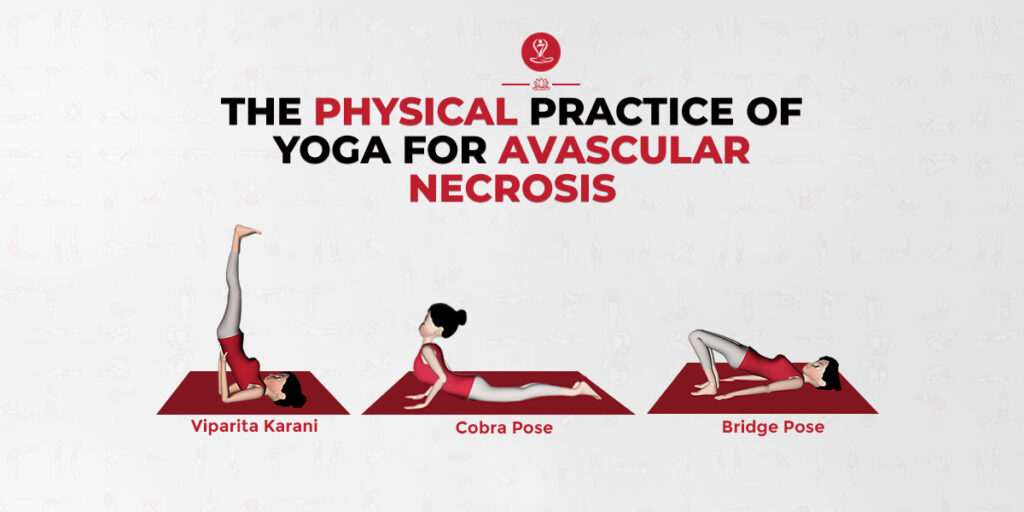
The physical practice of yoga for osteonecrosis promotes the flow of blood to the joint and also promotes strength, balance, and flexibility their.
Viparita Karani – Legs-up-the-Wall Pose
For Viparita Karani, spread a mat on the ground and lie down on your back. Now keep both feet and hands straight on the ground. Slowly raise both legs upwards. Keep in mind that 70% of your waist should be upwards while raising the legs. While doing this asana, both your hands will remain on the lower part of the waist, which makes it easy to balance the body. While doing the asana, do not force yourself to stay in this pose for as long as you can, according to your ability.
This pose invigorates the whole body and regulates the activity of the glands, thereby reducing stress and apathy. Relaxes the bones and improves blood supply to these areas.
Setu Bandhasana – Bridge Pose
For the Bridge pose, you will lie down on your back, keeping your hands by your side. Now the distance between the knees will be equal to the shoulder. Keep the heels on the ground, and bring them close to the buttocks. Now, while inhaling, raise the back above the ground. Try to lift the back completely upwards. Head will let you stay on the ground. The longer you stay, the more normal your breathing will become.
This classic posture helps to encourage bone alignment and promotes good hip posture.
Bhujangasana – Cobra Pose
Lie down on your stomach on the mat, keeping your feet close together. Keep the feet fully stretched and the direction of the soles should be upwards. Now, keeping both your hands equal to the shoulders, keep the palms on the ground. Lift the front part of the body upwards by giving weight on your palms. Raise the front part of the body and the head so that the shape of a bow is formed. The eyes should be straight and there should be full emphasis on the hands. In this way, you must do this action 4 to 5 times.
Bhujangasana increases body temperature as well as improves blood circulation in the body. Thereby reducing the amount of stress and weight on the affected bones will provide relief from a massive amount of pain.
Stretching and movement can further damage the bones, so the joints of the bones should not be put under pressure. Many yoga postures require you to stretch your hip joint. So, without ensuring you, do not do any type of yoga asanas. Before practicing yoga asana must consult your doctor to practise.
Conclusion
Yoga for AVN, hip joint pain & osteonecrosis builds strength and transforms your body. Yoga includes better posture, improved balance, enhanced coordination, reduce the risk of falling, higher strength, and better gait that is a safe and effective means of preventing osteoporosis-related fracture.
Frequently Asked Questions (FAQ)
Vascular necrosis (or osteonecrosis) is a bone condition where the blood supply to the bones is temporarily or permanently blocked or reduced. This causes the death of bone tissue and eventually leads to degeneration. It can happen due to joint or bone injuries, pancreatitis, diabetes, Gaucher’s disease, HIV/AIDS, systemic lupus erythematosus, sickle-cell anemia, and excessive alcohol consumption.
No. For most individuals, practicing yoga for osteonecrosis will only delay the need for surgery and temporarily relieve pain. Surgery is usually required to completely repair the bone.
While raising the legs so that 70% of your waist is upwards, keeping both of your hands on the lower part of the waist makes it easy to balance the body safely.
You must lift the front part of the body and the head into a bow shape and repeat this action 4 to 5 times to increase body temperature and improve blood circulation.
Stretching and movement can further damage the bones, so the joints should not be put under pressure. You must not do any type of yoga asanas that require stretching the hip joint without ensuring your safety and consulting your doctor first.
