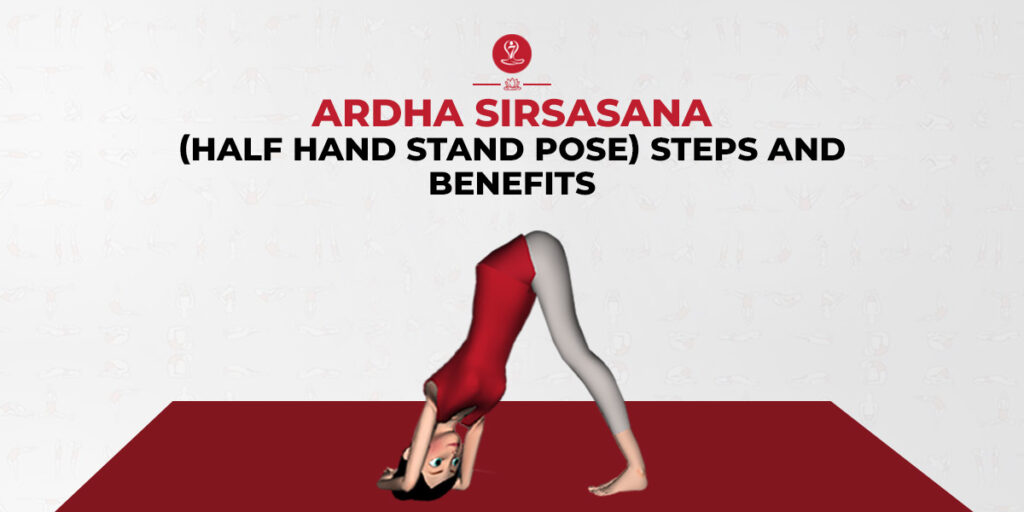
Ardha Sirsasana On Forearms is the preliminary practice and a basic inverted yoga posture that serves as a preparatory pose for the full version of Sirsasana.
In other cases, there is a flow-through Ardha Sirsasana on the forearm – alternatively, another flow, which requires more strength and power. As an inversion, Half Headstand Pose has a range of physical benefits, including opening the Sahasrara (crown) chakra, gaining more confidence about their bodies, and boosting energy, thereby reducing anxiety, fatigue, and stress as well as s create inner peace.
Ardha Sirsasana Basics
| Sanskrit Pronunciation | Ardha Sirsasana |
| Meaning | ‘Ardha’ resembling ‘half’, ‘Sirsa‘ means head, asana means posture |
| Pose Type | Inversion, Forward-Bend |
| Pose Level | Intermediate Level |
| Style of yoga | Hatha Yoga |
| Other Names | Half Headstand Pose On Forearms |
| Stretches | Arms, shoulders, hamstrings, calves, and arches |
| Strengthening | Arms and legs |
| Duration | 30 second to 3 minutes |
Meaning
‘Ardha Sirsasana’ is also made up of a combination of three words – ‘Ardha, Sirsa, and asana’, ie ‘Ardha’ resembling ‘half’, ‘Sirsa‘ means head, And asana stands for posture. Hence it is called ‘Ardha Sirsasana’ and ‘half headstand pose in English.
Practice Guide For Ardha Sirsasana
The practice guide to perform Ardha Sirsasana serves as a valuable resource for yoga enthusiasts seeking to advance their practice, offering a structured and detailed approach to mastering this asana.
Preparatory Poses
The following poses to build a sequence leading up to this pose:
- Adho Mukha Svanasana ( Downward-facing Dog Pose)
- Marjariasana (Cat Stretch)
- Dolphin Pose (Ardha Pincha Mayurasana)
Steps To Do Ardha Sirsasana – Half Handstand Pose
- Start by kneeling on your mat. Place your forearms on the ground, elbows shoulder-width apart, and parallel to each other. Your palms should be facing down. Interlace your fingers, creating a stable base for your head.
- Place the crown of your head on the mat, ensuring that the back of your head is cradled in your hands. Your head should be firmly rooted, with minimal pressure on your neck.
- Lift your hips upward, straightening your legs and coming onto the balls of your feet. Walk your feet closer to your elbows, bringing your body into an inverted “V” shape.
- Activate your core muscles by drawing your belly button towards your spine. This will help stabilize your body in the pose.
- Slowly lift one leg off the ground, extending it upward towards the ceiling. Keep the lifted leg active and engaged, with toes pointed.
- Find your balance in this position, distributing your weight evenly between your forearms and head. Engage your core and leg muscles to help maintain stability.
- Hold the pose for a few breaths, focusing on maintaining your balance and alignment. Start with shorter holds and gradually increase the duration as you build strength and confidence.
- To come out of the pose, slowly lower the lifted leg back down to the ground. Lower your knees to the mat and rest in Child’s Pose (Balasana) or any other resting pose of your choice.
Benefits
- This inversion yoga pose with the forwarding bend pose helps stretch the muscles of the back, lengthening the spine and with time helps keep the back strong and yet supple.
- Ardha Sirsasana can obviously help bring balance to the body. With time and practice, this exercise is done in preparation for the full top stand. Though holding this mudra for a long time may be difficult, holding it for a long period brings all the chakras in balance.
- When you practice Ardha Shirshasan upside down on the ground, the blood flow to the brain increases, due to which the brain functions are better and concentration increases.
- Along with the benefits for the heart, Ardha Sirsasana on the Forearms also always bring benefits for the respiratory system, lungs, and throat.
- It strengthens the muscles of the nape and neck as well as relaxes the back muscles.
- It is also a good exercise to relieve tension headaches, mild depression, insomnia, and sciatica.
Precautions
Avoid this posture when suffering from:
- headache
- migraine
- recent or chronic neck and spinal injury
- neck pain
- wrist pain
- glaucoma
- and diarrhea
- after food with a full stomach
Conclusion
Ardha Sirsasana also known as the Half Handstand On Forearms is a preparatory pose for the full version of Sirsasana that is frequently practiced in the forwarding bend pose. In this, the body forms a partial “V” shape. Its practice can help in achieving a high level of strength and flexibility in the body.
It has very benefits including strengthening the core, strengthening the lower back, calming the mind, improving digestion, and boosting energy, also reducing anxiety, fatigue, and stress and energizing.
