
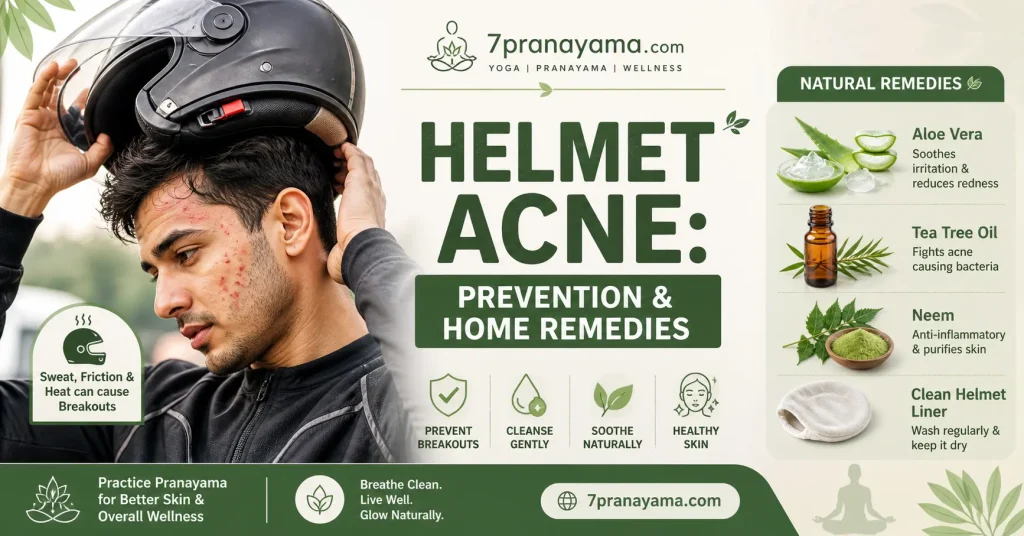
If you are a cricketer, cyclist, or motorcyclist, you likely struggle with “Acne Mechanica”—commonly known as Helmet Acne. This occurs when heat, sweat, and constant friction from your helmet straps or padding clog your pores and irritate the skin.
Why Does Helmet Acne Happen?
When you are on the field or riding your helmet traps sweat against your forehead and jawline. This “micro-environment” is a breeding ground for bacteria. The constant rubbing (friction) of the helmet padding pushes dirt and oil deeper into your follicles, leading to painful breakouts.
Effective Home Remedies for Relief
1. Neem Water Rinse (Natural Antibacterial)
Neem is one of India’s most powerful traditional remedies for skin infections and acne.
- The Remedy: Boil a handful of fresh neem leaves in water until the water turns green. Let it cool and store it in a spray bottle.
- How to use: After removing your helmet, wash your face with this water. It kills the bacteria trapped by the helmet sweat.
2. Apple Cider Vinegar (ACV) Toner
Sweat can disrupt the pH balance of your skin, making it more oily.
- The Remedy: Mix 1 part raw ACV with 3 parts filtered water.
- How to use: Dab this on your forehead and jawline with a cotton ball after your post-match shower. It acts as an astringent to shrink pores and balance the skin’s pH.
3. Tea Tree Oil Spot Treatment
Tea tree oil is a potent anti-inflammatory that works similarly to the “numbing” relief mentioned in your toothache guide, but for skin inflammation.
- The Remedy: Mix 2 drops of tea tree oil with a carrier oil (like coconut or jojoba).
- How to use: Apply directly to the helmet acne spots at night to reduce swelling and redness by morning.
Prevention Tips for Cricketers or rider
- The Bandana Barrier: Always wear a thin, breathable cotton bandana or “skull cap” under your helmet. This absorbs the sweat before it reaches the helmet padding and provides a soft barrier against friction.
- Disinfect Your Gear: Most players forget to clean the helmet itself! Use a mixture of water and tea tree oil to wipe down the internal padding and chin straps once a week.
- Immediate Rinse: Never let sweat dry on your face. Even if you don’t have face wash, a quick splash of plain water immediately after taking off the helmet can prevent 50% of breakouts.
Dietary Support for Clear Skin
Just as your Jaundice guide emphasizes a clean diet, clearing acne requires internal care:
- Stay Hydrated: Drink plenty of water to flush out toxins.
- Limit Sugar: High-sugar energy drinks can spike insulin, which triggers more oil production in your skin.
Summary Note: Helmet acne is a sign of skin irritation. If the spots become very painful, yellow, or start oozing, it may be a bacterial infection that requires a medicated ointment.
Potential Side Effects of Home Remedies
While natural remedies are generally safe, everyone’s skin reacts differently. Keep the following in mind:
- Apple Cider Vinegar (ACV): If not diluted properly, the acidity can cause redness or a stinging sensation, especially on sensitive skin. Always stick to the 1:3 ratio (1 part ACV to 3 parts water).
- Tea Tree Oil: This is very potent. Applying it “neat” (undiluted) can cause skin peeling or dryness. Always use a carrier oil like coconut or jojoba oil.
- Neem Water: While rare, some people may have a mild allergic reaction to neem. It is always best to do a small patch test on your inner arm first.
- Over-Cleansing: Over-washing your face can strip natural oils, leading the skin to produce even more oil to compensate. Stick to washing twice a day or once immediately after your match.
Conclusion
Helmet acne doesn’t have to be a permanent part of your game. By maintaining strict gear hygiene and using natural cooling agents like Neem and Sandalwood, you can keep your skin clear and stay focused on your performance. Remember, the key is to treat your skin immediately after the match to prevent sweat and bacteria from settling into your pores.
Frequently Asked Questions (FAQs)
dry towel only removes surface sweat; it doesn’t clear the bacteria pushed deep into your pores by the helmet’s pressure. Use a wet wipe or a splash of plain water at the very least.
If you are playing daily in high heat, you should wipe the pads down with a disinfectant (like a water-vinegar mix) after every game. If the pads are removable, wash them with mild soap once a week.
Not necessarily. Acne Mechanica is caused by the combination of friction and dirty skin. If you use a clean bandana as a barrier and wash your face immediately after play, you can prevent breakouts entirely.
Final Note: If your helmet acne begins to look like deep, painful cysts or if the area becomes hot to the touch, consult a dermatologist. Persistent infections may require professional treatment to avoid permanent scarring.
