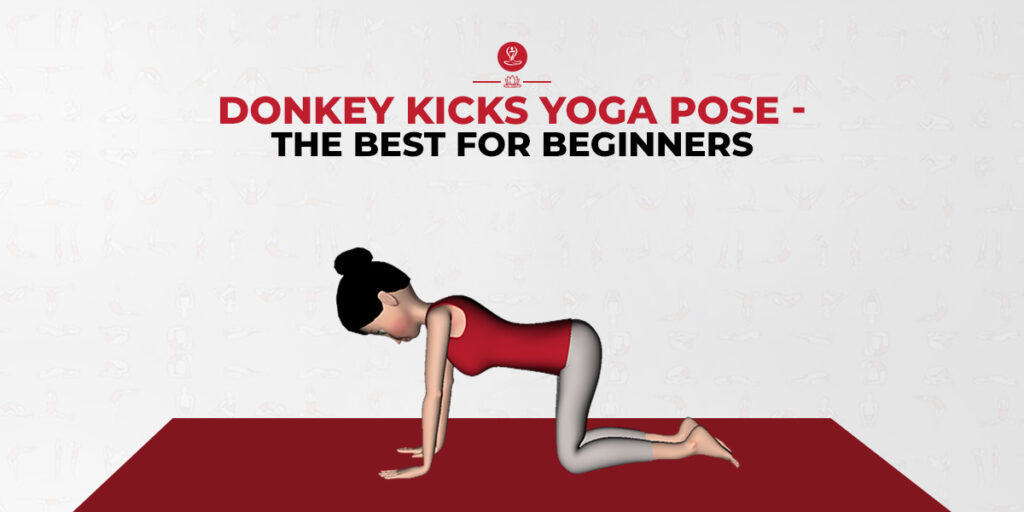
The traditional execution of the Donkey kicks exercise is the best for beginners.
This move targets and tightens your rear, an exercise that many other compound exercises can’t do, resembling the infamous kick of the beast.
Donkey Kicks Yoga Basics
| Pose Name | Donkey Kicks Yoga |
| Meaning | – |
| Pose Type | Strength, Stretch |
| Pose Level | Beginner Level |
| Style of yoga | Morden yoga |
| Other Names | Donkey Kick Pose |
| Stretches | The legs, |
| Strengthening | The gluteus maximus |
| Duration | 30 second to 3 minutes |
In the series of Yoga Poses – Donkey Kick Yoga Pose is a beginner level kneeling yoga pose – a variation of Table Top Pose (Bharamanasana). Table pose transformed into donkey pose to strengthen Kid’s yoga activity!
This active yoga movement strengthens kids’ arms and legs, targets the gluteus maximus (buttocks) and hip flexors, and helps open the hips. In this movement, children practice kicks in a dynamic manner while extending their hips.
Some of our favorite activities, including kicking ass, can be accomplished without equipment. There are many different variations of this exercise that may be especially appealing to children, and when incorporated into a kids’ yoga sequence, it can be practiced gently in a fun and creative way – because They imitate the movements of animals.
However, there are plenty of exercises you can do at the gym that target the back. But the donkey kick exercise is more efficient, easier and effective for strengthening your gluteus maximus. Gluteus Maximus – is the heaviest and largest glute muscle. Also known as a core muscle-engaging exercise, commonly seen as part of a gym workout, it can be modified for all fitness levels.
Donkey Kicks Benefits
Some donkey kick benefits that you get by regular practice:
Traditional donkey kicks improve your muscle strength and endurance. These target the gluteus maximus — the largest of your three glutes muscles, and the bulk of your booty. Its included.
- Glutes
- Hamstrings
- Core
- Lower Back
If your IT band or hip flexors are too tight, and you want to increase your stamina as well as strength at hip level, you can try donkey kicks with resistance bands.
Donkey kicks are great for both stability and toning of your core and shoulders, and keeps your body in correct posture.
Variations of the donkey kick help extend your hip to the opposite side and will help prevent hip and spine injuries. Kicking a donkey on the ground burns calories faster because there is no weight involved.
Donkey leg kick is one of those exercises that releases ‘feel-good’ hormones in your body and also has a positive effect on your mood.
The Donkey Kick Workout is an exercise that can relax your body without actually doing it. Like other donkey kick exercise benefits, it can be adjusted as needed.
Other donkey kick exercise benefits:
- Tighten and tone the glutes and core, hamstrings, shoulders, and back
- Improving your overall fitness level
- Opening up the hips
- Improving posture & proper alignment
- Strengthening your upper body.
How To Do Donkey Kick Exercises
The traditional sample donkey kick is best for beginners and does not require any equipment. The magnus maximus, magnus medius muscles are at work here.
Start in starting position on all fours or tabletop pose: feet shoulder-width apart, hands directly beneath your arch, neck and back to the sides or overhead.
Keeping your leg strong, begin to lift your right leg up, slowly straightening your leg back and up toward the ceiling. Zoom straight towards the ceiling and use your glasses to take a look at the top. Make sure your main base starts right before the arch of your back.
Witch take the foot down and go to the destination in the starting position. Complete 4-5 sets for 15-20 reps on each leg.
Complete 4-5 sets, 15-20 reps for each leg, then switch legs.
Conclusion
With correct traditional execution, the donkey kick is a highly effective isolation exercise for your glutes, core, and shoulders.
This exercise is especially beneficial for both stability and toning and targets your gluteus maximus—the largest of your three glute muscles, and the bulk of your booty.
