
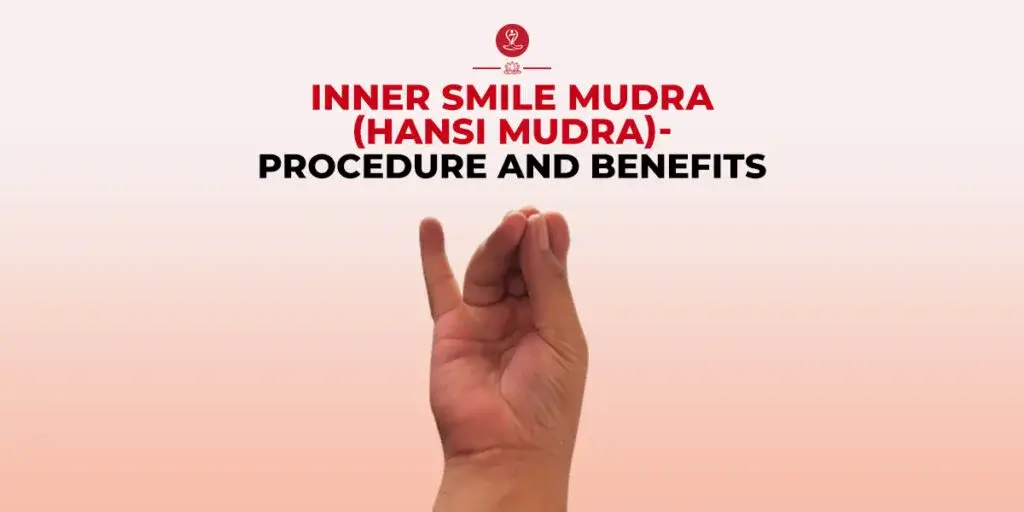
Hansi Mudra (Inner Smile Mudra) is a hand gesture from a feeling of fulfillment to happiness and contentment. This traditional practice of yogic hand gesture is also known as Udana Vayu Mudra because it focuses on balancing the Udana Vayu in the body.
The Inner Smile Mudra, along with many breathing techniques (pranyama) such as Nadi Shodhana, Ujjayi, and Kapalbhati, is widely renowned for its extraordinary health benefits for the mind and body.
As the name suggests Inner Smile means to be “happy and content” which signifies the state of Optimum Health and Happiness. Practicing Inner Smile mudra as part of regular practice will help you achieve greater mental clarity and focus.
This Yogic hand gesture can be practiced for 5 minutes to 40 minutes individually at any time of the day, or as a part of your yoga workout session.
Hansi Mudra is one of the hand gestures in yoga that is one of five types of Pancha Vayu – circulates throughout the body, and encourages the upward movement of the prana, and create the flow of prana energy mainly in the throat area. It activates the brain with positive thoughts and feelings with the flow of prana energy, leading to deep happiness and contentment.
This articel share everything important about the hansi mudra.
How to Do Hansi Mudra?
Before we get into the hansi mudra benefits, we need to expand on steps of hasta mudras are in order for you to understand this mudra better.
- Spread a yoga mat on an empty space that’s quiet and comfortable enough to practice mudra. There you can sit or meditate for several minutes without any distractions.
- Choose a comfortable sitting posture such as Sukhasana, Psdmasana , and Vajrasana. And all you have to do head facing forward and your hands on your laps.
- Start breathing in and out as a warm up for meditation. This will help you settle your mind.
- Now being your palms are facing the sky while resting on your thighs. And connect all your fingers tip with the tip of the thumb, excluding the little finger.
- While holding this pose, keep all your attention on the pose and you can tighten your grip of the pose to keep yourself busy.
- Try practicing it for at least 10 to 15 minutes one to three times each day.
- You can also hold this mudra while performing Virabhadrasana or Bridge – Setu Bandhasana.
Benefits
The practice of Hansi mudra are said to have a ton of health benefits in terms of your physical and mental well being.
- Hansi mudra main goals is balancing the udana vayu.
- Hansi mudra is closely connected with the throat chakra, an energy center that is located in the throat area.
- Brings prosperity and happiness in a person’s life.
- Hansi mudra encourages for the smooth flow of prana upwards
- It develops a person’s intelligence.
- Inner Smile Mudra is also said to stimulate the Vishuddha Chakra (Throat Chakra).
- The thyroid gland are also stimulated that regulates the body’s metabolism.
- Practicing the hansi mudra is said to help develop a person’s Intelligence.
Conclusion
Inner Smile Mudra (Hamsi Mudra) otherwise also called as Udana Vayu Mudra is a unique seal that is performed in yoga and meditation in order to helps create the flow of prana energy mainly in the throat area.
Keeping all the benefits in mind to the balance between our astral body and our physical one, practicing Hansi Mudra is a must-try gesture.
FAQ
Inner Smile Mudra, also known as Hansi Mudra, is a yogic hand gesture that promotes emotional balance, inner happiness, and mindfulness. It is often practiced during meditation and pranayama to encourage positive thoughts and reduce stress.
Beginners can practice for 10–15 minutes daily. Experienced practitioners may gradually increase the duration to 20–30 minutes while maintaining slow, relaxed breathing.
The best time is early morning during meditation or pranayama. However, it can also be practiced in the evening or whenever you feel mentally stressed and need emotional relaxation.
Yes. Hansi Mudra is simple, safe, and suitable for beginners. It requires no equipment and can be performed while sitting comfortably with a straight spine.
Absolutely. Practicing Inner Smile Mudra during meditation enhances mindfulness, relaxation, and emotional stability, making your meditation sessions more effective.
There are generally no known side effects when practiced correctly. Avoid forcing your fingers or maintaining uncomfortable postures for long periods. Stop if you experience discomfort.
Yes. Combined with deep breathing and meditation, Inner Smile Mudra may help calm the nervous system, reduce mental tension, and promote a peaceful state of mind.
