
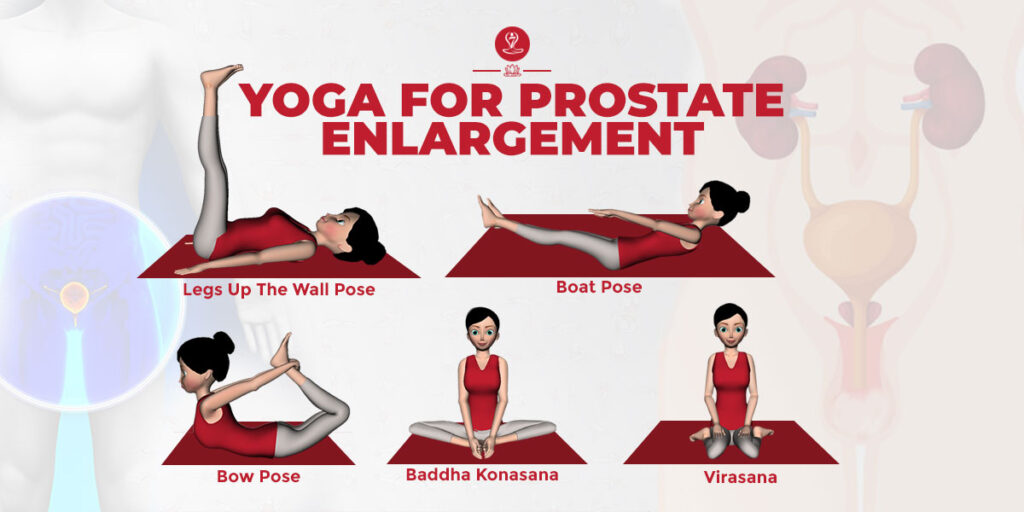
To help with a hypertrophied prostate, you must be careful to remain active and involved through light and low-intensity exercises. Focus on yoga exercises that work using gentle movements to the waist and legs, and move to the area around the circulatory pelvis. Often, yoga can be considered for prostate enlargement to improve flexibility, circulation, and pelvic floor muscles, including improved bladder and bowel control. But people with more severe symptoms can rely on professional help.
Quick Summary
Prostate enlargement, or benign prostatic hyperplasia (BPH), is a normal part of the aging process caused by changing hormone levels that can lead to frustrating urination issues for men. This article highlights how practicing gentle, low-intensity yoga movements and Kegel exercises can improve pelvic floor strength, circulation, flexibility, and bladder control. By avoiding highly stressful routines and staying active with targeted poses, men can manage and reduce their BPH symptoms naturally.
Do not do the most stressful exercises (for example, heavy weight training) or exercises that add excessive and repetitive stress to the pelvic area (for example, cycling and rowing), as they irritate the surrounding area and can cause prostate symptoms worse.
Through yoga postures, or asanas, and Kegel exercises, such as tightening the muscles around the scrotum and anus, you can strengthen the area of the pelvis and reduce BPH symptoms. Hold more poses of yoga for prostate enlargement for up to 30 seconds.
Table of Contents
What is Prostate Enlargement?
Prostate enlargement, also known as Benign Prostatic Hyperplasia (BPH), is a common condition that occurs in men as they age. The prostate is a small gland located below the bladder and is a part of the male reproductive system. When this gland becomes enlarged, it can put pressure on the urethra, causing problems such as frequent urination, difficulty starting urination, waking up multiple times at night, weak urine flow, and the bladder not emptying completely. Although this condition is usually not cancerous, its symptoms can impact daily life. A healthy lifestyle, regular exercise, and certain yoga asanas can help maintain better prostate health and reduce associated symptoms
Yoga for Prostate Enlargement or BPH
Studies conducted by researchers and experts on several yoga practices for the management of BPH were one-sided, although much important information emerged and suggested a possible role as an alternative and supportive method of treatment.
So let’s know about the yogas that can keep the prostate gland of men healthy and away from many prostate diseases.
Cobbler Pose / Bound Angle Pose (Baddha Konasana)
This asana reduces tension in the muscles of the pelvic floor and lowers the back.
How to do :
- Sit with both legs spread out in front and then bend the knees and mix both the heels and the claws with each other.
- Hold the feet tightly with the hands.
- Keep the spine straight and shoulders taut.
- Now, bring the knees of both feet up and down. Repeat this process over and over.
- Stay in this pose for 1 to 5 minutes.
To know more about this asana click here: Baddha Konasana
Bow pose (Dhanurasana)
This asana is done lying on the stomach. It has strong muscles in the abdomen, pelvis, and lower back.
How to do :
- Lie down on your stomach, keeping a distance between both legs.
- Now bend both legs at the knees.
- Hold the right knee with the right hand and the left knee with the left hand.
- Balancing the body at the navel while stretching the hands and feet, raising the knees and thoracic site.
- Look up, and both hands should be straight.
- Maintain this position while breathing normally.
To know more about this asana, click here: Dhanurasana
Hero Pose (Virasana)
By doing Veerasan, the muscles of the pelvic part of the men are strengthened, which keeps the prostate healthy and reduces the risk of diseases related to it.
How to do :
- Sit with your knees bent on the floor. Addies touch the axes.
- Keep both hands on your knees. Keep the head straight and look at the front.
- After this, slowly bring your hips downward, as if you are going to sit on the mat.
- Remove your calves by turning. Note that your hips stay right in the middle of the ankles.
- Stay in this final position as long as you are comfortable.
To know more about this asana, click here: Virasana
Legs Up The Wall (Viparita Karani )
This is a more advanced position that can be done to provide strength to the muscles of the waist and pelvic area. This stimulates the nerves and glands of the sexual glands of men, which improves prostate health.
How to do:
- Lie straight on your back. Now raise both legs together slowly upwards.
- Your legs should be raised at a 90-degree angle.
- Keep your hands straight. Now raise the part of the waist slowly in the air and support both hands behind the back.
- Stay in this pose for a few seconds and then slowly return to normal.
To know more about this asana, click here: Viparita Karani
Boat Pose (Naukasana)
This is a lying-down pose that focuses on improving strength in the core region and strengthening the abdomen, pelvic floor, and lower back.
How to do:
- First, you need to lie down on your back.
- Now raise your body to 30 degrees such that you can easily see your toes with your eyes.
- Keep the palms upper on the thighs.
- Stay in this final pose and keep breathing normally.
To know more about this asana, click here: Naukasana
Conclusion
Research reviews suggest that pelvic floor yoga exercises performed for up to 12 weeks promote flexibility, circulation, and growth of the pelvic floor muscles, also including improved bladder and bowel control and improved recovery after prostate surgery. Yoga for Prostate Enlargement should be adopted for BPH patients.
FAQ (Frequently Asked Questions)
Do not do the most stressful exercises (for example, heavy weight training) or exercises that add excessive and repetitive stress to the pelvic area (for example, cycling and rowing), as they irritate the surrounding area and can cause prostate symptoms to become worse.
Kegel exercises, such as tightening the muscles around the scrotum and anus, help strengthen the area of the pelvis and reduce BPH symptoms.
You should hold more poses of yoga for prostate enlargement for up to 30 seconds.
By doing Veerasan, the muscles of the pelvic part of men are strengthened, which keeps the prostate healthy and reduces the risk of diseases related to it.
This position provides strength to the muscles of the waist and pelvic area. It stimulates the nerves and glands of the sexual glands of men, which directly improves prostate health.
