
A slipped disc or herniated disc is a common spine-related problem in which the disc located between the vertebrae bulges outward and can put pressure on the surrounding nerves. This can cause issues like lower back pain, tingling in the legs, numbness, or weakness. Certain gentle and safe yoga asanas can help increase the flexibility of the spine, strengthen the back muscles, and reduce pain. In this article, we will explore 5 such yoga asanas for a slipped disc or herniated disc that can support the spine and assist in the recovery process.
Quick Summary
A slipped or herniated disc is a chronic condition where the soft, gel-like spinal discs break down, swell, or rupture, putting pressure on the spinal cord or nerve roots. This can cause pain, numbness, or weakness in the back, buttocks, and thighs. While aging, obesity, heavy lifting, and a sedentary lifestyle contribute to this issue, practicing gentle and targeted yoga poses can help treat it by strengthening the spine’s muscles and ligaments, improving flexibility, and reducing pressure on the spinal cord.
Table of Contents
- Introduction (What is a Slipped Disc?)
- Lumbar Disc Herniation & Yoga Guidelines
- Yoga Poses For Herniated Disc or To Treat Slipped Disc
- Conclusion
- FAQs
What is a Slipped Disc?
A slipped disc is also called a prolapsed or herniated disc. This is a chronic medical condition in which the discs in the spine break down or become inflamed. These discs are very soft, gel-like discs. When this disc breaks, a rubber or jelly-like substance starts flowing inside. This is called a slipped disc or lumbar herniated disc.
A damaged or broken disc can put pressure on the entire spinal cord or on a single nerve root. This means that a slipped disc can cause pain, numbness, or weakness in the area of the protruding disc and in the area of the body that is controlled by the nerve that is pressing on the disc.
This can cause pain in your back, buttocks, and even thighs. Movement such as bending, lifting, twisting, and sitting can increase the pain. In case of severe pain, lying flat on your back by bending your knees gives relief. Lying in this way reduces the pressure on the spine.
It is not always clear what causes a lumbar herniated disc to rupture. Herniated discs also tend to wear down with age. As we age, the discs wear out, the amount of water in the spinal cord starts to decrease, and its flexibility gradually ends.
Sometimes lifting heavy objects also leads to a lumbar herniated disc. When you lift something heavy, instead of stretching your leg and thigh muscles, your back muscles get stretched, and a herniated disc becomes a problem.
Herniated discs in the lower back are common in people who are obese or lead a sedentary lifestyle. Regularly doing yoga exercises, maintaining a healthy body weight, drinking plenty of water, avoiding smoking, and staying active can reduce your chances of getting a herniated disc.
Include back-strengthening exercises in yoga for a herniated disc. There’s nothing wrong with doing simple isometric exercises for the abdominals and back.
Lumber Disc Herniation & Yoga
Yoga can be beneficial for people with a herniated disc, but it’s important to approach it with caution and under the guidance of a qualified yoga teacher who has experience working with people with back pain.
Here are a few general guidelines to keep in mind when practicing yoga with a herniated disc:
- Start slowly: Begin with gentle, basic yoga poses and gradually work your way up to more advanced poses as your body becomes more comfortable.
- Focus on alignment: Proper alignment is key to preventing further injury to your back. Make sure your teacher emphasizes proper alignment and adjusts you as needed.
- Avoid poses that put pressure on the back: Poses that involve deep forward folds or twists can put excessive pressure on the spine, which can exacerbate herniated disc symptoms. Avoid these poses or modify them as needed.
- Practice poses that strengthen the core and back muscles: Strong core and back muscles can help support the spine and prevent future injury. Plank pose, cat-cow stretch, and bridge pose are all good options.
- Listen to your body: If a pose feels uncomfortable or painful, stop immediately. Don’t push yourself beyond your limits.
Yoga Poses For Herniated Disc or To Treat Slipped Disc
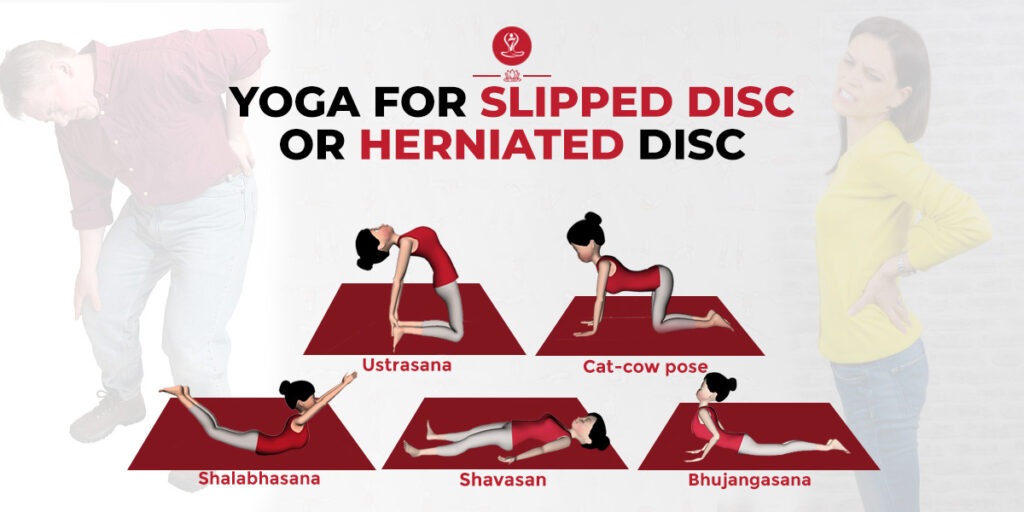
Yoga poses for the treatment of a herniated disc or slipped disc strengthen the muscles and ligaments of your spine. Practice with other yoga asanas that can give rest to the spine from time to time.
Ustrasana
Ustrasana is a very effective asana to relieve spinal pain. To do this asana, the body remains in the posture of a camel. In this pose, the body is tilted backwards, which creates positive pressure on the spine. This asana helps in relieving the pain.
Shalabhasana
Shalabhasana Yoga is such an asana in which the spinal cord is folded by lying on the ground on the stomach. By doing this yoga, relief from slip disc and back pain starts in a few days.
Bhujangasana
In Bhujangasana, the body is in the shape of a snake with its hood up. In this shape, there is pressure on the upper bones of the spine, due to which the bone starts coming in the old position. Bhujangasana is one of the 7 asanas of Surya Namaskar. It makes the body flexible as well as gives relief from back pain.
Cat-cow pose
The cat-cow pose is one of the most recommended yoga poses for treating a herniated disc in the lower back that engages two separate spine movements in a single pose. This pose also requires focus on your abdomen, shoulders, and spine, which will help the herniated disc contain its jelly-like insides.
Shavasan
Shavasana is considered a difficult posture of yoga practice. This asana increases the internal energy of the body. This natural energy of the body helps in curing every disease and problem by getting absorbed into your body.
Conclusion
It’s also important to note that yoga should be just one part of a comprehensive treatment plan for a herniated disc. Be sure to talk to your doctor and physical therapist about what exercises are safe and appropriate for your specific condition.
Along with yoga exercise, your diet must be balanced and nutritious. To reduce the risk of a slipped disc or a herniated disc, eat foods that are rich in vitamins C, D, E, protein, and calcium. Also, make sure to eat green vegetables and seasonal fruits.
FAQ (Frequently Asked Questions)
You should start slowly with basic poses, focus strictly on proper alignment, avoid deep forward folds or twists that put excessive pressure on the spine, focus on poses that strengthen the core and back, and stop immediately if a pose feels uncomfortable or painful.
In Ustrasana, the body is tilted backwards. This specific posture creates positive pressure on the spine, which helps in relieving the pain.
Bhujangasana puts pressure on the upper bones of the spine, which helps the bone start coming back into their old position. It also makes the body flexible and provides back pain relief.
The Cat-Cow pose engages two separate spine movements in a single posture. By requiring focus on your abdomen, shoulders, and spine, it helps the herniated disc contain its jelly-like insides.
Shavasana increases the internal energy of the body. This natural energy gets absorbed into your body to help cure diseases and problems while removing physical and mental exhaustion.
