
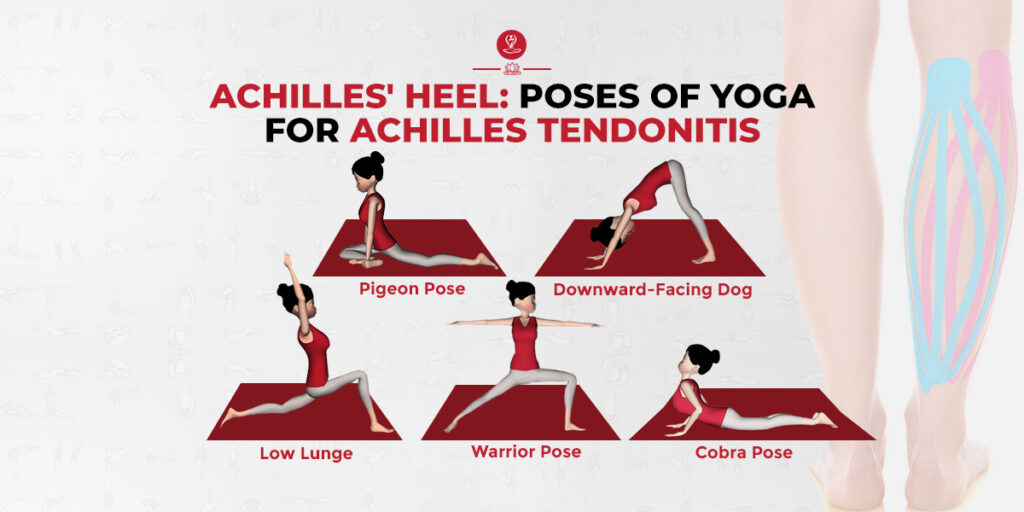
Practicing yoga can help alleviate symptoms of Achilles tendonitis by stretching and strengthening the affected area. Here are some yoga poses that can be beneficial for people with Achilles tendonitis:
Quick Summary
Achilles tendonitis is an inflammation of the Achilles tendon—the large tendon connecting the calf muscle to the heel bone—often caused by intense physical activity, minor impacts, sudden injuries, or overuse. This post outlines how practicing targeted yoga poses can help alleviate symptoms by stretching and strengthening the lower leg, resulting in a stronger, more stable tendon and increased flexibility.
Table of Contents
What is Achilles Tendonitis?
Achilles Tendonitis is a condition in which the Achilles tendon, located at the back of the heel, becomes inflamed, irritated, or painful. This tendon connects the calf muscles to the heel bone and plays a crucial role in walking, running, jumping, and climbing stairs.
Symptoms of Achilles Tendonitis
- Pain or burning sensation at the back of the heel
- Stiffness in the tendon upon waking up in the morning
- Increased pain after running or walking
- Swelling around the tendon
- Pain when standing on your toes
- Discomfort during or after exercise
Yoga For Achilles Tendonitis
Practicing these five Achilles tendon yoga poses will increase lower-leg strength and flexibility, creating a stronger, more stable tendon.
Downward-Facing Dog
This pose stretches the calf muscles and Achilles tendon. To perform this pose, start on your hands and knees, bend your waist, and bring both hands down on the ground. Your knees should be straight, and your hands should be slightly ahead of your shoulders. Raise the waist upwards as much as possible. Your ears should touch the inner parts of your arms. If possible, in this state, turn your gaze towards the navel. Keep in mind that in this asana, you have to make an inverted “V” shape. Remain in this position for a few seconds, then come back to the normal position.
Pigeon Pose
This pose is a great stretch for the calf muscles and Achilles tendon. Here, the ankle is working hard to keep your whole body connected and balanced.
To perform this pose, start in a lunge position with your back leg extended behind you. After this, you lift the body on your knees. While raising the body, you have to keep in mind that you do not have to stand on your feet, you have to rise only on your knees. Then, keep your hands near the toes of both feet. Now put your weight on the palms, and start turning your body backward. Take your shoulders and head backward. Slowly bring your head near both your feet and rest it on the ground. Hold the ankles of both feet with both your hands. Now the weight of your body will come on your shoulders and arms. Remain in this state for a few seconds according to your physical capacity.
Low Lunge
This pose stretches the calf muscles and the front of the ankle, helping to relieve Achilles tendonitis.
To perform Low Lunge, start in a lunge position with your back leg extended behind you and your front knee bent. Bring one leg forward and take the other back. After this, bend the front leg from the knees and straighten the back leg on the mat. During this, the sole of your foot will be upwards. Try to balance yourself in this situation and now take both hands above your ear and make a salutation posture. Both your arms should be straight. Now try to stretch yourself.
Warrior Pose
Warrior pose strengthens the calf muscles, which can help reduce the risk of Achilles tendonitis.
First of all, stand in Tadasana. After this, spread the legs for 3-4 feet. Then keep the left leg at 45-60 degrees. Then rotate the torso to 90 degrees. Join your hands while raising them. Now bend the right knee and bring the thigh parallel to the ground. Now raise your head comfortably. Keep the eyes on the fingers and wait for 20 to 30 seconds.
Cobra Pose
Cobra pose strengthens the calf muscles and the muscles of the lower leg.
To perform this pose, lie on your stomach with your hands under your shoulders. Push up into a backbend, keeping your legs and feet on the ground.
Conclusion
It’s important to listen to your body and to modify the poses as needed to avoid further irritation of the Achilles tendon. If you experience pain or discomfort while practicing these poses, stop and seek the advice of a healthcare professional.
FAQ (Frequently Asked Questions)
Achilles tendonitis is most often caused by intense and excessive physical activity. It can also be caused by a minor impact on the affected area, a sudden more severe injury, or simple overuse, which leads to pain and stiffness.
Practicing specific yoga poses helps alleviate symptoms by stretching and strengthening the affected area. This increases the power and flexibility of the lower leg, creating a stronger and more stable tendon.
The article recommends five beneficial poses: Downward-Facing Dog, Pigeon Pose, Low Lunge, Warrior Pose, and Cobra Pose.
If you experience pain or discomfort while practicing, you should immediately stop the pose and seek the advice of a healthcare professional.
