
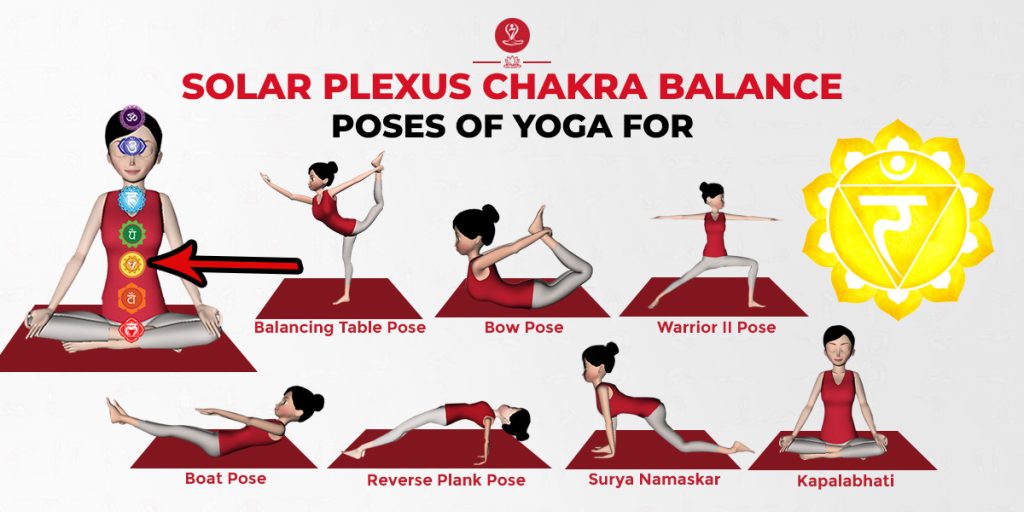
The solar plexus chakra, also known as the Manipura chakra (meaning city of jewels), is the third primary energy center and is associated with the color yellow. It is located in the upper abdomen, around the area of the diaphragm. So practicing yoga poses that engage the abdominal region, such as Boat Pose (Navasana) and Warrior III (Virabhadrasana III), stimulates the solar plexus chakra. These poses strengthen the core and increase the flow of energy in the area, promoting balance and vitality.
The Manipura chakra is associated with personal power, intellect, confidence, clarity, self-esteem, willpower, assertiveness, motivation, inner strength, discipline, self-confidence, and transformation. When balanced, it brings a sense of self-assuredness, purpose, and empowerment. An imbalanced Manipura chakra can manifest as low self-esteem, lack of motivation, anger, or digestive issues like ulcers, heartburn, eating disorders, and indigestion.
So to balance the solar plexus chakra through yoga, Practice specific yoga poses and focus on deep breathing and visualization while in poses, directing energy to the solar plexus area.
Additationly, Kapalabhati (Skull Shining Breath) and Breath of Fire involve forceful exhalations that stimulate the solar plexus and release stagnant energy.
Yoga For Solar Plexus Chakra Cleansing and Opening
Simply incorporate Solar Plexus Chakra yoga poses into your practice to unblock and realign your energy system.
Boat Pose – Navasana
Boat pose strengthens the core, ignites the inner fire, and cultivates a sense of personal power and confidence. While practicing this, visualize a radiant yellow light at your solar plexus area, symbolizing confidence, personal power, and inner strength.
Sit on the mat with your knees bent and feet flat on the floor. Lean back slightly, engage your core, and lift your feet off the ground. Extend your legs forward, forming a V shape with your body. Keep your spine straight and lift your chest. Hold this pose while focusing on your solar plexus area and cultivating a sense of personal power.
Reverse Plank Pose – Purvottanasana
Upward Plank Pose is an effective backbend for strengthening the shoulders, arms, wrists, and hips. To stimulate the Manipura Chakra Upward Plank Pose can regulate the functions of your gallbladder, liver, spleen, and pancreas.
- Sit with the legs stretched straight in front.
- Place the palms behind the shoulders.
- Now push the body with your hands and lift it upwards.
- Do not keep the knees bent but try to straighten it.
- Flatten the feet on the mat.
- Let the head go backward.
- In this asana, keep breathing slowly and keep exhaling.
- Hold the body up as per your capacity.
Warrior II Pose – Virabhadrasana II
Warrior II pose will allow warrior energy to flow freely through the body while building strength and confidence, supporting chakra healing.
First of all, stand in a straight posture. Now turn the head to the left while raising your arms parallel to the floor. Turn the left leg also 90 degrees to the left. Remain in this state for some time. In the same way, practice on the other side as well.
Bow Pose – Dhanurasana
Bow pose opens the chest, stimulates the solar plexus chakra, and encourages emotional release. It stretches the front of the body, stimulates the abdominal region, and promotes a sense of confidence and empowerment.
- Lie down on your stomach and keep your hands near your feet.
- Now bend the knees and hold it.
- While inhaling, raise the chest and pull the legs with the hands.
- Focus on the movement of the breath.
- Stay in this position for 15-20 seconds and then come back to normal.
Balancing Table Pose – Dandayamana
Balancing Table pose not only engages the core muscles but also promotes balance and stability, which are qualities associated with the solar plexus chakra.
- Start on all fours with your hands directly beneath your shoulders and your knees directly beneath your hips.
- Engage your core muscles and extend your right arm forward, reaching it parallel to the ground.
- At the same time, extend your left leg straight back, keeping it parallel to the ground as well.
- Hold the pose for a few breaths, feeling the activation and engagement in your solar plexus area.
- Repeat the pose on the opposite side.
Sun Salutations – Surya Namaskar
Sun Salutations are a dynamic sequence of yoga poses that activate the entire body, including the solar plexus chakra.
Surya Namaskar consists of a series of 12 steps that flow together smoothly. Pranamasana (Prayer Pose), Hastauttanasana (Raised Arms Pose), Hasta Padasana (Hand to Foot Pose), Ashwa Sanchalanasana (Equestrian Pose), Kumbhakasana (Plank Pose), Ashtanga Namaskara (The Salute With Eight Parts), Bhujangasana (The Cobra Pose), Adho Mukha Svanasana, Ashwa Sanchalanasana (The Equestrian Pose), Hastapaadasana (Hand to Foot Pose), Hasta Uttanasana (The Raised Arms Pose), Pranamasana (Prayer Pose).
Breath of Fire (Kapalabhati)
Sit comfortably keeping the spine straight. If you’re sitting on a chair, make sure to keep both feet on the ground. Before starting, take a deep breath through both the nostrils. Also, push the stomach inwards. Expel all the air from your lungs. Continue this 10 times, then let your breath come back to normal. This energizing breathing technique stimulates the solar plexus, increases oxygenation, and helps balance the chakra.
RAM (Manipura Bija Mantra)
The seed mantra for the Manipura chakra is “RAM.” Chanting this sound can help activate and balance the chakra.
Conclusion
Meditation, yoga postures, and the practice of affirmations for the solar plexus chakra burn away negativity to reveal and sustain positivity. A balanced Manipura chakra contributes to physical, mental, and emotional wellness.
