
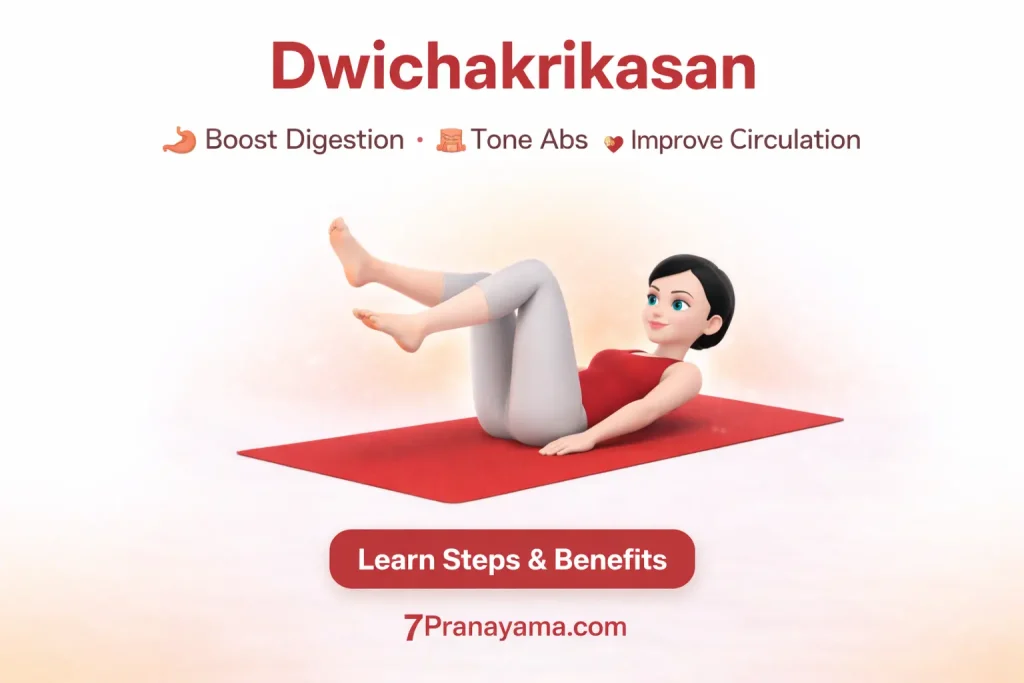
The “Dwichakrikasan” is a yoga pose that is known as “Bicycle Pose” and “Cycling Yoga Pose”, one of the lying down yoga poses, repeats to establish a daily yoga practice in life. The pose resembles cycling, targeting the core muscles and promoting balance and flexibility.
Dwichakrikasana (Cycling Yoga Pose) helps to activate the Solar Plexus (Manipura Chakra) and commonly found in the Kids yoga sequences and Hip opening yoga sequences.
What is Dwichakrikasan?
The name comes from Sanskrit:
- Dwi = Two
- Chakra = Wheel
- Asana = Posture
It literally means “two-wheel pose”, which reflects the cycling motion of the legs.
You perform it lying on your back while moving your legs in a controlled circular motion, similar to pedaling a bicycle
Practice Guide to Perform Dwichakrikasan
The Practice Guide to Perform Dwichakrikasan is a comprehensive manual designed to assist practitioners in mastering the Dwichakrikasan yoga pose. This guide offers step-by-step instructions, tips, and insights to effectively execute this intricate asana, known for its balancing and strengthening benefits.
Preparatory Poses
How to do Dwichakrikasan (Bicycle Pose)
Starting Position: Lie flat on your back on a yoga mat and keep your arms relaxed by your sides, palms facing down.
Position: Lift both legs off the ground, keeping them straight. Begin to replicate a cycling motion by alternately bending your knees and moving your legs in a circular motion as if pedaling a bicycle.
Rotate your legs from the hips, ensuring a fluid and controlled movement. Keep your movements controlled
Breathing: Coordinate your breathing with the leg movements. Inhale and exhale smoothly and steadily throughout the exercise.
Repetition: You can start with a few cycles in one direction and then switch to the opposite direction. Gradually increase the number of rotations as you become more comfortable with the pose.
Duration: Aim to perform the cycling motion for about 1-2 minutes initially, gradually extending the duration as your strength and stamina improve.
Follow Up Poses
Precautions & Contraindications
- If you suffering from Back pain, Slip disc OR chronic disease should not be practicing this asana.
- Ensure that your lower back stays grounded throughout the exercise to prevent strain.
- If you experience any discomfort or pain, ease off or stop the movement immediately.
As with any exercise or yoga pose, listen to your body and avoid overstraining. If you experience discomfort or pain, it’s advisable to stop the pose and consult with a yoga instructor. Gradually increasing the intensity and duration of Dwichakrikasan will help you reap its benefits effectively.
Benefits of Dwichakrikasan (Cycling Yoga Pose)
Improves Flexibility: Enhances flexibility in the hips, thighs, and lower back, promoting greater mobility.
Relieves Tension: It helps to relieve tension in the hip region, lower back, and thighs, making it beneficial for individuals with mild back pain.
Balance and Coordination: Challenges balance and coordination, especially as you synchronize leg movements while maintaining stability on your back.
Promotes Circulation: Stimulates blood flow in the lower body, aiding in better circulation and potentially alleviating stiffness.
Stimulate Abdominal Organs: Daily practices of Cycling Yoga Pose also helps to stimulate the abdominal organs, prostate glands, endocrine gland, bladder, and kidneys.
Conclusion
Dwichakrikasan, often referred to as the Dual Wheel Pose, involves a complex combination of balance, flexibility, and concentration. It is easily accessible for beginners yoga practice at home and experience the wonderful health benefits.
FAQs
It helps strengthen core muscles and supports fat loss when combined with proper diet and consistency.
Start with 30 seconds and gradually increase to 2–3 minutes.
Yes, it’s beginner-friendly. Start slowly and avoid overexertion.
Not recommended for serious back issues unless guided by an expert.
Yes, daily practice gives the best results.
