
Table of Contents
- Introduction to Yoga for Back & Core
- Top 5 Poses for Strength
- Tips for a Safe Practice
- Conclusion
- Frequently Asked Questions
Downward-facing dog, triangle, locust pose, plank, upward-facing bow, cat-cow stretch, and chair pose are four of the best poses of yoga for strong back and core as well as better spinal alignment.
Introduction to Yoga for Back & Core
It is true that to strengthen your back, focusing on the core muscles can provide some additional benefits. A weak core and poor posture from constantly sitting in chairs are actually common contributing factors to lower back pain and discomfort, especially with aging. And yoga for the spine is one such exercise method that can target the all-important back areas.
Simply put, the movements used in yoga are great for working on flexibility and core stability, building strength and mobility, and correcting posture – all of which are essential for a healthy & strong back.
If you have a problem that requires medical attention, connecting with a doctor or physical therapist may be the best way to do so.
Choose five or six yoga poses to put into practice for a strong back, and plan on holding each pose for 10 seconds to one minute. Remember that a healthy spine requires a balance between strength and flexibility, so breathe deeply throughout the hold.
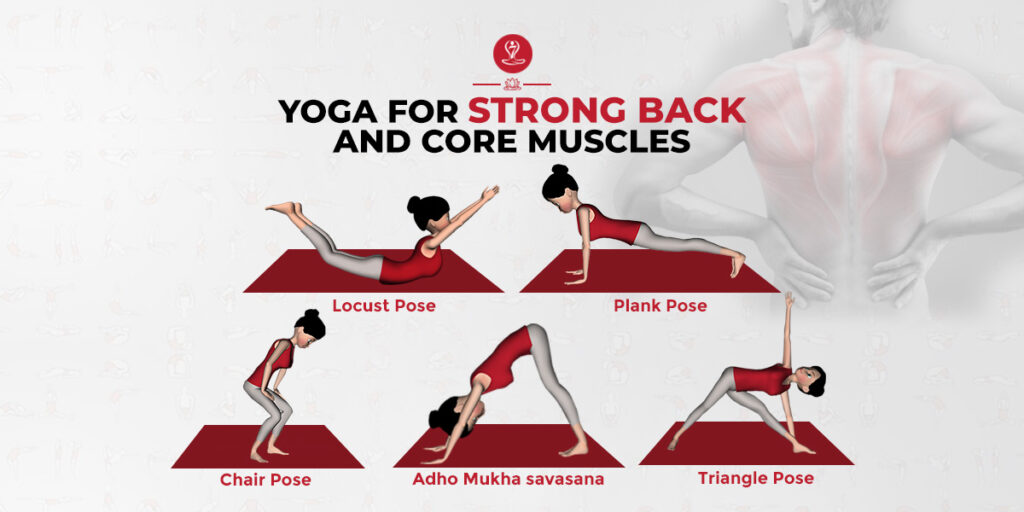
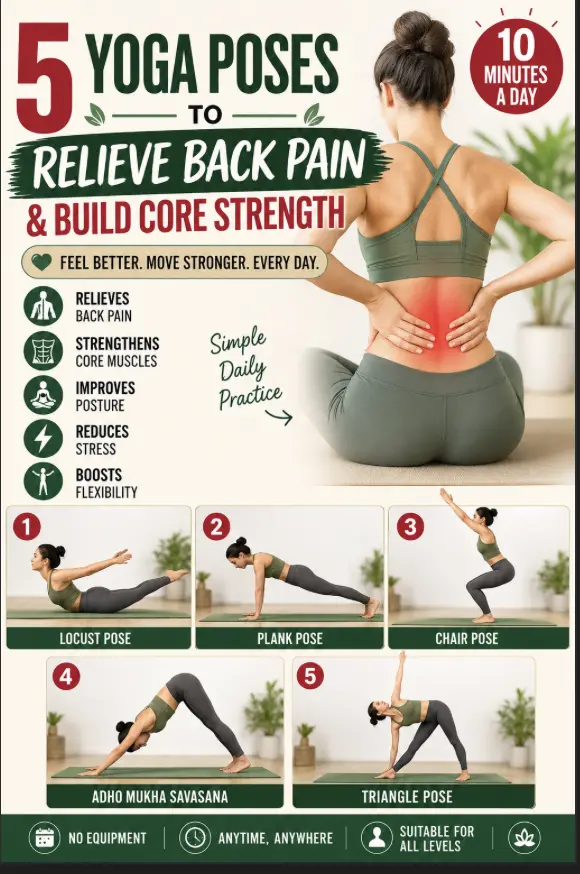
5 Poses Yoga For Strong Back & Core Strength
Here are five of my favorite yoga poses and stretches that are also suitable for beginners and for a strong back and developing core strength.
Make sure always listen to your body first and rest if you feel you are surpassing your capacity for the day. And You should pause the practice and start over again if you need to.
Downward-facing dog
Adho Mukha Svanasana is equal parts strengthening and stretching, which can help to build better balance and flexibility throughout your whole body. while stretching the hamstrings and calves strengthens the core and improves circulation.
- Sit on the floor with your knees bent.
- Bend forward at the hips and place your hands on the floor and palms on the floor by joining the shoulders.
- Place palms shoulder-width apart and feet hip-width apart.
- Now slowly lift your knees off the floor and allow your hips to move towards the ceiling, the toes should be towards the hands so that your feet rest on the floor.
- Now straighten your arms and legs to form an inverted V shape.
- Wrists should be in line with elbows and shoulders, and feet should be in line with respective knees and hips.
- Keep the head between the elbows.
- Hold the pose for a few minutes, and then slowly come out of the pose.
Triangle Pose
To get full back strengthening and stretching benefits practice Trikonasana and make sure your core is fully engaged. This protects the back while strengthening core muscles because it stretches out the side backs of the legs and lengthens the spine.
- Stand with a distance of at least one foot between both feet.
- Lift the right hand up towards the sky, bend down while stretching it up, and touch the heel of the left foot with the left hand.
- Keep in mind, to take a deep breath while raising the hand and exhale while touching the heel of the foot. Stay in that position for 10 seconds.
- Do the reverse of the above pose also. That is, raise the left hand up and touch the heel of the right foot with the right hand.
Locust Pose Yoga
Locust pose (Salabhasana) starts with you laying on your belly to take some back and abdominal strength, plus mental fortitude to hold the pose. Here you will be engaging nearly every muscle in your back that builds up core strength and stretching your chest.
- Lie down on your stomach.
- Now make half-fists with the palms of both your hands and place them under your thighs.
- Now try to keep your chin fixed on the ground while stretching it in front.
- Now let your body loose keeping in mind the right way.
- Now keep both your legs straight together.
- Now while inhaling try to raise both legs upwards.
- Wait as long as you are stopped in this state.
- After that try to come down slowly while exhaling.
Plank Pose Yoga
The plank pose in yoga used as a transitional pose requires the most amount of core strength. Hold this asana for 30 seconds a few times a day for strengthening your abdominals, back, core, glutes, and legs. This arm balance is most used to develop core strength and stability.
- Lie down on your stomach.
- Now bring your hands to the sides of your chest and keep your body weight on your forearms.
- Slowly, begin to raise your entire body on the strength of your forearm.
- Keep in mind that your back should be straight and your toes should be perpendicular to the floor.
- Hold for a few breaths.
Chair Pose Yoga
Chair pose in yoga demands strength and stamina in the body, but yields deep and lasting results. when you try it, you’ll find improves balance and strengthens your core, thighs, and ankles.
Tips for a Safe Practice
To get the most out of your yoga routine while protecting your spine, keep these essential safety tips in mind:
- Listen to Your Body: Never push yourself into a pose that causes sharp pain. There is a difference between the “good” burn of a muscle working and the “bad” pain of a joint or ligament being strained.
- Warm Up First: Never start with deep stretches or intense core work on “cold” muscles. Begin with gentle movements like Cat-Cow stretches or a slow walk to get blood flowing.
- Focus on Breath: If you find yourself holding your breath, you are likely pushing too hard. Deep, rhythmic breathing helps stabilize your core and keeps your muscles oxygenated.
- Micro-bend Your Joints: Avoid “locking” your knees or elbows in poses like Downward–Facing Dog or Triangle Pose. Keeping a tiny, soft bend protects your joints and forces your muscles to do the work.
- Use Props if Needed: Don’t be afraid to use yoga blocks or straps. In Triangle Pose, for example, resting your hand on a block rather than the floor can help you maintain proper spinal alignment.
- Consult a Professional: If you have pre-existing back injuries or chronic conditions, always check with a doctor or physical therapist before starting a new yoga regimen.
Conclusion
Yoga can be a great way to get strength back and core muscles. Practice the above asanas every day or every other day to strengthen and tone the muscles of the core. Developing core strength is essential for maintaining a healthy spine and limber for life!
FAQ
For noticeable improvements in core stability and back strength, it is recommended to practice these asanas every day or every other day. Consistency is key to maintaining a healthy and limber spine.
The 7pranayama guide suggests holding each pose for anywhere from 10 seconds to one minute. Always prioritize deep breathing throughout the hold to balance strength with flexibility.
Yoga can be highly effective for correcting posture and relieving discomfort caused by a weak core. However, if you have a medical condition or severe pain, you should consult a doctor or physical therapist before starting a new exercise routine.
Yes. The five featured poses—Downward-facing dog, Triangle, Locust, Plank, and Chair pose—are all suitable for beginners. It is important to listen to your body and rest or pause the practice if you feel you are surpassing your capacity.
A weak core is a common contributing factor to lower back pain. Strengthening the abdominals and back muscles through yoga provides the stability needed to support the spine and improve overall alignment.
