
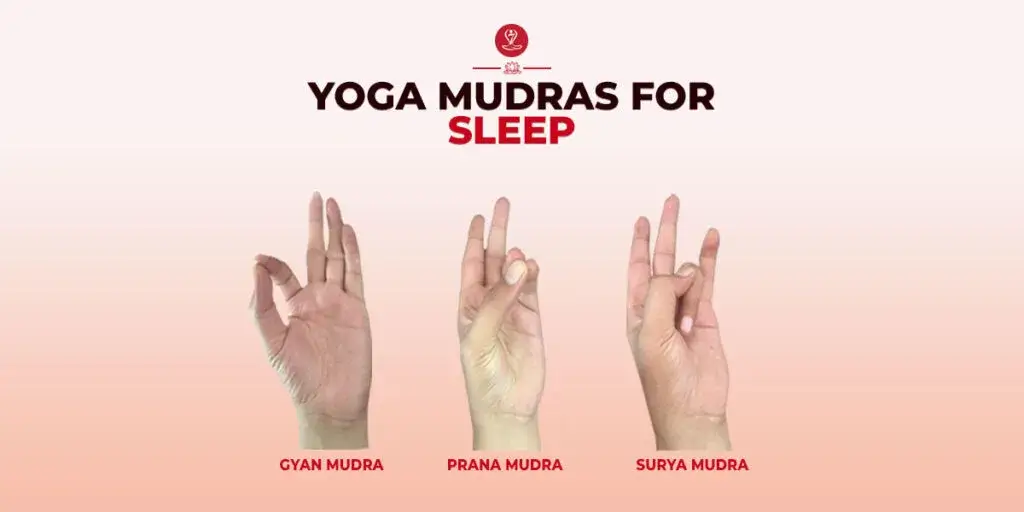
If you are struggling with sleep, incorporating specific mudras into your routine can help. Regular practice of these hand gestures, known as mudras, can alleviate stress, fatigue, and even insomnia, leading to better sleep quality. Practicing mudras before bed can result in deep, restful, and dream-free sleep by calming the mind and body.
How Mudras Help with Sleep
According to Ayurveda, insomnia is often caused by an imbalance of Vata and Pitta doshas, which can be exacerbated by mental stress. Mudras can help rebalance these doshas, promoting relaxation and improving sleep. Here are some effective yoga mudras for enhancing sleep quality:
Bedtime Yoga Mudras For Sleep
By practicing these mudras, you can activate your brain’s sleep mechanisms, helping you fall asleep faster and improve the quality of your sleep.
1. Gyan Mudra (Mudra of Knowledge and Wisdom)
Gyan Mudra helps alleviate insomnia by reducing mental tension and promoting relaxation.

How to Do Gyan Mudra:
- Relax your body, breathe slowly, and concentrate on your third eye.
- Sit in a comfortable position such as Vajrasana or Sukhasana.
- Close your eyes and fold your index finger to touch the tip of your thumb.
- Focus your mind on the sound “OM”.
2. Prana Mudra
By practicing yoga mudras and certain special mudras, one can sleep in a deep sleep in a few minutes. But Prana Mudra is a method by which you can not only experience a pleasant and restful sleep, but also by giving a new direction to your subconscious mind and can bring other pleasant changes in life.

How To Do Prana mudra:
- Sit in any meditation posture such as Padmasana and Sukhasana.
- Now fold your small and ring finger and tap the tip of the small and ring finger to the tip of the thumb.
- After this close the eyes and take some breaths.
- Perform this pose for 35 minutes at a stretch every day or for 10 to 12 minutes three times a day.
3. Surya Mudra (Agni Vardhak mudra)
Surya Mudra stimulate various parts of the body associated with breathing and affect the flow of prana. Keep chanting the mantra by applying mudra. You will automatically go to sleep.

How To Do Surya Mudra:
- Sit in any comfortable position or lay down on the bad.
- Now fold your ring finger and press it with your thumb.
- After this, close the eyes and chant any mantras.
- Perform this pose for 35 minutes at a stretch every day or for 10 to 12 minutes three times a day.
Practice All Above Mudras in Savasana Position
The most comfortable and effective mudra that is capable of sleeping is Shavasana. As such, Savasana is practiced at the end of the practice of Yogasanas. But after being tired all day long, when you practice above mudra in Savasana, then within a few minutes, you fall asleep.
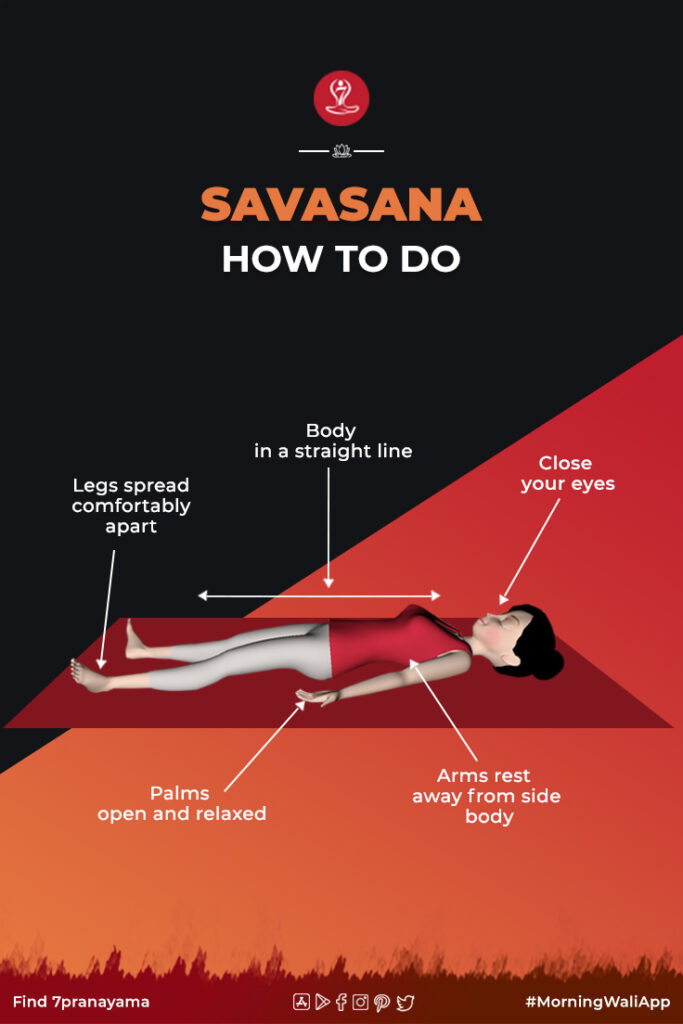
How to Do Savasana:
- Lie down on your bed, completely relaxing your body.
- Keep your feet and hands slightly apart, close your eyes, and relax.
- Combine this pose with any of the above mudras (Surya Mudra, Prana Mudra, or Gyan Mudra).
- Focus your meditation on each limb and then on your breath.
- Remain in this position for 20 minutes, maintaining slow, steady breaths.
Conclusion
Incorporating mudras into your bedtime routine can significantly improve your sleep quality by reducing stress and balancing your body’s energies. By regularly practicing Gyan Mudra, Prana Mudra, and Surya Mudra, especially in Savasana, you can achieve a deeper, more restful sleep. Try these simple yet powerful hand gestures and experience the benefits of better sleep and overall well-being.
FAQ
Shakti Mudra is one of the most popular yoga mudras for promoting relaxation and restful sleep. It is traditionally practiced before bedtime to calm the nervous system and ease mental tension.
For best results, practice a sleep mudra for 15–20 minutes before bedtime. Beginners can start with 5–10 minutes and gradually increase the duration as they become comfortable.
Yoga mudras may help reduce stress, relax the body, and improve sleep quality for some individuals. However, they are not a substitute for medical treatment if you have chronic insomnia or an underlying sleep disorder.
Yes. Many sleep mudras can be practiced while sitting comfortably or lying in bed. Focus on slow, deep breathing and a calm environment to maximize relaxation.
Yes. Combining mudras with meditation and pranayama can create a more relaxing bedtime routine and may improve mental calmness and sleep quality.
Sleep mudras are generally considered safe for most healthy individuals. If you have a medical condition, chronic pain, or concerns about your health, consult a qualified healthcare provider before beginning any new wellness practice.
Some people feel relaxed after the first session, while others notice gradual improvements after 2–4 weeks of regular practice. Consistency and healthy sleep habits are important.
Yes. Sleep mudras are simple hand gestures that can be practiced by most age groups. Children and older adults should practice comfortably without straining their hands or fingers.
