
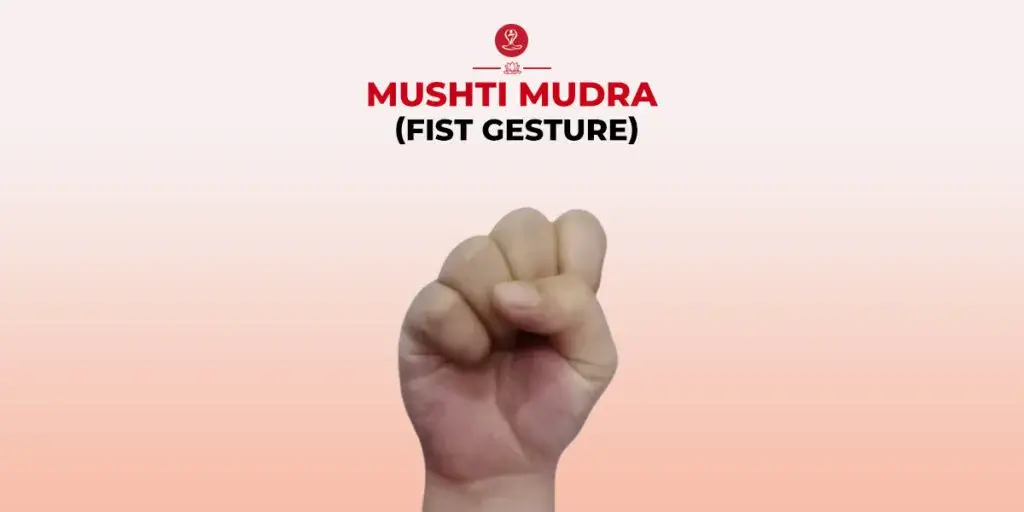
Mushti means closed fist. For this mudra, make a fist by folding the fingers and bringing the thumb over the fingers, press the ring finger (earth element) lightly.
Mushti Mudra is an Hasta (hand) yoga posture designed to relieve suppressed emotions like anger, fear, disappointment about one’s life. This mudra is one of a series of therapeutic postures known to have healing properties.
We are born with this simple hasta (hand) mudra, which is a symbol of strength. In addition, the body has a natural tendency to respond to negative emotions, then subconsciously use this hand gesture.
However, this gesture also provides many other benefits including promoting digestion, curing constipation and lethargy as well as venting anger, irritation, or excitement.
Mushti Mudra Meaning
Mushti is a Sanskrit word, meaning “closed hand” or “fist,” and mudra, meaning “gesture” or “seal”. The fist refers to the closed hand, therefore, this pose is also known as the fist pose.
This yogic hand mudra balances the five elements in our body called Panchatattva (fire, earth, water, air, and space). Apart from this, it helps in balancing the three doshas in the body which are called Vata, Pitta, and Kapha doshas.
More interesting, Mushti Mudra is a unique and one of the best hands techniques which give combined power of Vayu Mudra, Shunya Mudra, Jalodhar Nashak Mudra, and Surya Mudra. However, with consistent and regular practice any health benefits can be achieved.
Apart from having a yogic hasta mudra, in the Hindu Puranas, Lord Vishnu uses the Mushti hasta mudra to fight a demon named Madhu. Also, Mushti Mudra is considered to be a major hand gesture practiced in Bharatanayatam.
How to Do Mushti Mudra
To perform Musti mudra, first of all, you should choose any comfortable sitting pose such as Padmasana, Siddhasana, or Vajrasana and Sukhasana. If you cant sit in these pose then sit on the chair or bed.
Now Put laying the back of your hands on the knees and your palms should be facing the sky.
After this, close your eyes and focus your vision on the third eye or any particular point, so that your body maintains steadiness.
Take some deep breathing and relax your mind.
Now bend the fingers of both the hands towards the palm and press the palm with the ends of the fingers. After this, place the thumb on top of the first three fingers. Keep in mind that the tip of the thumb puts light pressure on the ring finger.
Hold this final posture and take deep breathing for 5 to 15 minutes as well as concentrate on your breath.
This mudra can be practiced at any time of the day. It can also be done in sitting, standing, prone, or walking postures as long as the body is kept relaxed.
Practice this mudra thrice daily for 15 minutes to get quick and unbelieved benefits.
Mushti Mudra Benefits
- This mudra helps in reducing negative emotions like anger, fear, and despair.
- This mudra stimulates the liver and helps in curing constipation, digestive problems as well as abdominal energy.
- Mushti fist is a symbol of anger, rage, or any other danger.
- This mudra can also be used to free the mind from anxiety, depression, frustration, and unwanted thoughts.
- Mushti mudra reduces tingling in the body parts and is practical for discharging unexpressed emotions.
- This mudra balances the excess amount of the five elements- air, sky, earth, fire, and water in the body. Thus prevents various health conditions caused by the excess of five elements.
- This mudra generates heat in the body and brings a sense of vigor.
Duration
Pause for 5 minutes to clear negative emotions, otherwise pause for 15 minutes 3 times a day as needed.
Conclusion
Mushti is the fist fight which is a natural tendency in the body to respond to negative emotions. This mudra makes us feel fit, energetic, and more relieved. So the next time you feel overwhelmed by suppressed negative emotions, make the practice of Mushti Mudra a part of your daily routine.
FAQ
Mushti Mudra, also called the Fist Gesture, is a traditional yoga hand gesture in which the fingers are folded into a gentle fist with the thumb placed over the folded fingers. It is commonly practiced during meditation and pranayama to encourage relaxation and emotional balance.
Sit comfortably with your spine straight. Fold your fingers into a relaxed fist and place the thumb gently over the folded fingers. Rest your hands on your knees with palms facing upward, close your eyes, and breathe naturally for 15–20 minutes.
The best time is usually early morning during meditation or yoga practice. It can also be performed in the evening or whenever you feel emotionally stressed or mentally exhausted.
Beginners can start with 10–15 minutes daily and gradually increase to 20–30 minutes according to their comfort and schedule.
Yes. Mushti Mudra is generally safe for daily practice and can be included in your regular yoga or meditation routine.
Traditional yogic teachings suggest that Mushti Mudra may help release emotional tension, calm the mind, and encourage relaxation when practiced consistently with mindful breathing.
Mushti Mudra is generally considered safe for most healthy individuals. However, if you experience pain, discomfort, or have a medical condition affecting your hands or wrists, consult a healthcare professional before practicing.
