
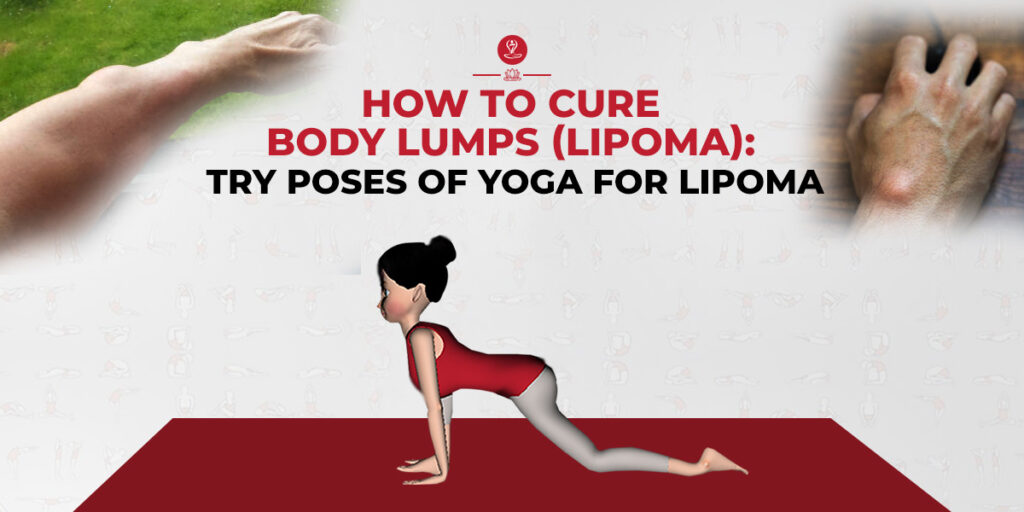
Since lumps (lipoma) are not a threat, there is no need to panic. Lipomas are typically treated by surgery, but before considering surgical removal, some people may turn to yoga for lipoma treatment.
Quick Summary
A lipoma is a soft, non-harmful fatty lump that develops under the skin, most commonly appearing on the shoulders, neck, chest, arms, and back. While they are usually harmless and treated surgically, lump formation can be prevented, and existing lumps can be managed naturally through yoga and pranayama. Practicing Surya Namaskar serves as an excellent cardiovascular exercise and natural therapy that provides energy to the body to help melt lipoma lumps, develop new cells, and eliminate dead skin cells.
Table of Contents
What is a Lipoma?
A lipoma is a slow-growing, soft lump of fatty tissue that develops just under the skin. It is usually benign (non-cancerous) and is one of the most common soft tissue growths.
Common Features of a Lipoma
- Soft and rubbery to the touch
- Moves easily when pressed
- Usually painless
- Grows slowly over time
- Commonly found on the neck, shoulders, back, arms, or thighs
Yoga for lipoma: Surya Namaskar
Surya Namaskar gives energy to the body, which helps in melting the lumps of lipomas. This is a natural therapy for lipoma.
Surya Namaskar is a combination of 12 powerful yoga asanas, which is also an excellent cardio-vascular exercise and is beneficial for health. It keeps both the mind and body healthy.
The 12 Positions of Surya Namaskar
The Surya Namaskar is practiced in twelve positions, which are as follows-
(1) Pranam Asana – To do this asana, stand on the edge of your yoga mat. During this, both your feet and toes should be connected. Now inhale and expand your chest. Keep the shoulders loose and bring them over the head, and come into the posture of Namaskar. You bring your hands in front of your chest in a namaskar posture, and you have completed this asana.
(2) Hasta Uttanasana – Take your hands over your head and take them back, and during this, keep the shoulders near the ears. To check that you are not just moving, push your hips or hips inwards and then do this asana.
(3) Hastapad posture – For this asana, while exhaling and keeping the spine straight, bend the front part from the waist. Now, while exhaling completely, place both hands on the ground near the toes.
(4) AshwaSanchalanasana – Come into the position of Bhujangasana and take the right leg as far back as you can. Raise your face upwards, but if you have any problem related to the waist or spine, then do this asana comfortably.
(5) Kumbhakasana – To do this asana, now you take your left leg back and keep the body in as straight a position as possible.
(6) Ashtanga Namaskar – It is clear from the name of this asana that you have to salute through your eight limbs. Yes, one body, one posture, but eight namaskars and do all this only or it is possible when your spine feels good. If there is a problem with it, then do not do this asana at all and do only Bhujangasana. For this asana, bring your knees to the ground. After this, raise the hips. Move your body forward and touch the ground with your chest and chin. In this state, your two arms, two legs, knees, and eight limbs, together with your chest and bones, will be in a salutation posture.
(7) Bhujangasana – For Bhujangasana, you lie down on your stomach and bring the palms along the shoulders. Now raise the upper part of the body. You can do this for ten to twenty seconds. This can also be done separately if you want to fix your back pain. Keep breathing normally.
(8) Adho Mukha Svanasana – While doing this asana, exhale and make an inverted V shape by keeping your hips above the ground and bending the spine towards the ground. To make it more effective, keep the toes in their place but pull the hips up. You will feel a stretch between your hips and toes.
(9) Ashwasanchalana Asana – This asana is similar to the fourth asana, except that the position of both your legs will be reversed from before. That is, the process of this asana is similar to that of the fourth asana, but in this, you have to bend your left leg and take the right leg backwards.
(10) Hasta Padasana- The Hastapadasana posture is repeated once again on the third number.
(11) Hastauttanasana – Hastauttanasana is exactly like the second posture.
(12) Tadasana -This position is like the first position, in which you have to stand straight in the posture of Pranam and take normal breath. After this, take both your hands straight down and stand straight, which will be called Tadasana.
Do yoga nidra after Surya Namaskar. With this, you will be able to clearly feel a vibration or change in the body. After any posture, take rest and do Shavasana along with it.
Conclusion
All the Surya Namaskar Yoga poses and asanas are effective in developing new cells and removing dead cells from the skin. Additionally, Yoga acts on the endocrine glands of the body, thus regulating the production of hormones that promote lipoma
Frequently Asked Questions (FAQ)
Lipomas can develop anywhere fat cells exist in the skin, but they are most commonly found on the neck, shoulders, chest, arms, and back.
Surya Namaskar delivers a boost of energy to the entire body, which acts as a natural therapy to help melt fatty lipoma lumps, promote new cell development, and clear away dead skin cells.
If you suffer from any issues related to your waist or spine, you must skip Ashtanga Namaskar entirely (practicing only Bhujangasana instead) and approach the Ashwa Sanchalanasana posture with extra comfort and caution.
After finishing the sequence, you should practice Yoga Nidra
and rest completely in Shavasana to clearly experience the internal vibrations and changes in the body.
