
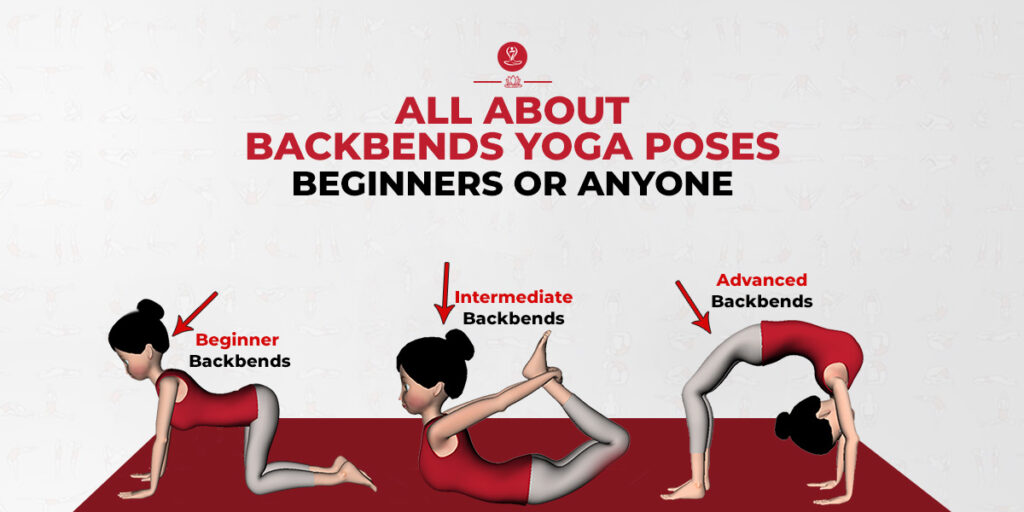
Backbends Yoga is an essential component of the main categories of yoga poses. Practicing backbend yoga poses provides a variety of benefits that improve your physical, mental, and emotional well-being.
Quick Summary
Backbends Yoga is a foundational category of yoga postures that lift the front body (chest, abdomen, and pelvis) while tilting the spine back. Because this bending can create tension and shallow breathing, beginners often find these poses challenging. Starting with gentle, beginner-friendly backbends helps build body-breathing awareness, physical strength, flexibility, and confidence before moving on to intermediate or advanced variations. Regular practice improves spinal mobility, relieves tension and back pain, opens the heart, and balances the body physically and spiritually.
Table of Contents
Introduction
Backbend yoga poses are also related to heart-opening yoga poses, and others are said to open up specific energy points (chakras) in the body, All these help in the general well-being of the person, both in the physical and the spiritual sphere. Whether this is true or not is up to you. You won’t know until you try them on your body! To kick start your yoga journey, here are some of my favorite gentle backbends.
Backbends Yoga Poses For Beginners Or Anyone
Start with the easiest poses and move on to more advanced poses, which help you to develop the strength, alignment, and awareness you need and go deeper into more advanced poses.
Beginner Backbends
Cow Pose (Bitilasana) — You can do a Cow Pose on its own or as a dynamic pose with a Cat pose (Marjariasana) but the cow pose by itself is a great way to warm up the spine before a more vigorous practice to a backbend series. Cow Pose beginning of a vinyasa flow to warm up your body—especially for your spine. The pose relieves tension in your upper body, especially in your back, shoulders, and neck, and promotes blood circulation as well as massages the spine to increase mobility.
Cobra Pose (Bhujangasana) — This is an infant of backbends, but a great way to elongate and strengthens your spine, as well as activate your abdominal, gluteal, and leg muscles to build strength. Also, it warms your spine up in preparation for deeper backbends. This pose is typically a heart-opening backbend that provides relief in back pain, tightness in your shoulders, or upper body soreness.
Sphinx Pose (Salamba Bhujangasana) — Salamba Bhujangasana (Sphinx Pose) is a modified gentle backbend form of Bhujangasana as well as a variant to aid beginners in yoga. Sphinx Pose strengthens your spine before moving on to advanced backbends. It expands the chest and shoulders, improves blood circulation, and relieves the body from stress.
Upward-facing Dog Pose (Urdhva Mukha Svanasana) — A common backbend that should not be overlooked, due to an important part of the Surya Namaskar series. This well-known backbend will challenge you to lift and open your chest and can combat feelings of depression and fatigue.
Intermediate Backbends
Bow Pose (Dhanurasana) — Bend back into the shape of a bow and stretches your hip flexors and hamstrings, strengthening your back. This heart-opening backbend is great for those who extended periods of time over computers. Like all backbends, Bow Pose improves posture, strengthens your back muscles, and builds confidence and empowerment.
Ustrasana (Camel Pose) — This is an energizing and beneficial backbend that is worth taking the time to do it well. It’s also important to tune in to your breath as you approach this backbend. This heart-opening pose is associated with love and compassion and relieves lower back pain with a generous.
Locust Pose (Salabhasana) — Locust pose is one with many variations to prep beginners for deeper backbends and activates your back, core, and leg muscles. This is more interesting and challenging than it appears at first glance. It strengthens the back of the torso, legs, and arms and elongates your spine, opens your chest as well as stimulates your digestive organs.
Fish Pose (Matsyasana) — Fish Pose builds confidence with a loving stretch in the shoulders and strengthens your neck and upper back, which improves flexibility and posture. It stimulates the organs of the belly and throat and stretches your chest, abdominal muscles, and hip flexors.
Advanced Backbends
Wheel Pose (Urdhva Dhanurasana) — As a more advanced pose, the wheel pose is an intense backbend that challenges plenty of yogis. It is generally recommended to be performed after more mild backbends. This energy-boosting pose opens the chest, shoulders, and hips and strengthens your arms, wrists, legs, abdomen, and spine as well as improves spinal mobility.
Dove Pose ( Vajra Kapotasana) — Vajra Kapotasana is one of the most intense backbends and an important asana in yoga with lots of health benefits. this should only be performed once you are proficient in Intermediate Backbends. An advanced level back bending posture of the Ashtanga Yoga series Stretching and strengthening the spine, chest, and abdomen, reduce back pain, relieves stress, anxiety, and depression, builds core strength, and improves digestion as well as blood circulation in the body.
Upward Facing Two-Foot Staff Pose (Dwi Pada Viparita Dandasana) — One such pose is Viparita Dandasana, an advanced back reclined posture that Stretches the entire front body and opens the chest. It builds immense strength in the upper body and improves the flexibility of the hips at an advanced level.
Conclusion
Backbends are an essential component to build strength, flexibility, and mobility.
If you are just starting your yoga journey always start with beginner backbends, over time, you can move on to intermediate or advanced backbends
Backbends provide a variety of benefits that strengthen your back, shoulders, chest, and hips, increase flexibility, and improve mobility, which helps relieve tension, tightness, and pain.
FAQ
Backbends lift the front body and tilt the spine backward, which creates tension in standard breathing patterns and mostly makes the breathing shallow. This adjustment to body-breathing awareness makes them feel more challenging at first.
Backbends build strength and flexibility, improve the mobility of the lumbar and thoracic spine, increase core and muscle temperature to prevent injuries, and enhance blood circulation. They also help relieve tension, stiffness, and pain in the back, shoulders, and neck.
You should always start by learning gentle, beginner-level poses (like Cow, Cobra, or Sphinx Pose). This allows you to gradually increase your energy and confidence. Intermediate and advanced poses should only be attempted once you have developed the necessary strength, alignment, and proficiency in the milder variations.
No. Beyond physical benefits, backbends are associated with “heart-opening” qualities linked to love and compassion, can combat feelings of depression and fatigue, relieve stress and anxiety, and open specific energy points (chakras) to improve overall spiritual well-being.
